
35 Years of the ADA
A Civil Rights Law in Name, Not in Practice


Next week, America will mark 35 years since the signing of the Americans with Disabilities Act (ADA)—the landmark civil rights law enacted on July 26, 1990, meant to guarantee equality for individuals with disabilities. But while government agencies prepare their press releases and advocates prepare their hashtags, many disabled Americans remain sidelined, silenced, and ignored—especially by the very systems that claim to protect them.
From employment to family court to healthcare, the ADA’s promises remain unfulfilled, and the federal government seems more interested in symbolic gestures than actual enforcement.
No Word from the White House?
So far, President Donald Trump has not issued a proclamation acknowledging the 35th anniversary of the ADA. That silence may disappoint some, but let’s be honest: Even during the Biden years, awareness outpaced action.
For example, while Biden’s administration pushed for digital accessibility updates under Title II, it routinely failed to enforce ADA rights in family courts, where thousands of disabled parents—especially those with unseen disabilities like PTSD, ADHD, or traumatic brain injuries—are routinely denied accommodations, due process, and even access to their children.
Now under Trump, the ADA faces even more uncertainty, especially after the administration’s early 2025 decision to roll back Obama- and Biden-era guidance on ADA enforcement, citing regulatory overreach.
Bureaucratic Lip Service Is Not Civil Rights
Federal agencies like the U.S. Department of Labor and EEOC have already begun previewing the ADA anniversary with statistics, webinars, and “impact stories.” They’ll tout expanded employment opportunities, accessible buildings, and inclusive policies.
But here’s the truth behind the spin:
- Disabled workers still earn just 74 cents on the dollar compared to their non-disabled peers.
- Unemployment among the disabled remains disproportionately high.
- Family courts continue to discriminate against disabled parents—with no accountability.
- Digital access is still a mess, especially in rural America, despite looming 2026 deadlines.
The ADA was supposed to protect against all of this. But in 2025, it's clear: the law has become more of a suggestion than a shield.
Disability Rights: Where’s the Enforcement?
The core problem? Lack of enforcement. The Department of Justice investigates some cases, but far too many violations go unchecked. Whether it’s adoption agencies rejecting disabled parents, schools ignoring IEPs, or judges brushing aside ADA accommodation requests in custody battles—there is no real fear of consequence for breaking the law.
Even when disabled citizens do everything right—submit documentation, request accommodations in writing, follow every ADA protocol—they’re still met with silence, delays, or denials. And unless you can afford a high-priced lawyer to sue the government or a corporation, you're often out of luck.
What Conservatives Should Champion
Here’s where a conservative perspective matters: the ADA is not a call for endless expansion of bureaucracy or bloated entitlements. It is a promise of equal treatment under the law. That promise is being broken—not for lack of spending, but for lack of accountability, transparency, and judicial consistency.
If a disabled veteran is denied accommodations in family court…
If a parent with ADHD is falsely painted as unstable…
If a job applicant with PTSD is ghosted after disclosure…
…it’s not because the ADA needs more revisions. It’s because government agencies, courts, and employers are not being held to the law as written.
This is about rule of law, equal protection, and limited but effective governance. In short, conservatives should be leading the charge to demand enforcement—not more empty ceremonies.

What to Watch for on July 26
As the anniversary approaches, expect:
- Rallies on Capitol Hill demanding restoration of ADA funding
- Agency statements touting minor gains while ignoring widespread violations
- Local proclamations (like in Massachusetts and Iowa) recognizing the ADA, even if the federal government stays silent
- Pushback from advocacy groups warning of threats to disability rights amid budget negotiations
But don’t expect serious reforms. Not unless voters, lawmakers, and the courts start treating ADA violations as real civil rights violations—not as PR liabilities.
Final Word
Next week, as politicians smile for the cameras and issue their ADA “celebrations,” let’s remember the disabled Americans who don’t get to celebrate—because they’ve been denied their rights, their accommodations, their children, or their jobs.
Thirty-five years is long enough to wait. The ADA doesn't need another anniversary party. It needs a backbone.
About the Creator
Michael Phillips
Michael Phillips | Rebuilder & Truth Teller
Writing raw, real stories about fatherhood, family court, trauma, disabilities, technology, sports, politics, and starting over.
Keep reading
More stories from Michael Phillips and writers in The Swamp and other communities.
Big Government Crashes the Party
On July 15, 2025, while Montgomery County families continue to struggle with skyrocketing housing costs, crumbling traffic infrastructure, and public schools hemorrhaging students and credibility, the County Council proudly came together to… outlaw house parties.
By Michael Phillips8 months ago in The Swamp
Parallel Protests
I haven't written for quite some time, but I have A LOT of thoughts about yesterday's protest rally against our government's involvement and complicity in America's war on Iran, on the harbourside of my home city Bristol, and I need to put them somewhere. My gorgeous girlfriend is always a loving and listening ear and sharing it all with her will always be a healthy and happy way of processing the mental and emotional weight, but getting it straight in my brain to share means writing it all down in straight lines, so, here we are and thanks for being here.
By Steph Cole9 days ago in The Swamp
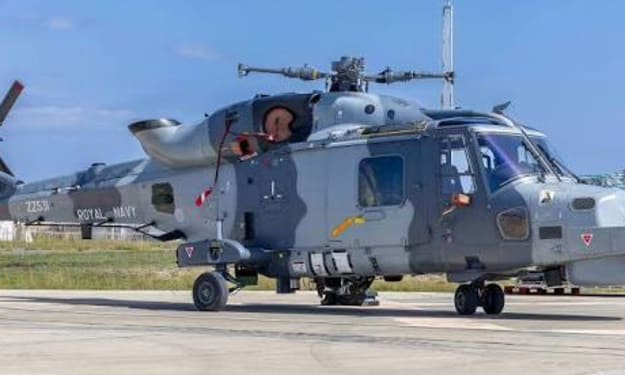
Royal Navy Wildcat helicopters arrive to defend Cyprus
The United Kingdom has deployed advanced naval helicopters to Cyprus as part of a wider effort to strengthen defenses around the island amid rising tensions in the eastern Mediterranean. The arrival of the AgustaWestland AW159 Wildcat helicopters operated by the Royal Navy highlights growing concerns about regional security and the potential for further military escalation. The helicopters were transported to British sovereign bases in Cyprus, where they will support surveillance, air-defense coordination, and maritime security operations. British defense officials say the deployment is intended to protect personnel and infrastructure while ensuring that the United Kingdom can respond quickly to any emerging threats in the region. Strengthening Defenses at Strategic Bases Britain maintains two major sovereign base areas on Cyprus—RAF Akrotiri and Dhekelia—which have long served as strategic hubs for military operations in the Middle East and eastern Mediterranean. These installations allow the United Kingdom to conduct air operations, intelligence missions, and humanitarian support across a wide geographic area. The arrival of Wildcat helicopters enhances the defensive capabilities of these bases. Known for their advanced radar systems and agility, the helicopters are designed to conduct reconnaissance, maritime patrols, and anti-surface warfare operations. Their sensors allow crews to detect small vessels, drones, and other potential threats at sea or along coastlines. British officials say the aircraft will also work closely with naval vessels operating nearby, creating a layered defense network designed to protect both military personnel and regional shipping routes. Rising Regional Tensions The deployment comes at a time of heightened tensions across the Middle East and eastern Mediterranean. Conflicts involving Iran, Israel, and the United States have increased concerns that the conflict could spill into neighboring areas or threaten international shipping lanes. Cyprus, located at a crossroads between Europe, Asia, and the Middle East, has become an important staging point for military operations and evacuation missions. Western forces have used the island’s bases to support surveillance flights, humanitarian operations, and logistical support for regional allies. Security analysts note that Cyprus’s strategic location makes it both valuable and potentially vulnerable during periods of regional instability. Role of the Wildcat Helicopter The AW159 Wildcat represents one of the most modern helicopters currently used by the Royal Navy. Designed for multi-role operations, the aircraft can carry precision-guided missiles, torpedoes, and advanced surveillance systems. Its compact size allows it to operate from both naval ships and land bases. Military planners often deploy the Wildcat in situations where flexibility and rapid response are required. The helicopter’s sensors can track multiple targets simultaneously, while its communication systems allow it to coordinate with ships, aircraft, and ground forces. Experts say these capabilities make the Wildcat particularly valuable in scenarios involving drone threats, small attack boats, or other fast-moving targets that can challenge traditional air-defense systems. A Broader Security Strategy British defense officials emphasize that the helicopter deployment is part of a broader strategy aimed at maintaining stability in the region. The United Kingdom continues to work with NATO partners and regional allies to monitor security developments and deter potential threats. In addition to the Wildcat helicopters, Britain has strengthened naval patrols and increased intelligence-sharing efforts with partner nations operating in the Mediterranean. These measures are intended to protect international shipping routes and prevent further escalation of regional conflicts. For Cyprus, the presence of additional British military assets reflects both the island’s strategic importance and the growing complexity of the regional security environment. Looking Ahead While British officials describe the deployment as precautionary, analysts say it highlights the fragile state of security in the eastern Mediterranean. As conflicts elsewhere in the region continue to evolve, Cyprus is likely to remain a key operational hub for Western forces. The arrival of the Royal Navy’s Wildcat helicopters underscores the United Kingdom’s commitment to protecting its overseas bases and maintaining a military presence capable of responding to rapidly changing threats.
By Fiaz Ahmed 6 days ago in The Swamp



Comments
There are no comments for this story
Be the first to respond and start the conversation.