
30 Days to Better Habits: A Simple Step-by-Step Guide for Forming Habits That Stick
Transform your life, one habit at a time
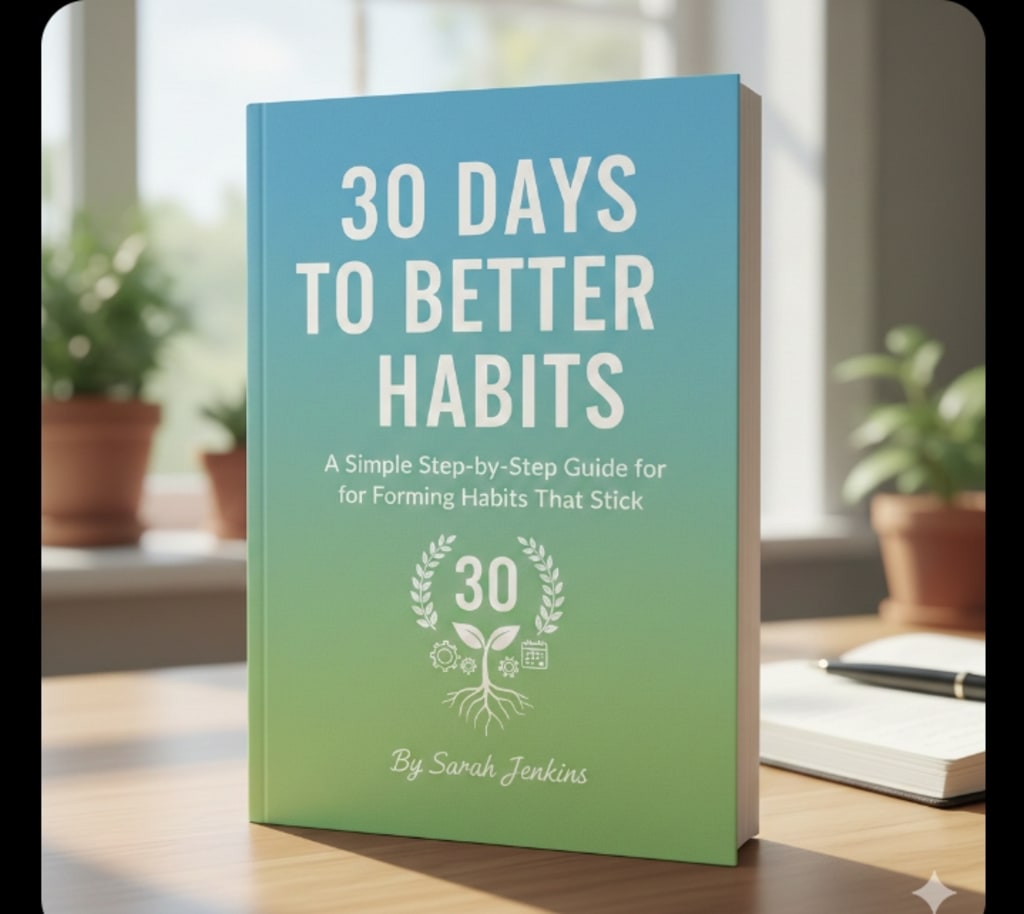
Changing your life doesn’t always require a massive overhaul. Often, small, consistent habits are the secret to long-term success. Research shows that most people fail to stick to new habits not because they lack motivation, but because they underestimate the importance of structure, consistency, and incremental progress.
This guide will help you build better habits in 30 days, using a simple, step-by-step framework that is practical, actionable, and sustainable.
Why Habits Matter
Habits shape who we are
Our daily actions define our lives. Tiny decisions repeated consistently become patterns that shape our identity. Whether it’s drinking water regularly, exercising, or reading daily, habits are the building blocks of success.
The science behind habits
According to behavioral science, habits form through cue → routine → reward loops. By understanding this loop, you can replace destructive habits with productive ones.
Key points:
Cue: The trigger that starts the habit
Routine: The action you perform
Reward: The benefit your brain receives, reinforcing the habit
By consciously designing these loops, you can hack your brain to stick to new routines.
Step 1: Choose One Habit at a Time
Trying to change too much at once leads to burnout. Focus on one habit for 30 days.
Examples of beginner-friendly habits:
Drinking 8 glasses of water daily
Walking 10,000 steps a day
Reading 10 pages every morning
Journaling before bed
Concentration on a single habit ensures higher success rates and reduces overwhelm.
Step 2: Make It Easy to Start
Human brains resist change, so start small. Instead of promising to run 5 miles daily, begin with 5 minutes of walking or jogging.
Tips for simplicity:
Break habits into micro-actions
Place cues in plain sight (water bottle on desk, running shoes by bed)
Remove friction that discourages starting
Starting small reduces mental resistance and builds momentum.
Step 3: Anchor Habits to Existing Routines
Use habit stacking to make your new habit automatic. Pair it with something you already do.
Examples:
After brushing your teeth → floss
After morning coffee → meditate 5 minutes
After lunch → take a short walk
This technique leverages existing neural pathways, making the new habit easier to remember and maintain.
Step 4: Track Your Progress
Tracking helps your brain visualize success. Even simple checkmarks on a calendar trigger a sense of achievement.
Effective tracking strategies:
Habit tracker apps (Habitica, Strides)
Calendar check-ins
Journaling daily reflections
Seeing progress builds psychological reinforcement, making the habit more likely to stick.
Step 5: Reward Yourself
Habits stick when there’s a positive reward. The reward doesn’t need to be material — a small mental pat on the back works.
Reward ideas:
Celebrate completing a week without missing the habit
Enjoy a small treat or leisure activity
Share your success with a friend for accountability
Positive reinforcement strengthens your habit loop, making the behavior automatic over time.
Step 6: Embrace Consistency, Not Perfection
Missing a day isn’t failure; inconsistency is natural. Focus on getting back on track immediately.
Tips:
Aim for “most days,” not perfection
Forgive lapses and analyze what caused them
Adjust routines to reduce friction
Consistency matters more than intensity. Over time, repeated small actions compound into significant change.
Step 7: Reflect Weekly
Weekly reflection helps you identify obstacles and successes. Ask yourself:
Did I follow my habit every day?
What challenges did I face?
How can I improve next week?
Reflection reinforces self-awareness, allowing you to optimize habits and prevent stagnation.
Step 8: Gradually Increase Complexity
Once a habit is solid, increase its intensity. For example:
Start with 5 push-ups daily → increase to 20
Read 10 pages → increase to 20 pages
This gradual scaling prevents overwhelm while maximizing progress.
Step 9: Build Accountability
Tell someone about your habit. Accountability creates social pressure and motivation.
Methods:
Share progress with a friend or mentor
Join habit-focused groups online
Post updates on social media (if comfortable)
External accountability amplifies your commitment and increases the likelihood of sticking to your habit.
Step 10: Mind Your Environment
Your environment influences behavior. Design your space to support good habits and hinder bad ones.
Examples:
Place fruits on the counter, hide junk food
Keep workout clothes ready
Remove distractions during focus time
A habit-friendly environment makes positive behaviors automatic and reduces reliance on willpower.
Common Pitfalls and How to Avoid Them
Setting unrealistic goals → Break into smaller steps
Neglecting rewards → Celebrate milestones
Ignoring failures → Analyze and adjust
Trying to change too much at once → Focus on one habit
Lack of tracking → Keep a habit log
Avoiding these pitfalls increases success rate dramatically.
Why 30 Days Works
Psychologists suggest that 30 days is enough to establish a new habit, though some may take longer. The key is continuous repetition, supported by reward and tracking mechanisms.
After 30 days:
Actions begin to feel automatic
You experience visible progress
Your identity shifts slightly (e.g., “I am a person who exercises daily”)
Case Studies: Habits That Stuck
1. Sarah’s Morning Routine
Sarah struggled to wake up early. She started with 5 minutes of stretching every morning after brushing her teeth. Within 30 days, her body and mind adapted, and she extended the routine to 30 minutes of yoga, feeling more energized daily.
2. Mark’s Reading Habit
Mark wanted to read more. He began with 10 pages every night before bed. By tracking progress in an app and rewarding himself with a coffee after each week, he formed a sustainable reading habit, completing multiple books in 90 days.
These examples show that small, incremental habits compound into lasting lifestyle changes.
Conclusion: Your 30-Day Habit Challenge
Forming lasting habits doesn’t require extraordinary willpower. By following this 10-step guide, you can build habits that stick:
Choose one habit
Make it easy to start
Anchor to existing routines
Track progress
Reward yourself
Focus on consistency
Reflect weekly
Gradually increase intensity
Build accountability
Optimize your environment
Start today, follow this framework, and watch small actions transform your life. A single habit repeated for 30 days can become the foundation for a lifetime of positive change.
About the Creator
Keep reading
More stories from Zahid Hussain and writers in The Swamp and other communities.
US Dollar Strengthens as Trump Nominates Kevin Warsh as Federal Reserve Chair
A Pivotal Moment for the Fed and the Dollar In a move that has captured global attention, President Donald Trump nominated Kevin Warsh to serve as Chair of the U.S. Federal Reserve. The decision immediately sent ripples through the financial markets, with the U.S. dollar strengthening sharply, treasury yields rising, and investors reassessing their expectations for monetary policy in the coming months. The Fed, the United States’ central bank, plays a critical role in shaping the economy, controlling inflation, and influencing global financial markets. As such, the nomination of a new Fed Chair is more than a political decision—it is a signal to markets, businesses, and international observers about the future direction of U.S. monetary policy. Kevin Warsh, known for his experience during the 2008 financial crisis and his reputation as a market-savvy economist, brings a particular philosophy to the role, which investors believe will influence the dollar and broader markets. Kevin Warsh: Background and Experience Kevin Warsh’s career has been defined by high-stakes financial environments and navigating economic crises. His background includes: Education at Harvard University, where he earned a degree in Economics Early experience in investment banking and financial consulting, providing him insights into market mechanics Senior advisory roles in the Federal Reserve, where he contributed to policy decisions during periods of market volatility Warsh’s professional trajectory has made him well-versed in the mechanics of monetary policy and risk management, positioning him as a credible choice for a Fed Chair during a period of global economic uncertainty. Why Markets Reacted to the Nomination 1. Dollar Strengthening The most immediate market reaction to Warsh’s nomination was a strengthening of the U.S. dollar against major currencies. Analysts attribute this to several factors: Hawkish Expectations: Warsh is perceived as more inclined toward tightening monetary policy, controlling inflation, and maintaining the strength of the dollar Investor Confidence: Markets interpret his experience during previous financial crises as an ability to maintain economic stability, which increases confidence in U.S. assets Interest Rate Anticipation: A stronger dollar typically reflects expectations of higher interest rates relative to other economies The dollar’s movement has implications for imports, exports, and global financial flows. A stronger dollar can reduce import costs for American consumers, but may also pressure emerging market economies and commodity prices. 2. Treasury Yields Rise Alongside the dollar, U.S. Treasury yields climbed, reflecting investor expectations that Warsh may advocate for interest rates that prevent overheating of the economy. Rising yields often: Make borrowing more expensive for corporations and consumers Attract foreign investment into U.S. government bonds Signal market confidence in the Fed’s ability to manage inflation The combination of higher yields and a stronger dollar underscores investor belief in Warsh’s commitment to financial stability. 3. Stocks and Risk Assets Equity markets showed mixed reactions. While some sectors, particularly financials, welcomed the prospect of a more predictable monetary policy, other risk assets, including technology stocks and cryptocurrencies, experienced modest declines. A tighter monetary policy can affect: Growth-sensitive sectors like tech and real estate Non-yielding assets such as gold and silver, which fell in value as investors moved toward interest-bearing assets These movements reflect the complex balance markets strike between stability, growth, and interest rate expectations. Kevin Warsh’s Policy Philosophy Warsh is known for a balanced, data-driven approach, combining market awareness with caution. Analysts highlight key aspects of his likely policy stance: Inflation Control: Warsh has historically emphasized preventing runaway inflation, which could strengthen the dollar and support long-term growth Financial Stability: His experience in crisis management suggests a focus on risk mitigation in banking and markets Measured Decision-Making: Warsh is not expected to make sudden or unpredictable policy moves, which markets typically favor This philosophy explains why traders and investors reacted with a positive sentiment for the dollar, seeing his nomination as a sign of steady and competent economic stewardship. Global Implications of the Nomination The Fed Chair’s decisions impact not only the U.S. economy but also the global financial system: Emerging Markets: Rising U.S. yields and a stronger dollar could pressure debt-servicing costs in countries with dollar-denominated debt Commodity Prices: Metals, oil, and other commodities often react to a stronger dollar, affecting global supply chains International Trade: Exporters may face challenges as their goods become more expensive for U.S. consumers Kevin Warsh’s leadership may therefore reshape international markets depending on his approach to interest rates and monetary policy. Historical Context: Fed Chairs and Market Confidence The Fed Chair’s role is unique because their statements and policy actions directly influence market psychology. For example: Alan Greenspan: Known for his careful guidance during volatile periods, instilled confidence in markets Ben Bernanke: Guided the Fed through the 2008 financial crisis, emphasizing crisis response Janet Yellen: Focused on gradual policy shifts, balancing growth and inflation Warsh, shaped by the 2008 crisis, is expected to combine analytical rigor with market prudence, reassuring investors that the Fed will act responsibly. Why the Dollar Reacted So Quickly Market participants often price in expectations long before policies take effect. Warsh’s nomination likely caused immediate reactions due to: Perceived hawkishness: Investors anticipate tighter monetary policy Crisis credibility: His past experience suggests a capable steward of the economy Market psychology: Traders adjust positions quickly to reflect potential Fed moves The speed of the reaction is typical for high-stakes financial news, where sentiment and perception can move markets faster than policy itself. Potential Risks and Challenges While the nomination has been positively received, there are risks: Global Economic Volatility: Rising rates could slow global growth and impact trade Political Pressures: The Fed must maintain independence, even as political narratives around Warsh’s appointment emerge Market Overreaction: Investors may have priced in too much optimism, risking a correction if policies differ from expectations These risks mean that Warsh will need to balance market expectations with real economic conditions, a delicate task for any Fed Chair. The Road Ahead for Investors Investors and financial planners are advised to: Monitor Treasury yields and dollar movements closely Prepare for potential interest rate adjustments affecting loans, mortgages, and investments Assess the impact on commodities, emerging markets, and equities Follow Warsh’s early speeches and Fed statements for guidance Long-term, Warsh’s tenure may stabilize the U.S. dollar, influence global markets, and reshape investor strategies worldwide. Conclusion: A Critical Juncture for U.S. Monetary Policy Kevin Warsh’s nomination as Federal Reserve Chair is more than a political choice—it is a market-moving event with immediate and far-reaching implications. The dollar’s strength, rising yields, and cautious equity responses reflect a combination of expectation, confidence, and strategic anticipation. As Warsh prepares to take the helm, the world watches closely. His decisions will not only influence domestic growth and inflation but also global financial stability, investor sentiment, and international trade flows. In a period marked by economic uncertainty and market sensitivity, Warsh’s leadership will be a key factor in determining whether markets remain calm or face volatility, making this nomination one of the most consequential for investors in recent years.
By Zahid Hussain2 days ago in The Swamp
Spanish Track Fractured Before High-Speed Train Disaster, New Report Reveals
A newly released report into the tragic Spanish high-speed train disaster has revealed that a fractured track was a critical factor in the fatal crash that occurred several months ago. This shocking discovery raises significant concerns about the safety of Spain’s high-speed rail network and the broader issue of infrastructure maintenance. The investigation underscores the complexity of the accident, suggesting that a combination of technical failures and human error contributed to the devastating consequences.
By Ayesha Lashari7 days ago in The Swamp
Trump News at a Glance: Top Democrats Give Trump Ultimatum to Fire Kristi Noem
House Democrats demand the dismissal of Homeland Security Secretary Kristi Noem or threaten impeachment, highlighting growing bipartisan scrutiny over federal immigration enforcement after deadly incidents in Minneapolis
By Salaar Jamali4 days ago in The Swamp
TUS NUA - ch 49
TUS NUA – ch 49 New Beginnings – Mia and Midnight (*)(*)(*) As Mia spoke on the phone to Ali’s sister, Ellen, Finola slipped quietly away and walked to the stream behind Tus Nua. Carefully, she put a block on her family so no one could know what she was about to do.
By Margaret Brennan7 days ago in Fiction




Comments
There are no comments for this story
Be the first to respond and start the conversation.