
Understanding Crypto Exchanges: The Backbone of Digital Currency Trading
How Digital Marketplaces Power the Trading, Security, and Growth of Cryptocurrencies
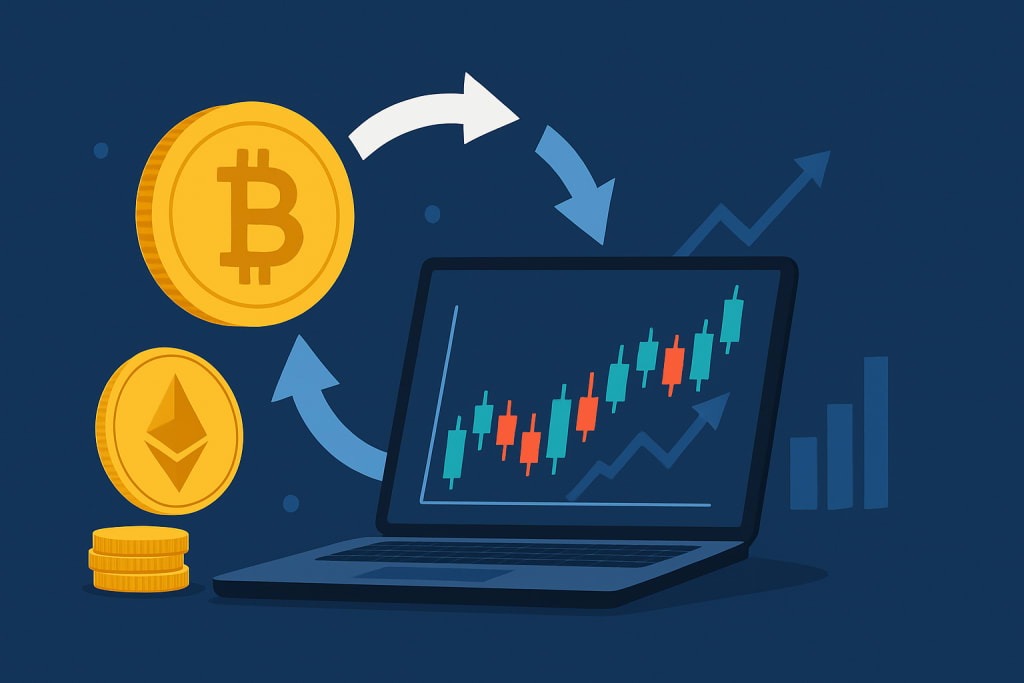
Cryptocurrencies have redefined how we perceive money, investing, and even the internet itself. Since the launch of Bitcoin in 2009, a vibrant ecosystem of digital currencies has emerged, supported by a powerful infrastructure that makes it possible for individuals and institutions to trade these assets. At the core of this infrastructure lies the crypto exchange, a digital marketplace where buyers and sellers meet to exchange cryptocurrencies, or convert them into traditional fiat currencies like USD or EUR. These platforms have evolved from obscure, hacker-run bulletin boards to multi-billion-dollar businesses rivaling traditional stock exchanges. Understanding how crypto exchanges work, their types, the technology behind them, and their role in the broader financial system is essential for anyone interested in digital assets.
What Is a Crypto Exchange?
A crypto exchange is a digital platform that allows users to buy, sell, and trade cryptocurrencies. Just as stock exchanges match buyers with sellers of stocks, crypto exchanges facilitate trades between those who want to acquire digital coins and those who want to sell them. This could be a simple swap between Bitcoin and Ethereum, or it could involve trading crypto assets for fiat money.
Most exchanges today operate online, accessible via web platforms or mobile apps, offering users an intuitive interface for trading. Behind the scenes, however, these platforms are highly complex, using advanced algorithms, matching engines, wallet infrastructures, and sometimes blockchain integrations to ensure smooth transactions. Some exchanges also offer additional features like margin trading, futures contracts, staking, and lending—bringing them closer to full-service financial institutions.
The Evolution of Crypto Exchanges
In the early days of cryptocurrency, there were few options for trading. Enthusiasts relied on peer-to-peer forums like Bitcointalk or informal over-the-counter (OTC) deals to acquire coins. The launch of Mt. Gox in 2010 marked the beginning of centralized crypto exchanges. At its peak, Mt. Gox was handling over 70% of all Bitcoin transactions worldwide before its infamous collapse in 2014 due to a massive hack.
This catastrophic event highlighted the risks inherent in custodial platforms and prompted a wave of innovation. New players like Binance, Coinbase, and Kraken emerged, offering enhanced security, more regulatory compliance, and better user interfaces. These platforms grew rapidly as the broader public began taking interest in cryptocurrency, especially during the bull runs of 2017 and 2021.
Today, crypto exchanges are divided into two main types: centralized exchanges (CEXs) and decentralized exchanges (DEXs).
Centralized vs. Decentralized Exchanges
A centralized exchange is operated by a company or organization that acts as an intermediary between buyers and sellers. Popular centralized exchanges like Binance, Coinbase, and Kraken handle user registration, hold customer funds in their own wallets, and often require identity verification (KYC). This model is favored for its speed, liquidity, and ease of use. However, it also introduces a point of trust—and therefore a point of vulnerability. Hacks, regulatory crackdowns, or internal malfeasance can compromise users' funds.
On the other hand, decentralized exchanges (DEXs) operate without a central authority. Trades on DEXs like Uniswap, SushiSwap, or PancakeSwap are conducted directly between users via smart contracts on a blockchain. Users retain control of their private keys and assets at all times, which significantly reduces the risks of centralized failures. However, DEXs come with their own limitations, such as lower liquidity, slower transaction speeds (especially on congested blockchains like Ethereum), and limited customer support.
The debate between CEXs and DEXs continues, but many users now adopt a hybrid approach—using centralized platforms for convenience and decentralized platforms for privacy and security.
The Technology Behind Exchanges
Running a crypto exchange is no small feat. The core component is the matching engine, which pairs buy and sell orders based on price and quantity. This engine must operate with millisecond precision and be capable of processing thousands of transactions per second, especially during volatile market periods.
Exchanges also need robust wallet infrastructure. Every user deposit and withdrawal must be managed securely, usually through a combination of hot wallets (connected to the internet for fast access) and cold wallets (offline for maximum security). Managing these wallets, especially in a multi-currency environment, requires careful design and regular audits.
Then there’s the API layer, which allows third-party tools like trading bots and portfolio managers to interact with the exchange. APIs are vital for institutional investors and algorithmic traders, who need to execute large volumes of trades quickly and programmatically.
Security is a constant challenge. Exchanges are frequent targets for hackers due to the massive amounts of money they hold. As a result, modern platforms employ multi-layered security, including encryption, two-factor authentication, withdrawal whitelists, and behavioral analytics to detect suspicious activity. Still, history shows that even the largest platforms are not immune to breaches.
Regulatory Landscape
As cryptocurrencies have grown in popularity, governments and regulatory agencies around the world have turned their attention to exchanges. Most countries now require crypto exchanges to comply with Know Your Customer (KYC) and Anti-Money Laundering (AML) regulations. These measures are intended to prevent illicit activity but can be a barrier to entry for users who value anonymity.
In the U.S., exchanges must register with FinCEN and comply with the Bank Secrecy Act. In Europe, the Markets in Crypto-Assets (MiCA) regulation is creating a unified legal framework. Meanwhile, some countries like China have banned centralized crypto trading altogether, pushing activity underground or toward decentralized platforms.
This fragmented regulatory landscape poses challenges for exchanges operating globally. They must balance compliance with user experience and innovation. In response, some platforms are choosing to operate only in jurisdictions with clear, crypto-friendly laws.
Liquidity and Market Making
One of the most important metrics for any exchange is liquidity—the ability to buy or sell assets without causing significant price movement. High liquidity ensures that traders get the best possible price for their trades and can enter or exit positions quickly.
To achieve this, exchanges often partner with market makers, entities that provide constant buy and sell quotes to keep the market active. Some exchanges even use automated market makers (AMMs), particularly in the DeFi space, where liquidity pools and algorithmic pricing replace traditional order books.
Liquidity attracts traders, and traders attract more liquidity. This feedback loop helps top exchanges maintain dominance while smaller or newer platforms struggle to gain a foothold.
Revenue Models and Fees
Crypto exchanges typically generate revenue through trading fees, which can range from 0.1% to 0.5% per transaction. Some offer discounts for using the platform’s native token (like Binance’s BNB) or for high-volume traders.
In addition to trading fees, exchanges may earn income through withdrawal fees, listing fees for new tokens, interest on margin loans, and staking services. Some exchanges even act as launchpads, helping new projects raise funds and list their tokens in exchange for a share of the supply.
These business models can be highly profitable. Binance, for example, reportedly made over a billion dollars in profit in 2021. However, these profits come with high overhead and operational risks, including legal scrutiny, technology failures, and market downturns.
User Experience and Accessibility
As competition has grown, user experience has become a key differentiator. Top exchanges invest heavily in intuitive interfaces, mobile apps, educational content, and customer support. Some offer demo accounts for beginners, while others cater to advanced users with features like charting tools, algorithmic trading, and real-time analytics.
Accessibility is also improving. With the rise of mobile-first exchanges and fiat on-ramps (methods to buy crypto with a credit card or bank account), it’s easier than ever for newcomers to start trading. Still, complexity and volatility remain barriers. Many first-time users are intimidated by the jargon and risk of loss, which is why education plays a central role in onboarding.
The Future of Crypto Exchanges
The future of crypto exchanges is tied closely to the evolution of the digital asset space. As new forms of tokens emerge—like tokenized stocks, NFTs, and central bank digital currencies (CBDCs)—exchanges will have to adapt their infrastructure and regulatory frameworks.
Interoperability is another trend to watch. Cross-chain bridges and layer-2 solutions like Arbitrum and Optimism are enabling faster, cheaper trading between different blockchains. This could lead to a more unified, seamless trading experience, even across decentralized platforms.
Artificial intelligence and machine learning are also making their way into exchange operations, from fraud detection to predictive analytics. These tools could improve efficiency and security, but also raise ethical and regulatory questions.
In the long run, we may see a blurring of lines between traditional finance and crypto. Established financial institutions are already entering the space, either by launching their own exchanges or integrating crypto services into their platforms. The result could be a hybrid financial system where crypto assets are traded alongside stocks, bonds, and commodities—accessible to anyone with a smartphone and an internet connection.
Final Thoughts
Crypto exchanges are the beating heart of the digital asset ecosystem. They have grown from niche websites to global powerhouses, driving adoption, innovation, and investment. Whether centralized or decentralized, these platforms empower individuals to take control of their finances and participate in a new, digital economy.
But with great power comes great responsibility. As exchanges continue to grow, they must balance security, compliance, innovation, and user trust. The choices they make today will shape not just the future of crypto, but the future of finance itself.
About the Creator
Keep reading
More stories from Lily Arthur and writers in The Chain and other communities.
How Long Does a Smart Contract Audit Really Take?
Smart contracts are the backbone of decentralized applications (dApps) in the blockchain ecosystem. Whether it's DeFi protocols, NFT platforms, or DAO governance systems, smart contracts automate and secure digital agreements. However, the immutable nature of blockchain also means that any bugs or vulnerabilities in smart contracts can lead to irreversible financial losses or system failures. That’s why smart contract auditing has become a critical phase in the lifecycle of any blockchain project.
By Lily Arthur9 months ago in The Chain
Commodity-Backed Stablecoins: Redefining Value in the Digital Economy
The cryptocurrency market has consistently evolved to address volatility, scalability, and trust. Among the innovations reshaping this ecosystem, commodity-backed stablecoins have emerged as a critical bridge between blockchain technology and traditional asset classes. Unlike purely algorithmic or fiat-backed models, these tokens derive value from tangible commodities such as gold, silver, oil, or even agricultural products. This asset-collateralized approach not only mitigates market instability but also offers institutional-grade trust for investors seeking transparency and sustainability in digital finance.
By Siddarth D6 days ago in The Chain
How Stablecoins Are Created: A Deep Dive Into The Future of Digital Finance
The evolution of digital finance is reshaping how we think about money, and at the heart of this revolution lies a seemingly simple yet incredibly powerful innovation: the stablecoin. Designed to offer the best of both worlds—blockchain’s speed and decentralization with the stability of traditional currencies—stablecoins are quickly becoming integral to both individual transactions and global financial systems. But how are these digital assets actually brought to life? What lies beneath their perceived simplicity? Let’s take a deep dive into how stablecoins are created, and what it takes to build a currency that must remain stable in a volatile digital world.
By Siddarth D6 days ago in The Chain




Comments
There are no comments for this story
Be the first to respond and start the conversation.