
The Future-Crypto
How crypto currencies change the economic face of future world.

Cryptocurrency is a groundbreaking digital or virtual currency secured by sophisticated cryptography, transforming how we perceive and conduct financial transactions. Unlike traditional currencies regulated by central banks and governments, cryptocurrencies operate with a decentralized structure, largely free from centralized authority regulation. Imagine it as computer-generated money, existing purely in the digital realm and used for online transactions. The foundation of this innovative system lies in blockchain technology, a distributed and immutable ledger that ensures transparency and security. Popular examples of cryptocurrencies include the pioneering Bitcoin, the versatile Ethereum, and the streamlined Litecoin, each with unique features and applications.
Key attributes distinguish cryptocurrencies from traditional financial systems, driving their increasing adoption and potential impact:
Decentralization: This fundamental characteristic sets cryptocurrencies apart, liberating them from the control of banks, governments, or any single entity. This decentralization fosters greater financial autonomy and reduces the risk of censorship or manipulation.
Security: Cryptocurrencies employ advanced cryptography to secure transactions and protect user data. Cryptographic algorithms ensure the integrity and confidentiality of every transaction, making it extremely difficult for malicious actors to tamper with the system.
Digital: Existing entirely online, cryptocurrencies eliminate the need for physical cash or traditional intermediaries. This digital nature allows for faster, more efficient, and borderless transactions, facilitating global commerce and financial inclusion.
Cryptocurrency holds the potential to revolutionize financial transactions, reshaping the landscape of global commerce and financial systems. Blockchain technology, the backbone of cryptocurrencies, promises to deliver more transparent, faster, and secure transactions, reducing fraud and enhancing efficiency. Furthermore, it could promote financial inclusion by empowering the unbanked to easily send and receive money, opening up economic opportunities for marginalized populations.
While adoption is growing at an accelerating pace, and some countries are actively exploring the launch of their own digital currencies, challenges persist. Regulatory uncertainty, hacking threats, and market volatility remain significant hurdles. Overcoming these challenges requires close collaboration between governments, the technology sector, and regulatory bodies to establish clear guidelines, enhance security protocols, and foster a stable and sustainable ecosystem.
To comprehend the intricacies of cryptocurrencies, it's crucial to understand how they function and how new coins are created. Cryptocurrencies operate using blockchain, a distributed database meticulously managed by numerous computers (nodes) spread across the network. This distributed ledger records every transaction securely, ensuring transparency and preventing fraud. Each transaction is grouped into a "block," which is then added to the chain, forming a chronological and immutable record of all transactions.
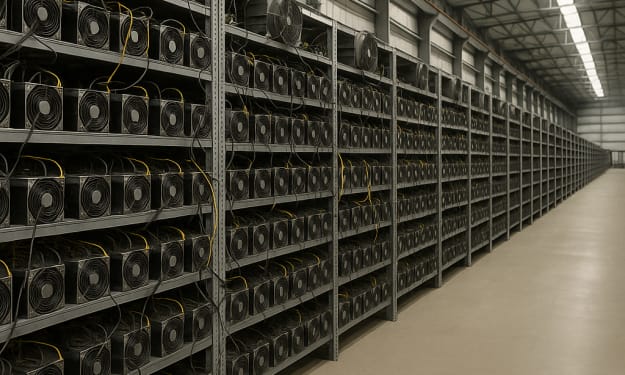
New coins are primarily generated through a process known as mining. This computationally intensive process involves powerful computers solving complex mathematical calculations to create new blocks. The first miner to solve the puzzle and validate the block is rewarded with newly minted cryptocurrency. This "Proof of Work" (PoW) system, employed by cryptocurrencies like Bitcoin and Litecoin, ensures the integrity of the network and the distribution of new coins. Mining requires significant computational power to solve mathematical problems and validate transactions, making it a competitive and energy-intensive endeavor.
There are two primary approaches to cryptocurrency mining:
Free Mining: Various platforms offer "free mining" opportunities through computers or mobile phones. However, these often provide limited long-term profits and can expose users to security risks, such as malware and scams.
Mining with Fees: A more effective approach is to join a mining pool, where miners combine their resources and share the profits. Mining pools leverage collective computational power to increase the chances of successfully mining blocks, resulting in more consistent and profitable outcomes.
Cryptocurrency and blockchain technology are rapidly evolving, constantly pushing the boundaries of innovation and potentially becoming integral to the global economy. While opportunities exist to acquire cryptocurrency through mining, airdrops, and other methods, it's essential to be acutely aware of the associated risks and prioritize security above all else. Before engaging with cryptocurrency, conduct thorough research, understand the underlying technology, and diversify your investments. Informed decision-making is paramount when navigating the complex and ever-changing world of cryptocurrency.
About the Creator
Naim Bin Masud Prottay
Storyteller of real lives, seeker of hidden truths. I capture real incidents and analyze current affairs with empathy and depth, weaving facts and emotions into narratives that make you think, feel, and see the world a little differently.
Keep reading
More stories from Naim Bin Masud Prottay and writers in The Chain and other communities.
The Nostalgia Effect
**The Nostalgia Effect: How Y2K and 90s Trends Are Shaping Today’s Pop Culture** Fashion is a time traveler. What was once considered outdated inevitably returns with fresh appeal, and today, nothing embodies that cyclical nature of trends quite like the Y2K and 90s revival. From chunky sneakers to butterfly clips, low-rise jeans to metallic aesthetics, the styles of the late 1990s and early 2000s have taken over once again. But why are we so drawn to these nostalgic looks, and how does this trend impact our daily lives and social media presence? Let’s dive into the resurgence of Y2K fashion and the deep cultural shifts it’s bringing along.
By Naim Bin Masud Prottay10 months ago in Styled
The Power Behind Bitcoin
Bitcoin borrowed a word that does not belong to it. Mining sounds physical. It carries an image of dirt, steel, and effort. It suggests men who work in tunnels and move rock by the ton. When the public hears it, they picture a job that leaves a body tired in a way that makes sense. None of that exists in a modern Bitcoin facility. What you find instead is a heat-filled building lined with machines made for only one purpose. Each machine is a miner. One miner equals one computer. Thousands of them sit in rows, running without rest. Once a person understands that a miner is not a human but a device that never sleeps, the scale becomes easier to grasp. These machines fire through guesses at high speed. Each one is trying to match the one valid answer the network will accept. The winning machine earns the reward. All other miners (computers) try again. The entire operation is a probability race powered by electricity.
By Dr. Mozelle Martin3 days ago in The Chain
How Smart Founders Validate Blockchain Ideas in 4 Weeks - Before Spending Millions
Founders don’t lose money on blockchain because the technology fails — they lose money because they validate too late. By the time many startups build a full platform, they discover the market doesn’t need decentralization, regulators require changes, or integration costs explode. A fast Proof of Concept (PoC) flips that risk model. Instead of committing six months and a large budget, founders can validate feasibility, scalability, and stakeholder adoption in four weeks.
By Nia Higgins7 days ago in The Chain



Comments
There are no comments for this story
Be the first to respond and start the conversation.