
Stock Trading - Entry 40
Did I drown or get my feet wet with Bitcoin second time around?


Earlier, I learned the hard way about guarding my tokens in a personalized wallet, or at least one I have control over. Other than maintaining control, why would I now try investing in Bitcoin again, but smartly? Bear in mind that in this article, I am expressing my thoughts and opinions as they pertain to yours truly and my situation. I am NOT dispensing financial advice.
First up, blockchain tokens are not recognized as legal tender in Canada, they are digital ASSETS, which can be bought and sold at different prices, meaning I could interpret their acquisition as an addition to my investment portfolio. Kinda like if I owned an apartment complex that was rented out. That said, in 2025 any gains on the sale of blockchain tokens are taxable in Canada!!! The big question for me, then, was what percent of my portfolio do I allocate to these digital assets?
They are super-risky, so I need to treat them as potential total losses. Right away I opted for less than 10%. Further to that, I figured I should do an initial investment and leave it at that. So that's what I did.
Why Bitcoin?
Well, let's take a look at how it stacks up (at as of the date of publishing this article) against my 13 questions (first outlined in entry 16).
1. Is "puzzle processing time" actually useless to the running of the blockchain?
Pretty much, I mean, it is a fiat blockchain, but miners will still need to keep doing their thing for the next while (29 halvings that take about four years each according to this article).
2. Has the "puzzle processing time" been converted into something useful for...well...anything outside of the blockchain?
Not really from what I gather.
3. How does the blockchain's use case (which has real-world/analogue applications) impact the general technology requirements of a node?
Miners pretty much need some hefty computer equipment now to do their thing. In fact, whole industries have sprung up to cater to making blockchain mining equipment.
4. What is the optimal supply limit for the blockchain and what happens when that is reached?
According to this article, the maximum supply of Bitcoin is 21 million and in 29 more halvings, they only way miners can be incentivized is to collect transaction fees. That's pretty far off, so I am going to do the rare thing (for me) and take the ostrich approach. I mean, there are way too many variables to consider and that is super far off. Plus, I do expect a lot of other things to happen so I don't think bitcoin will remain an asset (or currency) in a century.
5. What happens to tokens that are simply lost (like a penny falling into the ocean)?
They are lost forever, according to this article.

6. How is the blockchain structured from an economics/business standpoint?
The whole thing behind the Bitcoin blockchain was it decentralizing exchanges and having an irrefutable proof-of-ledger. When you buy a Bitcoin token, there is no doubt who owns it and you don't need anyone between you and the other person to transfer it. I mean, exchanges facilitate transfers a whole lot more, but I could easily transfer Bitcoin from my personal wallet to that of a neighbour, friend, store owner...directly. Plus, with a cap of 21 million tokens, that means inflation is effectively reduced to nil (except with what happens to question 5).
7. Can the parameters of the blockchain be changed after-the-fact?
According to this article, Bitcoin is transparent of its code and any changes made. Who can change it? Technically, anyone can propose a change. The question is, will it pass rigorous reviews by the wider developer community and be adopted by miners? (I smell the start of a great book series.)
BUT, being a blockchain, it can always be forked and turned into something else. Take Ethereum for example (based on this article*). Given what prompted the move from ETC (classic) to ETH (the new one) is the reason I refuse to invest in the Ethereum blockchain tokens directly for now.
8. What is or can be used to form/drive the value of the blockchain?
Hype, for sure. Links to other things, for sure. Adoption needs to fuel that, though. I have listened to a few podcasts including one featuring Raul Pal and I mention that one because it provided an interesting perspective. First, the blockchain sphere is so wild-west, it is difficult to predict much at the micro-level. Raul takes many steps back to do his analysis and has so far made attempts to link what happens in the bitcoin sphere with elements in the current financial system. Sure, one could argue he's grasping at straws with correlations, but it's a very interesting perspective nevertheless that leads into the next two questions.
9. Given the value drivers, how can the principal profiteers of a blockchain profit from the blockchain?
Anyone who can drive the value of Bitcoin tokens in the direction they want is a principal profiteer as I see it. For example, what if the larger investment companies that have ETFs and mutual funds allocated a paltry 1% in the blockchain sphere? That's many millions of dollars moved over. And that's only one player out there. Another is anyone with $200 who just wants to ride whatever waves come - and if MANY people do that...well.... Then there is the blockchain ecosystem and how others interact with Bitcoin, pushing value into its fiat use case.
Miners could all of a sudden just stop mining. Not sure why they'd do that any time soon given mining computers aren't too cheap, according to this article. Uh, wait, what about tariffs?

Then there are governments, who are becoming increasingly tied to it, with one in particular I mentioned in entry 23.
10. Who/what is the competition, if any?
Short- and long-term market analyses abound and are fairly lengthy. Even distilling those for the sake of this article is challenging, so I will say the following. How people interact to exchange things will always depend on value propositions, which requires at least a little trust. If you want to do away with the current financial system with a currency being the medium of exchange, not barter, then other options open up. Banks are toying with the notion of creating their own nonfungible tokens (NFTs), so what might that look like? How mortgages are competed could change, what "currency" you would see in your bank could change, what "currencies" would be involved when transferring between institutions could change, how life insurance policies work could change....
For me, I don't see an ecosystem shift big enough to do away with bitcoin as some kind of reserve currency that many have come to trust at least a bit. Opportunity to gain via investment is likely, but I am very leery for the long-term.
11. Which parties benefit from creating demand for computer hardware used in nodes? What are the intents of those parties?
See Question 3 (above). I am not sure how quickly that industry can pivot should the demand for Bitcoin mining equipment drop, but there is demand for mining equipment for a variety of blockchain tokens....
12. Would anything to do with the blockchain be worth regulating for the benefit of any party?
Regulators have been and are continuing to weigh in on it. Since a lot is being considered in many places, I will leave it to news monitoring on the subject for now.
13. Imagine the blockchain was a feat of social engineering (AKA grand scale manipulation). What would that hidden objective be?
My imagination can conjure up two things. One is to bypass the current financial system. To see this in action, go to Northern (Turkish) Cyprus and you will see what I mean what with all the cryptocurrency exchanges there. (I am even debating about writing about that based on a trip I went on there in September 2024.) Whether or not that has to do with so many Russians being there, I don't know.
The other is to spark the replacement of the current financial system. Bitcoin, being forkable, doesn't even need to survive such a change for this to happen. I guess it's one big experiment to get people to be explicit about what they trust as the basis of exchange.
Verdict for Me
With so many altcoins out there, it doesn't seem like anything else has the ability to garner a lot of attention and popularity in the wild-west-style that is the blockchain-sphere. Bitcoin seems like a good starting point, but not for a huge chunk of the amount I am willing to bet on blockchain tokens (this is something I will definitely review on an annual basis, at least).
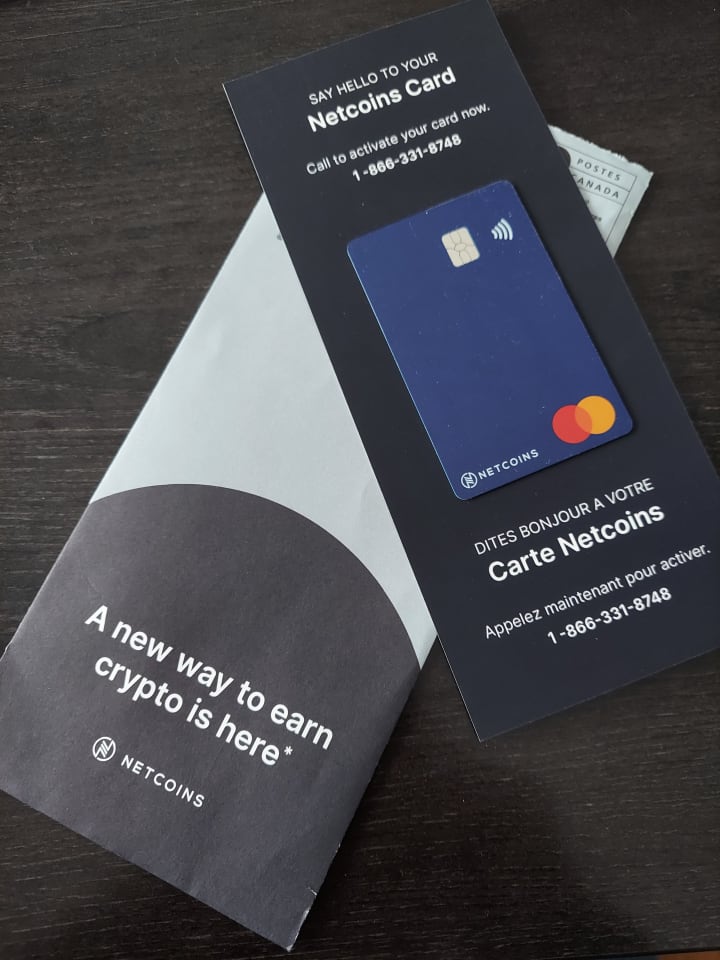
In terms of which exchange to use to store my Bitcoin tokens, I opted for Netcoins, simply because I could earn free bitcoin via a prepaid credit card and the trading fees were ok, so I may as well have those tokens in one basket. Will I put the bulk of my purchases on that card? Nope, just the rewards earned on charges I intentionally give away, like charity donations.
To find out what what I do or don't invest in next, subscribe for free below to become notified right when I publish those articles. Alternatively, you can bookmark this page that contains a list of all my entries in my stock and blockchain trading journey I publish on Vocal Media.
About the Creator
Richard Soulliere
Bursting with ideas, honing them to peek your interest.
Enjoyes blending non-fiction into whatever I am writing.
Keep reading
More stories from Richard Soulliere and writers in The Chain and other communities.
Stock Trading - Entry 38
In the romper room (AKA the blockchain sphere/ecosystem/wild west), I considered other blockchains to add to my portfolio. Note that I am not dispensing financial advise here. In this article, I outline what went through my mind based on my own situation to determine whether or not to invest in Cardano (token symbol ADA).
By Richard Soulliere11 months ago in The Chain
The Global Race to Regulate Stablecoins: How Countries Are Shaping the Future of Digital Currency
The rapid rise of stablecoins marks a pivotal moment in the evolution of global finance. These digital assets—pegged to the value of fiat currencies like the US dollar or the euro—offer the promise of fast, low-cost transactions without the volatility associated with other cryptocurrencies. However, with their growing popularity, stablecoins have also triggered a regulatory dilemma that governments around the world are now racing to address.
By Siddarth D7 days ago in The Chain
Crypto Coin: Architecture, Utility Models, and Market Dynamics Explained
The term Crypto coin refers to a native digital asset that operates on its own blockchain infrastructure, functioning as a medium of exchange, store of value, and programmable financial instrument. Unlike tokens that are deployed on existing chains, a Crypto coin underpins its network’s consensus, incentivization, and transaction validation layers. Understanding how a Crypto coin operates requires a multi-dimensional perspective that includes cryptographic security, economic design, governance structures, and regulatory implications.
By Siddarth D2 days ago in The Chain


Comments
There are no comments for this story
Be the first to respond and start the conversation.