
How to Mine Bitcoin: A Comprehensive Guide for Beginners
A step-by-step guide to understanding Bitcoin mining

In the ever-evolving landscape of digital currencies, Bitcoin remains the most prominent and widely recognized cryptocurrency. Its decentralized nature and finite supply have made it an attractive option for investors, technologists, and entrepreneurs alike. One of the foundational processes that support the Bitcoin network is mining. If you're curious about how to mine Bitcoin, this guide will walk you through the basics, the necessary equipment, and the risks and rewards involved in this complex yet fascinating activity.
What is Bitcoin Mining?
Before diving into how to mine Bitcoin, it's essential to understand what mining actually is. Bitcoin mining is the process through which new bitcoins are created and transactions are verified on the blockchain. Miners use powerful computers to solve complex mathematical puzzles. When a puzzle is solved, the miner gets to add a new block of transactions to the blockchain. As a reward, they receive newly minted bitcoins and transaction fees.
Mining is crucial for maintaining the integrity of the Bitcoin network. It ensures that transactions are legitimate and prevents the problem of double-spending—a scenario where the same Bitcoin could be spent more than once.
How to Mine Bitcoin: Step-by-Step
1. Understand the Basics
The first step in learning how to mine Bitcoin is to grasp the basic principles of blockchain technology and cryptographic hashing. Bitcoin operates on a decentralized ledger where all transactions are recorded. Mining involves solving a hash function that aligns with certain difficulty parameters. The first miner to solve the puzzle broadcasts it to the network, and if verified, earns the reward.
2. Choose Your Mining Hardware
In the early days, you could mine Bitcoin using a standard home computer. Today, due to increased difficulty and competition, specialized hardware is required. These devices are called ASICs (Application-Specific Integrated Circuits). They are designed specifically for mining and offer significantly more processing power than general-purpose hardware like CPUs or GPUs.
Popular ASICs include models from Bitmain (Antminer series) and MicroBT (WhatsMiner series). When selecting hardware, consider factors like hash rate (speed of mining), energy consumption, and initial cost.
3. Pick the Right Mining Software
Once you have your hardware, the next step in how to mine Bitcoin is to install mining software. This software connects your hardware to the Bitcoin network and allows you to control and monitor your mining activities.
Some popular Bitcoin mining software includes:
- CGMiner
- BFGMiner
- EasyMiner
- Awesome Miner
Most of these programs are compatible with different operating systems and provide a user-friendly interface for both novice and experienced miners.
4. Join a Mining Pool
Mining Bitcoin solo is extremely difficult and often unprofitable for individuals due to the competition and computational power required. A practical solution is to join a mining pool, which is a group of miners who combine their computing resources to increase the chances of earning rewards.
In a mining pool, the rewards are distributed among members according to the amount of computational power they contributed. Popular mining pools include F2Pool, Slush Pool, and Antpool.
5. Set Up a Bitcoin Wallet
If you’re serious about how to mine Bitcoin, you’ll need a secure place to store your earnings. A Bitcoin wallet allows you to send, receive, and store your bitcoins. There are several types of wallets:
Hardware wallets (e.g., Ledger, Trezor): Most secure.
Software wallets (e.g., Electrum, Exodus): Convenient and easy to use.
Mobile wallets: Good for on-the-go access.
Paper wallets: Physical storage of your keys; more secure from hacking, but riskier in terms of loss.
Make sure to back up your wallet and keep your private keys safe.
6. Monitor and Optimize
Once your mining setup is live, continuous monitoring is vital. Track metrics like temperature, hash rate, power consumption, and pool statistics to optimize performance. Tools like Hive OS and Minerstat offer detailed dashboards for analytics and remote control.
Costs and Profitability
A significant aspect of understanding how to mine Bitcoin is evaluating the cost versus potential rewards. Key factors include:
Electricity Costs: Mining hardware consumes a lot of power. The cost of electricity in your area can greatly impact profitability.
Hardware Investment: ASICs are expensive and become obsolete over time as more efficient models are released.
Maintenance: Mining rigs generate heat and require proper ventilation and regular maintenance.
Bitcoin Price Volatility: Your earnings are directly tied to the market price of Bitcoin, which is highly volatile.
To estimate your potential profits, use online mining calculators like those from CryptoCompare or NiceHash.
Is Mining Bitcoin Still Worth It?
While it's true that mining Bitcoin has become more competitive and resource-intensive, it can still be profitable under the right circumstances. Individuals with access to cheap electricity, bulk hardware deals, or renewable energy sources can find it worthwhile. Alternatively, some people participate in cloud mining, where they rent mining power from large data centers instead of managing physical hardware.
Final Thoughts
Learning how to mine Bitcoin is not just about setting up machines and waiting for rewards. It’s a technical, strategic, and sometimes risky endeavor that requires a solid understanding of blockchain technology, upfront investment, and ongoing attention to market conditions. Whether you’re exploring mining for profit, education, or to support the Bitcoin network, this process is an essential part of the cryptocurrency ecosystem.
By taking the time to learn and plan carefully, you can decide whether Bitcoin mining aligns with your goals—and perhaps carve out a niche in the world of decentralized finance.
About the Creator
Nabiha
Hey, I’m Nabiha, a crypto enthusiast with a passion for blockchain technology and digital assets. I love exploring market trends, analyzing price predictions, and staying ahead in the ever-evolving world of cryptocurrencies.
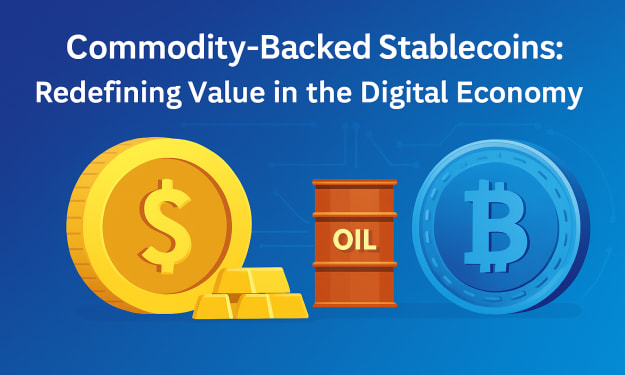
Commodity-Backed Stablecoins: Redefining Value in the Digital Economy
The cryptocurrency market has consistently evolved to address volatility, scalability, and trust. Among the innovations reshaping this ecosystem, commodity-backed stablecoins have emerged as a critical bridge between blockchain technology and traditional asset classes. Unlike purely algorithmic or fiat-backed models, these tokens derive value from tangible commodities such as gold, silver, oil, or even agricultural products. This asset-collateralized approach not only mitigates market instability but also offers institutional-grade trust for investors seeking transparency and sustainability in digital finance.
By Siddarth D6 days ago in The Chain
How Stablecoins Are Created: A Deep Dive Into The Future of Digital Finance
The evolution of digital finance is reshaping how we think about money, and at the heart of this revolution lies a seemingly simple yet incredibly powerful innovation: the stablecoin. Designed to offer the best of both worlds—blockchain’s speed and decentralization with the stability of traditional currencies—stablecoins are quickly becoming integral to both individual transactions and global financial systems. But how are these digital assets actually brought to life? What lies beneath their perceived simplicity? Let’s take a deep dive into how stablecoins are created, and what it takes to build a currency that must remain stable in a volatile digital world.
By Siddarth D6 days ago in The Chain



Comments (1)
Bitcoin mining is super interesting. Understanding the blockchain and hashing is key. I remember when regular computers could do it, but now ASICs are a must. It's amazing how it keeps the network secure. Do you think the future of Bitcoin mining lies in more efficient ASICs or new technologies altogether? The rewards and risks are important to consider. Earning new coins and fees sounds great, but the hardware costs and energy usage are significant. Have you ever thought about trying to mine Bitcoin? What stopped you if so?