
How IP Tokenization Development Services Are Transforming Music Industry Revenue Models
IP Tokenization in Music: A Practical Business Case for Development Services

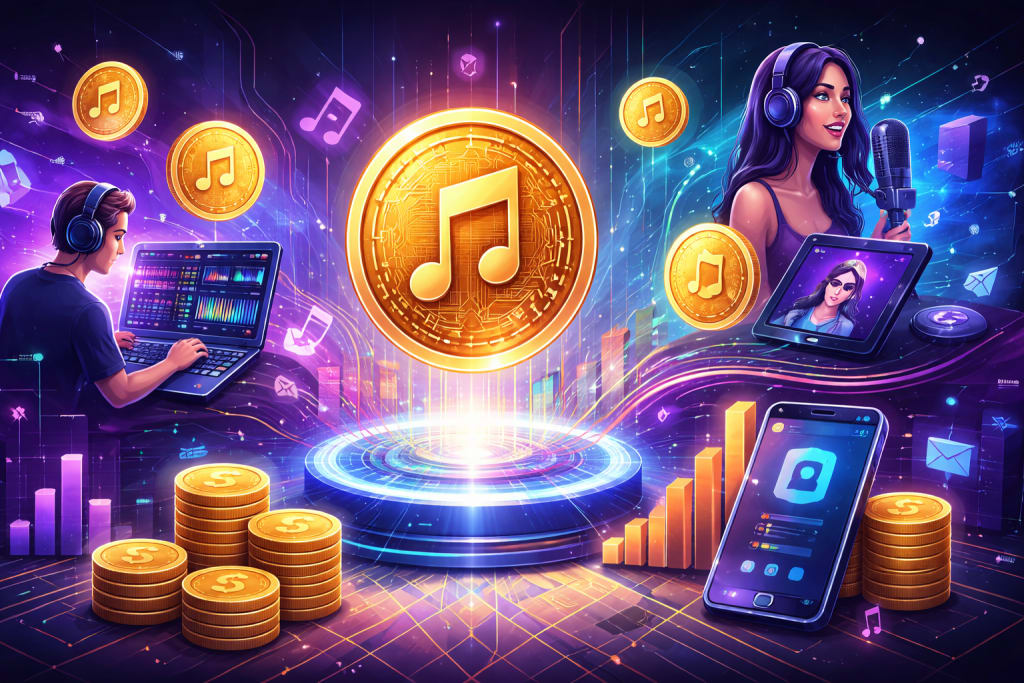
The music industry has always been shaped by innovations in technology and distribution. From vinyl to streaming, each technological shift has reconfigured how artists are discovered, how fans consume music, and how revenue is generated and shared. Yet despite the growth of digital distribution and global audiences, many music creators still face systemic challenges: unequal revenue splits, delayed royalty payments, lack of transparency, and limited access to monetization streams beyond traditional licensing structures. The advent of blockchain and the rise of intellectual property (IP) tokenization are now enabling an unprecedented transformation of music industry revenue models, introducing new ways to own, trade, and earn from music rights.
IP tokenization refers to the process of representing ownership or economic rights of intellectual property—such as music catalogs, sound recordings, publishing rights, or performance royalties—as digital tokens on a blockchain. By converting intangible assets into tokenized units that can be traded, managed, and governed using distributed ledger technologies, the music industry is beginning to shift from centralized, opaque systems toward more transparent, inclusive, and automated revenue ecosystems. Tokenization does not simply introduce a new technology layer; it reimagines the economic architecture of music rights, opening possibilities for fractional ownership, direct fan engagement, real-time royalty distribution, and new investment channels.
To understand the full implications of IP tokenization development services for music industry revenue models, it is important to explore how tokenization works, why it addresses long-standing structural issues, what new revenue pathways it creates, and what challenges and considerations remain as the ecosystem evolves.
What IP Tokenization Means for Music
At its core, tokenization involves creating digital representations—or tokens—that correspond to defined rights associated with a specific piece of music or catalog. These rights could include:
- Publishing rights (the right to earn when a composition is performed, broadcast, or reproduced),
- Master recording rights (earnings from actual sound recordings),
- Performance royalties (fees collected when music is publicly performed),
- Mechanical royalties (fees from reproducing music on digital or physical media),
- Synchronization licenses (use of music in films, ads, media),
- Future revenue streams tied to streaming or licensing.
Each token represents a share of economic interest in the defined rights. For example, an artist or rights owner could tokenize 10% of a song’s publishing rights and offer that stake as tradable tokens on a blockchain marketplace. Investors, fans, or industry participants could then acquire tokens and earn proportional revenue when royalties are distributed.
Unlike traditional rights management that often involves intermediaries (labels, collection societies, distributors, administrators), tokens can operate within a blockchain environment where ownership, transfer history, and revenue distribution are transparent, automated, and governed by programmable logic.
Blockchain as the Technological Foundation
Blockchain technology underpins IP tokenization. A distributed ledger records token ownership and transactions immutably, enabling participants to verify provenance and transactional history without centralized trust intermediaries. Smart contracts—self-executing code deployed on blockchain networks—can automate revenue distribution, governance rules, royalty splits, and compliance checks based on predefined terms.
Several properties of blockchain are especially relevant for music rights:
- Immutable recording of ownership and transactions minimizes disputes over who owns what.
- Programmable monetization logic enables revenue to flow directly to token holders based on automated triggers (e.g., streaming data reporting).
- Fractional ownership lets creators and investors divide rights into smaller units, broadening access and participation.
- Global accessibility allows rights and revenue flows to cross borders without reliance on legacy settlement systems.
The combination of tokenization mechanisms with blockchain’s core attributes positions a new infrastructure layer that disrupts legacy revenue models and opens alternative pathways for creators and stakeholders.
Traditional Revenue Challenges in the Music Industry
Before examining how tokenization is reforming revenue models, it is essential to understand the structural challenges that have persisted in the music ecosystem:
1. Opaque Royalty Chains
Music royalties flow through complex webs of rights organizations, collection societies, publishers, labels, and distributors. Determining who should be paid, how much, and when often requires reconciliation across multiple databases, leading to delays, errors, and disputes.
2. Delayed Payments
Rights holders can wait months before receiving royalty payments due to batching, processing, and reporting cycles. Smaller rights owners often lack transparency into where their earnings originate.
3. Concentrated Revenue Shares
Traditional contracts often allocate significant percentages of revenue to intermediaries. Emerging artists without bargaining power may receive a fraction of the actual revenue generated by their work.
4. Limited Monetization Options
For many creators, the primary revenue channels remain streaming royalties and licensing deals. While lucrative at scale, these pathways often provide little flexibility or immediate earnings for artists early in their careers.
Tokenization as a Solution to Structural Inefficiencies
IP tokenization addresses many of the structural inefficiencies inherent in traditional music revenue models. Key transformative effects include:
Fractional and Inclusive Ownership
Tokenization enables fractional ownership of rights, meaning that a song’s publishing or master rights can be divided into thousands or millions of tokens. This allows:
- Artists to retain partial control while monetizing a portion of future revenue streams.
- Investors or fans to participate financially in a song’s success without purchasing entire catalogs.
- Creation of broader investment pools for emerging or niche artists.
Fractional ownership thus democratizes access to music rights investment, similar to how stock shares allow broader participation in corporate ownership.
Real-Time and Automated Royalty Distribution
Smart contracts can be programmed to distribute royalties automatically based on predefined triggers. Streaming platforms or data providers can feed usage data into the blockchain, and smart contracts can execute proportional payouts to token holders without manual processing.
This changes the revenue timeline:
- Instead of quarterly or biannual royalty checks,
- Revenue can flow more continuously, with transparency into who is paid and how much.
Real-time distribution reduces administrative overhead, minimizes disputes, and improves cash flow predictability for rights holders.
Transparency and Traceability
Blockchain’s ledger provides a permanent, tamper-resistant record of ownership, transfers, and revenue distribution. This transparency reduces disputes over attribution and verifies that revenue is sent to rightful owners.
This is especially useful in cross-border licensing and usage reporting, where multiple stakeholders often need synchronized records to reconcile payments.
New Funding and Investment Models
Tokenization creates investment vehicles tied to future revenue streams. For example:
- A catalog owner could tokenize a portion of royalty rights to fund new projects.
- Fans could collectively invest in an artist’s upcoming album in exchange for revenue participation.
- Institutional investors could allocate capital to diversified tokenized music rights portfolios.
These models blur the line between music as cultural expression and music as investable financial assets. They expand capital flow into creative production without traditional debt financing or label advances.
Enhanced Fan Engagement
Tokenization enables direct economic participation from fans. Fans who hold tokens tied to a song or artist can share in revenue, creating deeper financial and emotional connection. Creators can design token-based membership tiers, exclusive rights, or fan loyalty rewards tied to token ownership.
This engagement model aligns incentives: fans increase listening and promotion because they share in financial outcomes.
New Revenue Models Enabled by IP Tokenization
IP tokenization development services are not just digitizing existing revenue flows; they are enabling entirely new models:
1. Revenue Sharing Tokens
Revenue sharing tokens distribute streaming or licensing revenue to token holders. Instead of traditional royalty cheques, holders receive proportional payouts directly through blockchain mechanisms. This creates liquidity and transferability for ongoing revenue streams.
Revenue sharing can be structured to reflect:
- A percentage of future royalties,
- Fixed income distributions,
- Tiered payment rights depending on token class.
2. Tokenized Advance Funding
Artists can tokenize future revenue to raise capital upfront. Instead of signing label advance deals, an artist could issue tokens backed by projected earnings. Investors or fans can purchase these tokens in exchange for future revenue share.
This model aligns artist incentives with investor interests and provides an alternative to debt-based or opaque label financing.
3. Secondary Markets for Music Rights
Tokenized music rights can be traded on blockchain-enabled exchanges. A music catalog token purchased today can be sold to another investor tomorrow, introducing liquidity to an asset class that was previously illiquid. Secondary markets enable price discovery, portfolio diversification for investors, and dynamic allocation of capital into music rights.
Over time, secondary market activity could create benchmark pricing for catalogs, similar to traditional financial markets.
4. Token-Enabled Licensing and Sync Deals
Smart contracts can automate licensing terms for synchronization (use in film, TV, ads). Instead of negotiating rights through intermediaries, creators can list tokenized licenses that automatically execute when usage conditions are met, with revenue distributing to token holders.
This reduces friction in licensing and accelerates access to opportunities for smaller creators.
Case Examples (Conceptual)
While caution is necessary to avoid endorsing specific products or services, conceptual examples illustrate how tokenization can change revenue flows:
- Example A: An artist tokenizes 20% of their publishing rights for $500,000 worth of tokens. Token holders receive proportional revenue based on streaming and licensing receipts. The artist retains the remaining 80% and uses upfront capital for production and promotion.
- Example B: A legacy catalog owner tokenizes royalty streams into a diversified set of tokens. Investors purchase these tokens, creating liquidity and enabling the owner to reinvest in new ventures.
- Example C: A fan community collectively purchases tokens tied to a breakout artist’s upcoming album. Fans earn revenue based on album performance and participate in governance decisions about future releases.
These scenarios highlight tokenization’s capacity to create flexible financial arrangements that align contributors, fans, and investors.
Ongoing Challenges and Considerations
While tokenization holds transformative potential, it also raises important challenges:
Regulatory Complexity
Music rights are tied to legal structures that vary across jurisdictions. Tokenizing rights requires careful legal alignment with copyright, securities, and licensing laws. Some tokens may be treated as securities, triggering compliance requirements. Clear regulatory frameworks are still evolving in many markets.
Investors and creators must understand:
- Whether tokenized rights are considered securities,
- How royalties are taxed,
- How rights transfers are recognized legally.
Data Integration and Standards
Automated royalty distribution depends on reliable usage data. Standardizing reporting from streaming platforms, broadcasters, and performance rights organizations into blockchain-friendly formats remains a technical and cooperative challenge.
Effective tokenization ecosystems require interoperable data standards and integration protocols.
Valuation Uncertainty
Tokenized music rights introduce new valuation challenges. Pricing tokens requires forecasting future revenue, which can be speculative. Valuation models for catalog tokens may vary widely, and secondary market prices may fluctuate based on sentiment rather than fundamentals.
Participants must be cautious of volatility and speculative behavior in early markets.
Platform Trust and Custody
Rights tokenization platforms must ensure secure custody of rights documentation and accurate linkage between tokens and legal claims. Investors must assess platform credibility, audit practices, and dispute resolution mechanisms.
Ensuring that ownership recorded on blockchain aligns with legal rights verified by courts and rights organizations is essential.
The Path Forward
The transformation of music industry revenue models through IP tokenization is not instantaneous. It requires collaboration between artists, rights organizations, technologists, regulators, and fans. Progress is being made on multiple fronts:
- Early pilot projects have demonstrated tokenized royalty flows,
- Standards for rights data are advancing,
- Regulatory frameworks are beginning to recognize tokenized assets,
- Secondary markets are emerging for digital rights trading.
As tokenization infrastructure matures, it is likely that music revenue systems will become more transparent, equitable, and efficient. The adoption curve will vary across regions and genres, but the underlying trend points toward decentralization, automation, and broader participation.
Conclusion
IP tokenization development services are redefining how value flows within the music industry. By converting rights into digital tokens governed by blockchain protocols, creators, investors, and fans gain access to fractional ownership, transparent revenue distribution, and new monetization pathways. Tokenization addresses long-standing structural challenges—opaque royalty chains, delayed payments, limited investment access—and introduces revenue models driven by automation, global access, and financial innovation.
While significant legal, technical, and market challenges remain, the emergence of music IP tokenization marks a pivotal shift in the economics of creative work. As the ecosystem evolves, music revenue may become not only a function of artistic success but also a participatory financial system where value is shared, traded, and co-created by a distributed network of stakeholders.
About the Creator
Gabrielle
Blockchain enthusiast and NFT writer dedicated to merging technology with art on decentralized platforms, driving innovation for a creative future. Embracing the potential of digital expression.
Ethereum Mining: What It Was, Why It Ended, and What to Do Now
Introduction Ethereum mining was once one of the most popular ways Americans earned crypto. From home GPU rigs to large mining farms, thousands of people across the U.S. mined Ethereum as a side hustle, a business, or a long-term bet on crypto.
By saif ullah8 days ago in The Chain
Why Are Leading B2B Enterprises Investing in White-Label Crypto Wallets?
The way B2B enterprises manage value is changing fast. Digital assets are no longer just a playground for retail investors or crypto-native startups. Today, large enterprises are stepping into the blockchain space with one clear goal: control. At the center of this shift are white-label crypto wallets, quietly becoming the backbone of enterprise crypto operations.
By Matthew Haws2 days ago in The Chain


Comments
There are no comments for this story
Be the first to respond and start the conversation.