
Ethereum Mining: What It Was, Why It Ended, and What to Do Now
The Truth About Ethereum Mining for Crypto Users in the U.S.


Introduction

Ethereum mining was once one of the most popular ways Americans earned crypto. From home GPU rigs to large mining farms, thousands of people across the U.S. mined Ethereum as a side hustle, a business, or a long-term bet on crypto.
Today, many people are confused. You still see searches, videos, and apps claiming to teach ethereum mining, yet others say it’s “dead.” So what’s the truth?
Here’s the reality: Ethereum mining existed, it mattered, and it ended. But understanding how it worked—and what replaced it—is still important for crypto investors, traders, and wallet users.
This guide explains Ethereum mining in plain English: how it worked, why it stopped, what happened to miners, and what smart crypto users do instead today.
What Was Ethereum Mining?
Ethereum mining was the process of securing the Ethereum blockchain using Proof of Work (PoW).
Miners:
Used powerful GPUs
Solved cryptographic puzzles
Verified transactions
Earned ETH rewards
This system ensured security and decentralization but required large amounts of electricity and hardware.
Mining wasn’t passive. It required:
Hardware setup
Cooling
Power management
Constant monitoring
How Ethereum Mining Worked (Before 2022)
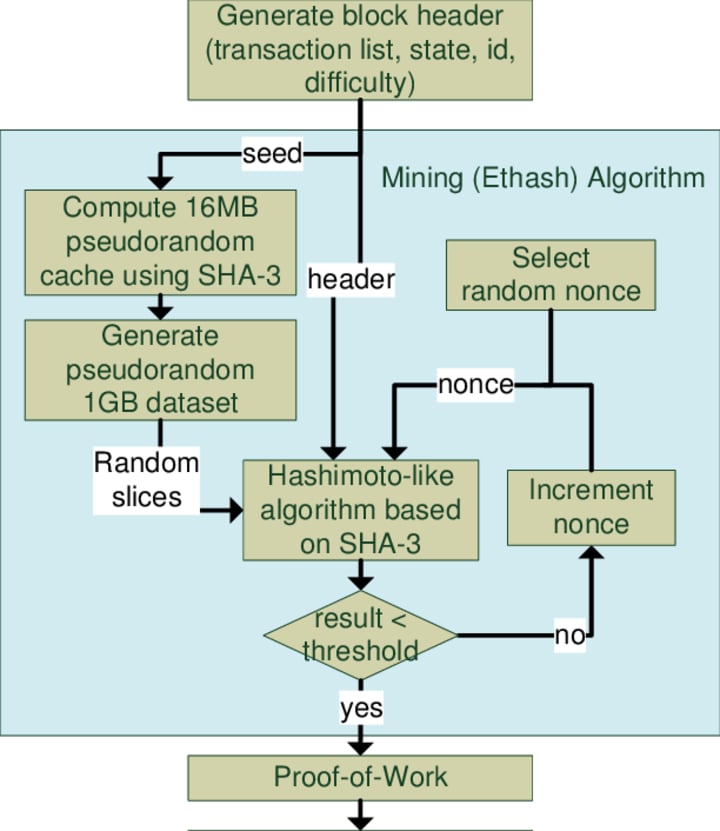
Step-by-step:
Build or buy a GPU mining rig
Install mining software
Join a mining pool
Validate transactions
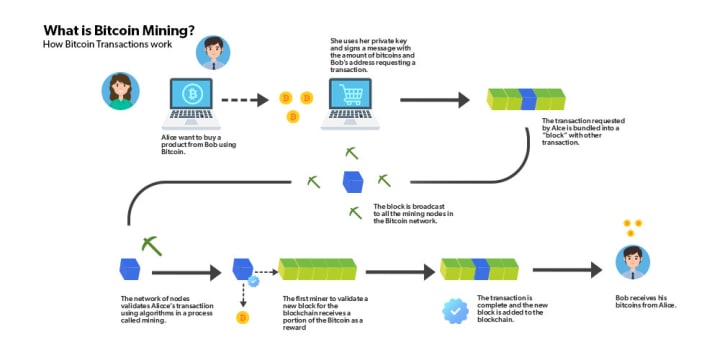
Earn ETH rewards
Send ETH to a wallet
Why mining pools mattered
Solo mining was unpredictable. Pools gave miners steady payouts, making them the preferred option.
Why Ethereum Mining Was So Popular in the U.S.
Ethereum mining exploded in America because:
GPUs were widely available
Electricity was relatively affordable in some states
Tech communities were strong
Crypto adoption grew rapidly
Many U.S. miners treated it like:
A side hustle
A small business
A long-term crypto accumulation strategy
The Merge: When Ethereum Mining Ended

Ethereum mining officially ended on September 15, 2022.
This event was called The Merge.
Ethereum switched from:
Proof of Work (mining)
to
Proof of Stake (staking)
What changed instantly:
Mining stopped
GPU rigs no longer earned ETH
Validators replaced miners
Energy usage dropped by over 99%
Ethereum can no longer be mined.
Why Ethereum Ended Mining
Ethereum developers made this decision for long-term survival.
Key reasons:
Massive energy reduction
Better scalability
Easier future upgrades
Environmental pressure
Improved network efficiency
Mining was secure—but not sustainable at Ethereum’s scale.
Can You Still Mine Ethereum Today?
Short answer: No.
If someone claims:
“Mine ETH on your phone”
“Cloud mine Ethereum”
“ETH mining app 2026”
⚠️ Be careful. These are often misleading or outright scams.
What Happened to Ethereum Miners?
When mining ended, U.S. miners adapted quickly.
Common paths:
Switched to Ethereum Classic (ETC)
Mined Ravencoin (RVN)
Sold GPUs
Repurposed rigs for AI or rendering
Transitioned to Ethereum staking
Ethereum Staking: The Replacement for Mining
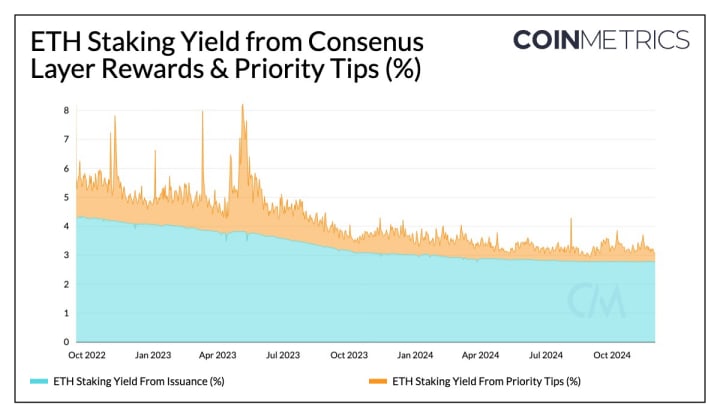
Ethereum now uses staking instead of mining.
How staking works:
Lock ETH into the network
Help validate transactions
Earn rewards
To run your own validator:
You need 32 ETH
Most users stake through:
Staking pools
Wallet integrations
Centralized platforms
Ethereum Mining vs Ethereum Staking
Feature Mining (Old) Staking (Now)
Hardware GPUs None
Energy use Very high Very low
Technical skill High Low
Noise & heat Yes No
Accessibility Limited Broad
Wallets and ETH Rewards (Then vs Now)
Mining taught users self-custody early.
Today:
Stakers still use wallets
Private key security matters more than ever
Cold wallets remain best for long-term holding
Whether mining or staking, wallet security is non-negotiable.
Common Ethereum Mining Scams to Avoid

Red flags:
Guaranteed daily returns
“Mine ETH without hardware”
No verifiable company
Pressure tactics
If it sounds easy and risk-free—it’s not real.
Is Ethereum Still Worth Participating In?
Yes—but not through mining.
Ethereum remains:
The top smart-contract platform
The foundation of DeFi and NFTs
A core part of Web3
Participation today happens via:
Staking
Trading
Building apps
Investing
Quick Takeaways
Ethereum mining ended in 2022
Mining is no longer possible on Ethereum
Proof of Stake replaced Proof of Work
Staking is the new way to earn ETH
GPU miners migrated or exited
Wallet security still matters
Beware of fake mining offers
Conclusion
Ethereum mining played a huge role in crypto history—especially in the United States. It helped bootstrap one of the most important blockchain networks in the world.
But Ethereum evolved.
Mining is over. Staking is now the foundation. This shift made Ethereum more efficient, sustainable, and scalable for the future.
If you’re searching for ethereum mining today, the real question isn’t “How do I mine ETH?”
It’s “How do I participate in Ethereum smartly now?”
And the answer depends on your goals: investor, trader, or builder.
FAQs
1. Can Ethereum be mined in 2026?
No. Ethereum mining permanently ended in 2022.
2. Why did Ethereum stop mining?
To reduce energy use and improve scalability.
3. Is Ethereum Classic still mineable?
Yes, ETC still uses Proof of Work.
4. Is staking safer than mining?
It has lower operational risk but market risk still exists.
5. Do I need a wallet for staking?
Yes. A secure wallet is essential.
🇺🇸 Engagement Question
Did you ever mine Ethereum—or did you miss the chance?
👉 Share this article with someone who still thinks Ethereum can be mined.
About the Creator
saif ullah
Content writer on different niches, specially on finance.
Keep reading
More stories from saif ullah and writers in The Chain and other communities.
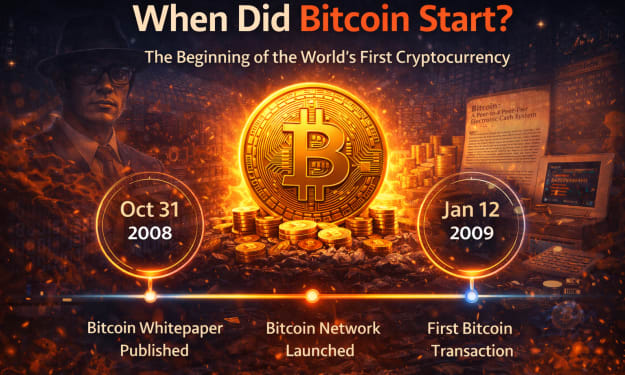
When Did Bitcoin Start? A Simple History of Bitcoin’s Beginning
Introduction Many people use Bitcoin today, but few know exactly when Bitcoin started and how quietly its journey began. Bitcoin did not launch with hype, investors, or advertisements. Instead, it emerged during a time of global financial uncertainty, offering a new idea: money without banks.
By saif ullah4 days ago in The Chain
Token Launch Strategies That Align With 2026 Market Expectations
The token launch landscape entering 2026 looks fundamentally different from the speculative cycles that defined earlier crypto eras. Market participants are no longer chasing short-term hype alone. Capital allocators, exchanges, regulators, and even retail users increasingly demand demonstrable product traction, governance clarity, compliance readiness, and sustainable economics. The collapse of several high-profile token launches during the 2022–2024 downturn exposed weaknesses in poorly structured tokenomics, inflated valuations, and superficial community building. In response, the market has matured.
By Jennifer Atkinson4 days ago in The Chain
Silence, Patterns, and Power: How Tom Bower Changed the Royal Conversation
For months, the royal conversation rippled with speculation. Claims multiplied, narratives twisted, and every whisper seemed to point back to the same names. But one man whose voice normally thundered across royal reporting said nothing—Tom Bower. Known for investigative aggression and fearless conclusions, Bower’s silence didn’t just feel unusual. It felt intentional. Observers noticed. Commentators asked where he’d gone. Why wasn’t he weighing in? And then came the realization: Tom Bower doesn’t react to noise. He studies the echo. While tabloids flung accusations and social media threads tied Meghan Markle to every flare-up inside the monarchy, Bower remained quiet. That wasn’t restraint—it was strategy. Bower had no interest in arguing rumor versus fact. His method relies on something far more revealing than gossip: institutional behavior. Silence as Data Where others saw unanswered questions, Bower saw an unfolding pattern. Inside Buckingham Palace, silence isn’t absence. It is a coded response. A pause. A calculation. A decision about what is worth engaging—and what is safer to ignore. Bower wasn’t analyzing the scandal itself; he was analyzing how the palace reacted to the scandal. Which stories were swatted away within hours? Which claims lingered unchallenged for months? Which headlines forced quiet restructuring behind closed doors? To Bower, these reactions told the real story—one about stress fractures and shifting roles inside the monarchy. The Meghan Variable What emerged from his study wasn’t accusation, but recurrence. Meghan Markle wasn’t presented as the source of crises—but as the constant in the room each time turbulence hit. Not triggering explosions, but always standing close enough for the shockwaves to force recalibration. This interpretation damaged no reputations legally—but it reshaped perception. Institutions don’t need villains. They react to pressure, not personalities. And by simply existing at the center of modern royal controversy—interviews, lawsuits, streaming projects, fractured family ties—Meghan represented unpredictability. In royal systems built on predictability, unpredictability reshapes behavior. The Palace Logic Palace advisers work from a simple, centuries-old rulebook: Threats to the Crown’s function are addressed Threats to the Crown’s image are absorbed You don’t fight every rumor—especially when fighting validates the rumor. Sometimes silence is not weakness but defense. To the public, silence feels mysterious. To the institution, silence is strategy. Harry’s Blind Spot Prince Harry’s story complicates this further. For him, silence meant abandonment. Lack of response confirmed neglect rather than restraint. Harry believed discussion was the solution, that acknowledgment could heal wounds. But the monarchy is not designed for emotional transparency. It is designed to outlast individuals, moods, and moments. And so, what looked like indifference to Harry was—according to Bower—calculated caution. When Bower Finally Spoke By the time Tom Bower broke silence, the ground had already shifted. Public trust in royal messaging had cracked. Media fatigue had set in. Sympathy moved from one side to another, then back again. Bower offered no new allegations. He offered explanation. He spoke about patterns—how silence itself becomes a reaction, how institutions prioritize stability over fairness, and how recurring storms force systems to distance rather than confront. His words reframed everything. Suddenly, the debate wasn’t: “Is this rumor true?” The question became: “Why does the palace treat this rumor differently?” That reframing turned speculation into a study of power. The Impact of Insight From the palace’s viewpoint, Bower’s words required no response—and they gave none. Engagement would elevate. Silence would deflate. For Meghan and Harry, the shift was subtle but significant. It challenged the narrative that ignoring them meant irrelevance or denial. Instead, it suggested strategic containment. The media world, weary of royal upheaval, reacted differently. Producers didn’t panic—they paused. Not because Bower exposed wrongdoing, but because he illuminated the operating system behind the monarchy’s reactions. And once a system is visible, it is harder to ignore. The Conversation Evolves Tom Bower didn’t break silence to drop bombs. He broke silence to show how bombs are diffused—even when no explosion is heard. His intervention changed nothing on paper: No policies, no statements, no public apologies. Yet it changed everything in perception. He taught audiences to stop listening only to what is said—and start studying what is left unsaid. And in the end, that insight may be more disruptive than any accusation. Because once silence stops looking accidental and starts looking deliberate, distance becomes clarity— and the story begins to write itself.
By Behind the Curtain7 days ago in The Chain



Comments
There are no comments for this story
Be the first to respond and start the conversation.