
From Tangible to Tokenized: How Real Assets Are Being Digitized with Blockchain
Explore the rise of tokenization, blockchain infrastructure, real-world use cases, and what this shift means for the future of global finance.

The world of finance is undergoing a digital renaissance. While cryptocurrencies initially captured attention, the true evolution is now happening in the domain of real-world asset (RWA) tokenization. This process transforms tangible assets—like real estate, art, commodities, and private equity—into digital tokens secured by blockchain technology. It’s a shift that’s not only revolutionizing traditional finance but also democratizing access to markets once reserved for institutional giants.
This blog explores how tangible assets are getting tokenized, the technology behind it, its real-world applications, and why businesses, investors, and regulators are now paying close attention.
What Is Real Asset Tokenization?
At its core, tokenization refers to the process of converting ownership rights in a real-world asset into a digital token on a blockchain. These tokens can then be bought, sold, and traded just like cryptocurrencies—except they’re backed by something tangible.
Unlike traditional digital records, blockchain-based tokens are immutable, programmable, and easily transferable, making them ideal for capturing and exchanging value with transparency and trust. With the help of smart contracts, tokenized assets can automate dividends, enforce compliance, and streamline record-keeping—all in real time.
The Infrastructure Behind Tokenized Assets
The digitization of real assets isn’t just about turning a house or gold bar into a JPEG or digital file. It requires a sophisticated combination of technologies and legal structures. Blockchain provides the base layer for decentralization and security. Smart contracts, typically built on Ethereum or other scalable networks like Polygon or Avalanche, act as the logic layer that governs how tokens behave.
Moreover, oracles are used to feed real-world data into these systems, such as property valuations or commodity prices. Legal wrappers—like Special Purpose Vehicles (SPVs)—are often set up to bridge the gap between real-world ownership and on-chain representation, ensuring the token reflects actual rights or entitlements.
This infrastructure enables a digital token to be more than a representation—it becomes a legally enforceable, tradeable unit of value.
Why Tokenize Real-World Assets?
One of the most compelling reasons to tokenize tangible assets is liquidity. Traditionally, real estate, fine art, and private equity stakes are considered illiquid because they take time and effort to sell. By contrast, tokenized assets can be traded instantly on blockchain-based marketplaces or secondary exchanges.
Tokenization also brings fractional ownership into the picture. An investor no longer needs to buy an entire $1 million property but can instead purchase a $1,000 token representing a share in that property. This drastically lowers the barrier to entry, opening the door for retail investors to participate in markets previously reserved for institutional investors.
Other advantages include transparency, 24/7 market access, automated compliance, and faster settlement times, which can reduce transaction costs and enhance investor confidence.
Real-World Use Cases: From Real Estate to Renewable Energy
The practical applications of RWA tokenization are already playing out across industries. In real estate, projects like RealT and Lofty.ai allow investors to buy tokenized shares of income-generating properties, receive rent payments in stablecoins, and sell their tokens on secondary markets.
In commodities, companies are tokenizing gold and silver, providing a blockchain-native way to gain exposure to precious metals without storage and security concerns. Examples include Paxos Gold (PAXG) and Tether Gold (XAUT), both of which are fully backed by physical gold reserves.
Art is another frontier. Tokenization platforms now allow collectors to purchase fractional shares in high-value paintings, sculptures, or NFTs linked to physical pieces. This has given rise to a new category of art investing that merges creativity with blockchain finance.
Energy is emerging as a surprising player. Renewable energy companies are experimenting with tokenizing solar panels or kilowatt-hours of power to allow community-driven energy production and investment.
Even private equity and debt instruments are being transformed. Tokenized funds and bonds are letting investors access previously illiquid, opaque markets with newfound transparency and liquidity.
How Regulation Is Catching Up
As the adoption of tokenized real assets grows, so does regulatory scrutiny. One of the most significant challenges in this space has been ensuring that digital tokens comply with securities laws, anti-money laundering (AML) policies, and know-your-customer (KYC) requirements.
In the United States, the SEC has made it clear that most tokenized assets fall under the category of securities and must be issued in compliance with existing financial laws. Meanwhile, the European Union’s MiCA (Markets in Crypto-Assets Regulation) framework aims to create standardized rules for token issuance and trading across member states.
Progressive jurisdictions such as Switzerland, Singapore, and the UAE have become hubs for asset tokenization by offering regulatory sandboxes and clearer legal guidelines. These regulatory frameworks ensure investor protection while encouraging innovation, creating a more predictable environment for entrepreneurs and institutions alike.
Challenges That Still Remain
Despite the enormous potential, tokenization is not without hurdles. Legal ambiguity, especially in cross-border transactions, can make it difficult to enforce rights attached to digital tokens. There’s also the challenge of integrating off-chain data—like physical ownership documents or appraisal reports—into decentralized systems without compromising data integrity.
Scalability and interoperability are technical concerns. With dozens of blockchain protocols in existence, it’s vital for tokenized assets to work across platforms, wallets, and exchanges to maintain utility and liquidity.
Moreover, the success of tokenized assets hinges on market acceptance. Institutional adoption is steadily growing, but retail investor education, UI/UX improvements, and real-world success stories are essential to drive mainstream use.
Institutions Are Taking Notice
The tide is turning. Major financial institutions and asset managers are entering the RWA space. BlackRock, Franklin Templeton, and Hamilton Lane have either piloted or launched tokenized funds. JP Morgan has been experimenting with Onyx, a blockchain-based platform for tokenized financial instruments
Even central banks are exploring tokenized bonds and CBDC interoperability to modernize sovereign debt issuance. These moves signal not just curiosity—but conviction that tokenization will become an essential component of global finance.
Meanwhile, Web3-native companies are developing decentralized marketplaces, liquidity pools, and lending protocols designed specifically for tokenized RWAs, merging the worlds of DeFi and traditional finance.
What This Means for the Future of Finance
Tokenizing tangible assets represents more than just digitizing certificates—it symbolizes a complete rethinking of ownership, investment, and access. By making real assets programmable and accessible via blockchain, we’re building the foundation for a more open, transparent, and efficient financial system.
In the near future, it's entirely plausible that your investment portfolio will contain fractional shares in a tokenized condo in New York, a Picasso painting, some gold stored in Switzerland, and a stake in a renewable energy project in Africa—all managed from a decentralized wallet on your phone.
This vision isn’t decades away—it’s unfolding right now.
Final Thoughts
The transition from tangible to tokenized assets is one of the most exciting shifts in the digital economy. It blurs the line between physical and digital, legacy and innovation, retail and institutional. And while challenges remain, the momentum is undeniable.
As blockchain infrastructure matures and regulatory clarity improves, tokenized assets will become the new standard for investing, fundraising, and ownership. Whether you're an investor, developer, institution, or policymaker, understanding this transformation is no longer optional—it’s essential.
The future of finance is tokenized. And it starts by turning the tangible into something that can move at the speed of the internet.
About the Creator
Keep reading
More stories from Lily Arthur and writers in The Chain and other communities.
Which Blockchain is Best for Tokenized Assets? Public vs. Private Blockchain
Blockchain technology plays a pivotal role in the rise of tokenized assets. By providing a decentralized, secure, and transparent ledger, blockchain ensures the integrity and immutability of tokenized assets. Whether through public or private blockchains, it enables fractional ownership, reduces transaction costs, and enhances asset liquidity. The technology allows digital assets to be tracked and transferred efficiently, fostering trust in asset transactions across various industries like real estate, art, and finance. This innovation has the potential to transform traditional asset management models into more accessible and streamlined processes.
By Lily Arthur7 months ago in The Chain
How Stablecoins Are Created: A Deep Dive Into The Future of Digital Finance
The evolution of digital finance is reshaping how we think about money, and at the heart of this revolution lies a seemingly simple yet incredibly powerful innovation: the stablecoin. Designed to offer the best of both worlds—blockchain’s speed and decentralization with the stability of traditional currencies—stablecoins are quickly becoming integral to both individual transactions and global financial systems. But how are these digital assets actually brought to life? What lies beneath their perceived simplicity? Let’s take a deep dive into how stablecoins are created, and what it takes to build a currency that must remain stable in a volatile digital world.
By Siddarth D5 days ago in The Chain
The Power Behind Bitcoin
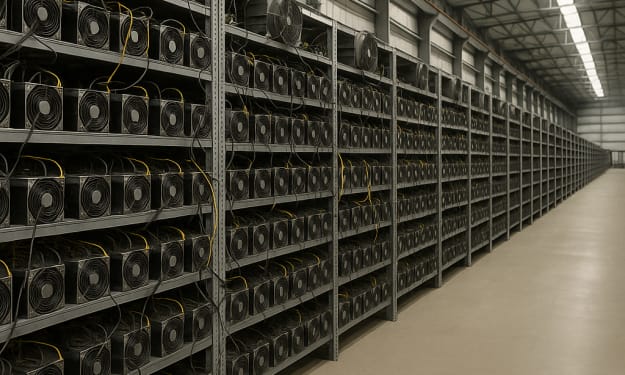
Bitcoin borrowed a word that does not belong to it. Mining sounds physical. It carries an image of dirt, steel, and effort. It suggests men who work in tunnels and move rock by the ton. When the public hears it, they picture a job that leaves a body tired in a way that makes sense. None of that exists in a modern Bitcoin facility. What you find instead is a heat-filled building lined with machines made for only one purpose. Each machine is a miner. One miner equals one computer. Thousands of them sit in rows, running without rest. Once a person understands that a miner is not a human but a device that never sleeps, the scale becomes easier to grasp. These machines fire through guesses at high speed. Each one is trying to match the one valid answer the network will accept. The winning machine earns the reward. All other miners (computers) try again. The entire operation is a probability race powered by electricity.
By Dr. Mozelle Martin2 days ago in The Chain



Comments
There are no comments for this story
Be the first to respond and start the conversation.