
What Investors Need to Know About the Knitting Industry in 2025
Knitting 2.0: How Innovation, Sustainability, and Customization Are Reshaping the Textile Investment Landscape in 2025

The global textile industry has long been a cornerstone of manufacturing and retail, and within it, the knitting sector is gaining renewed attention due to technological advancements, sustainability trends, and growing consumer demand for customization and functionality. As we move through 2025, investors looking to tap into the textile space should pay close attention to the knitting industry. Once considered a traditional craft, knitting has transformed into a high-tech, innovation-driven sector with a promising outlook. This comprehensive overview explores the major trends, innovations, challenges, and investment opportunities in the knitting industry for 2025.
1. Technological Transformation: From Craft to Smart Manufacturing
- Automation and Smart Knitting Machines
The knitting industry is no longer reliant solely on manual labour or basic mechanical equipment. In 2025, we are seeing widespread adoption of automated flat and circular knitting machines powered by AI and IoT technologies. These smart machines can detect defects, optimize production in real time, and adjust knitting parameters autonomously.
For investors, this trend reduces labour dependency, enhances scalability, and opens avenues for tech-based investments in hardware and software.
- 3D Knitting and Seamless Production
3D knitting technology allows the production of entire garments in one go without the need for cutting and sewing. Brands like Nike and Adidas have adopted this technology for performance wear, reducing waste and production time.
The growing demand for seamless, ergonomic clothing presents investment opportunities in start-up's developing 3D knitting solutions and whole-garment knitting systems.
2. Market Growth and Demand Drivers
- Expanding Apparel and Athleisure Market
Knitwear has surged in popularity due to comfort and versatility. With the rise of athleisure and casual workwear, knitted garments are now at the forefront of fashion trends.
According to market projections, the global knitting industry is expected to grow at a CAGR of 5-7% through 2028, driven by both fashion and functional demands.
- Customization and On-Demand Fashion
Digital knitting technologies enable brands to offer personalized designs with short turnaround times. On-demand production minimizes excess inventory, which aligns with today’s sustainability goals and fast fashion cycles.
Investors should look at companies providing digital customization platforms, as well as agile knitting manufacturers focusing on small-batch production.
3. Sustainability: A Key Differentiator
- Eco-Friendly Yarns and Materials
Environmental awareness among consumers has driven demand for recycled, biodegradable, and organic yarns. Plant-based fibbers like bamboo, hemp, and Tencel are becoming mainstream in knitwear.
Investors may consider partnerships with innovative material producers or vertically integrated companies that control their sustainable supply chain.
- Waste-Reduction Techniques
Whole-garment knitting and zero-waste design models are helping reduce textile waste, a major concern in fashion. Moreover, companies that repurpose post-consumer knit garments into new yarns are gaining popularity.
Venture capital and private equity firms are increasingly supporting such sustainable textile start-up's with long-term scalability.
4. Technical and Functional Textiles
- Smart Textiles and E-Knitting
The fusion of knitting with electronic components has led to the development of smart textiles—fabrics that can monitor heart rate, body temperature, or posture. These are being used in healthcare, fitness, military, and space industries.
Investment in this segment offers exposure to a high-growth, niche market combining textiles, electronics, and data analytics.
- Protective and Performance Wear
Technical knitwear is used in industrial safety gear, medical textiles, and sports uniforms, offering moisture management, compression, and temperature regulation.
Companies specializing in high-performance knits are positioned for strong B2B growth, making them attractive for investors focused on industrial innovation.
5. Global Supply Chain and Regional Trends
- Reshoring and Nearshoring Manufacturing
In the wake of pandemic-related disruptions, many companies are bringing textile manufacturing closer to consumer markets. Knitting, with its relatively low capital and space requirements, is particularly suited for reshoring strategies.
North America and Europe are seeing renewed interest in local knitting production hubs. Investors can capitalize on government incentives and growing demand for "Made in [Country]" products.
- Asia-Pacific Remains a Stronghold
While reshoring grows, Asia—particularly China, India, Bangladesh, and Vietnam—continues to dominate knitting production due to infrastructure and skilled labour. However, rising wages and environmental regulations are shifting dynamics.
Investors should weigh risks and benefits when evaluating knitting firms in this region and consider ESG (Environmental, Social, Governance) factors.
6. Challenges and Risk Factors
- Raw Material Volatility
Price fluctuations in cotton, wool, and synthetic fibbers affect profit margins. Diversifying suppliers and investing in raw material innovation can mitigate risks.
- Skilled Labour Shortages
Despite automation, some level of technical expertise is still needed. Regions lacking skilled operators may face bottlenecks in scaling up production.
- Technology Integration Costs
The upfront investment required to upgrade knitting operations to smart factories can be high. However, long-term ROI is typically favourable.
- Fashion Cycle Volatility
The knitting industry is still heavily influenced by consumer trends. Poor forecasting or inventory mismanagement can lead to losses.
7. Investment Opportunities and Entry Points
- Public Companies and ETFs
Several publicly traded apparel and textile machinery companies offer exposure to the knitting sector. ETFs focused on textile manufacturing or sustainable fashion may include relevant holdings.
- Private Equity and VC Investment
Early-stage investments in smart textile start-up's, sustainable yarn manufacturers, and 3D knitting tech companies can yield high returns, especially as demand for customization and tech-integrated apparel grows.
- Joint Ventures and Strategic Partnerships
Collaborations between tech firms and traditional knitwear producers can create powerful synergies. Investors may facilitate these joint ventures to tap into innovation without starting from scratch.
8. The Outlook for 2025 and Beyond
- The knitting industry in 2025 stands at the intersection of fashion, technology, and sustainability. With digital transformation and eco-conscious production becoming industry standards, the sector is poised for robust growth.
- Strategic investments in automation, sustainable practices, and high-performance textiles will likely offer the best returns. Moreover, as global consumers shift toward ethical consumption and functional clothing, knitting companies that align with these values will outperform.
Conclusion
For investors in 2025, the knitting industry is no longer a niche market defined by heritage craft—it's a dynamic, innovation-led ecosystem. From smart manufacturing to eco-conscious production and customizable clothing, the industry reflects broader trends in consumer behaviour, technology, and global supply chain strategies. By understanding these shifts and identifying forward-thinking companies, investors can unlock significant value and be part of the next wave of textile innovation.
About the Creator
Keep reading
More stories from nick rodas and writers in Styled and other communities.
Knitting Industry's Role in Reducing Textile Waste
The textile industry is one of the largest contributors to global waste, with millions of tons of fabric discarded every year. As sustainability becomes a growing concern, the knitting industry is playing a crucial role in reducing textile waste through innovative techniques, sustainable materials, and waste-free production methods. Knitting, unlike traditional woven textiles, allows for precise control over fabric creation, reducing excess material and promoting eco-friendly practices. This article explores the various ways in which the knitting industry is minimizing textile waste and contributing to a more sustainable future.
By nick rodas10 months ago in Styled
Hand-Tied vs. Machine Wefts: The Ultimate Guide to Choosing Your Perfect Extensions
In the world of professional hair extensions, "wefts" are the gold standard for adding significant length and volume. However, the choice between Hand-Tied Wefts and Machine Wefts often leaves clients—and even some stylists—uncertain.
By Emma Smith6 days ago in Styled
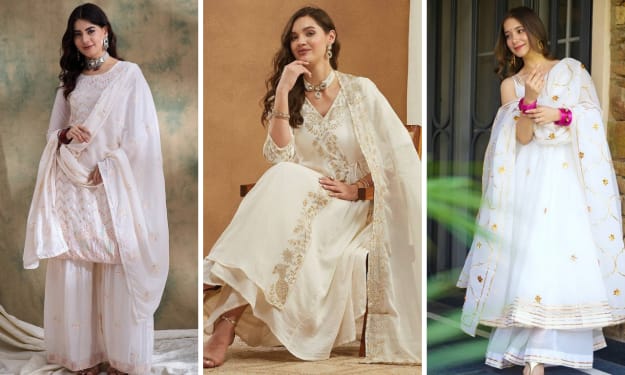
Reel-Ready White Salwar Kameez Styles That Photograph Beautifully
For social media and festive fashion in 2026, white salwar kameez is a favourite option for women looking for outfits that are as flattering IRL as they appear on camera. And whether you are posting a reel from a family party, festival celebration or Sunday brunch with your friends, the perfect white salwar kameez style can give you stunning visuals with minimal effort no matter how styled up (or down) it appears.
By Amit Mandalabout 22 hours ago in Styled


Comments
There are no comments for this story
Be the first to respond and start the conversation.