
Textile Ministry Extends Samarth Reskilling Programme Till March 2025: A Step Towards Workforce Empowerment
Samarth Reskilling Programme Extended Till March 2025: Strengthening India's Textile Workforce for a Future-Ready Industry

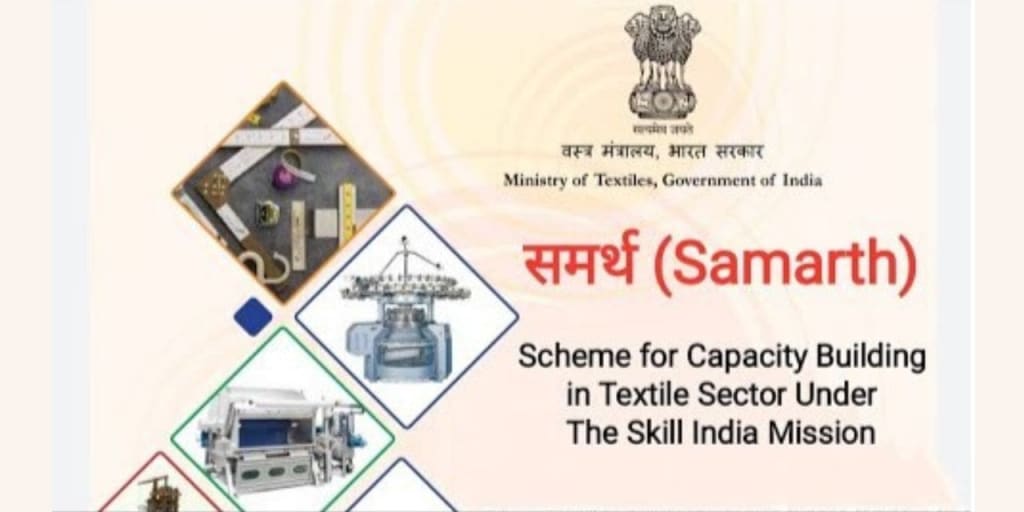
The Indian textile industry, a vital contributor to the country's economy, is undergoing rapid transformation due to evolving technologies, changing consumer demands, and global competition. To ensure that the workforce remains skilled, adaptable, and employable, the Ministry of Textiles has extended the Samarth Reskilling Programme until March 2025. This initiative plays a crucial role in equipping workers with relevant skills, promoting sustainable employment, and boosting the overall growth of the textile sector.
The extension of the Samarth (Scheme for Capacity Building in the Textile Sector) programme underscores the government's commitment to strengthening the textile workforce, particularly in light of emerging challenges and opportunities in the industry. This initiative aims to bridge the skill gap, provide employment to millions, and support India’s vision of becoming a global leader in textiles and apparel.
1. Understanding the Samarth Reskilling Programme
Launched in 2017, Samarth is a flagship skill development programme by the Ministry of Textiles, designed to train and reskill individuals in various textile-related fields. It focuses on providing industry-relevant training to unemployed youth, women, and marginalized sections of society, ensuring that they acquire the necessary skills to secure employment or start their own businesses.
The programme covers a wide range of textile and apparel-related activities, including:
- Weaving, knitting, and spinning techniques
- Garment manufacturing and tailoring
- Handicrafts and handloom production
- Dyeing and printing processes
- Technical textiles and advanced fabric processing
The curriculum is developed in collaboration with industry experts, ensuring that trainees are equipped with practical knowledge and hands-on experience to meet the demands of the modern textile sector.
2. Why the Extension Until March 2025?
The decision to extend the Samarth programme until March 2025 comes in response to the growing need for skilled labour in the textile sector. Several factors have contributed to this extension:
a) Workforce Demand and Industry Growth
India's textile industry is expected to reach $250 billion by 2030, driven by rising exports, domestic demand, and technological advancements. To sustain this growth, it is essential to have a skilled and efficient workforce capable of adapting to new production techniques and industry trends.
b) The Impact of Automation and Technology
The textile industry is undergoing a digital transformation, with innovations like smart fabrics, AI-driven quality control, and automated weaving machines. Many traditional textile workers lack the skills required to operate these modern systems. Samarth’s reskilling initiative ensures that workers are trained in these new technologies, reducing job displacement and improving employability.
c) Economic and Employment Challenges
Post-pandemic economic recovery has highlighted the need for sustainable employment opportunities. Many workers, particularly in rural and semi-urban areas, struggle to find stable jobs. By extending Samarth, the government aims to:
- Create employment opportunities in textiles and apparel
- Promote entrepreneurship in traditional crafts
- Support self-reliance initiatives under Make in India and Atmanirbhar Bharat
d) Empowering Women and Marginalized Communities
A significant focus of the Samarth programme is on women empowerment and inclusive growth. The textile industry employs a large percentage of women, especially in handloom, embroidery, and garment manufacturing. By providing free training and job placement support, the programme ensures that women from economically weaker sections gain financial independence and improve their socio-economic conditions.
3. Key Features and Implementation of the Extended Programme
a) Training Modules and Courses
With the extension, the Samarth scheme will continue to offer structured training programmes in:
- Traditional textiles (handloom, block printing, weaving)
- Modern apparel manufacturing (industrial sewing, pattern making, digital printing)
- Technical textiles (non-woven fabrics, medical textiles, geotextiles)
- Sustainable fashion and eco-friendly production
The courses are designed to meet the National Skills Qualification Framework (NSQF) standards and are certified by recognized agencies.
b) Collaborations with Industry and Training Partners
To enhance training quality and ensure job placements, Samarth collaborates with:
- Textile manufacturers and apparel brands
- Industry associations like AEPC, CITI, and TEXPROCIL
- Skill development organizations and academic institutions
Training is provided through a network of 200+ training centres across the country, equipped with modern facilities and expert instructors.
c) Placement and Employment Support
One of the major advantages of Samarth is its placement-linked training. After completing the courses, trainees receive certification and job placement assistance. The programme works closely with textile companies to ensure that skilled workers are hired directly, reducing unemployment rates.
Additionally, self-employment opportunities are encouraged through financial aid, government grants, and mentorship programmes for those looking to start their own textile businesses.
d) Monitoring and Evaluation
To ensure transparency and effectiveness, Samarth includes a biometric attendance system, real-time tracking, and periodic evaluations. This ensures that only eligible candidates benefit and that the training meets industry standards.
4. The Future Impact of Samarth Reskilling Programme
The extension of Samarth till March 2025 is expected to have long-term benefits for the textile industry and the Indian economy.
a) Strengthening India’s Position in the Global Textile Market
With a skilled workforce, India can enhance its global competitiveness, attract more investments, and increase textile exports to Europe, the US, and emerging markets.
b) Sustainable and Eco-Friendly Practices
Samarth’s focus on sustainable textile production will help India transition towards eco-friendly manufacturing, reducing the industry’s carbon footprint and promoting ethical fashion.
c) Boosting Employment and Rural Development
By providing training in handlooms, embroidery, and crafts, the programme will revitalize rural economies and promote India’s rich textile heritage.
d) Encouraging Digital and Smart Manufacturing
With the introduction of AI, IoT, and automation, the textile workforce will be better prepared to handle smart factories and digital supply chains, ensuring long-term industry growth.
Conclusion
The extension of the Samarth Reskilling Programme till March 2025 is a significant step towards workforce empowerment, job creation, and industry modernization. By equipping workers with essential skills, promoting sustainable practices, and fostering innovation, the initiative is set to reshape India’s textile industry for the better.
With continued government support, industry collaboration, and technological advancements, Samarth will play a key role in ensuring that India remains a global leader in textiles, while also uplifting its workforce and communities.
As the industry moves forward, Samarth’s impact will be felt across generations, making the textile sector more inclusive, resilient, and future-ready.
About the Creator
textilenews
publisher
Keep reading
More stories from textilenews and writers in Styled and other communities.
India Extends Samarth Textile Training Scheme Until March 31, 2025: Boosting Skill Development in the Textile Industry
The Indian textile industry, a cornerstone of the country's economy, is set to benefit from the extension of the Samarth (Scheme for Capacity Building in Textile Sector) training program until March 31, 2025. This initiative, launched by the Ministry of Textiles, is aimed at providing skill development, employment opportunities, and promoting sustainability in the sector. The extension signifies the government’s continued commitment to strengthening the workforce and ensuring that the industry remains globally competitive.
By textilenews10 months ago in Styled
How To Dye A Wig?
Hey Sis! So you saw that fire honey-blonde balayage on TikTok, or maybe you’re feeling that midnight blue fantasy, but the thought of bleaching your own curls colored wigs has you saying, “Absolutely not.” I get it—our hair is our crown, and sometimes you don’t want to risk the throne.
By manman zhai7 days ago in Styled
Wild Card Weekend Recap: What Happens Now?
I think I figured out why I love Wild Card Weekend so much. It's because it's the first playoff anything of the calendar year. The NFL season starts in the fall, and once upon a time, the champion was crowned either on or slightly before New Year's. The evolution of the NFL schedule has resulted in the playoffs starting just into the New Year, and currently, the final week of the season falls on the first weekend of the New Year, with Wild Card Weekend coming a week after that. So yes, chronologically, the NFL's Wild Card Weekend serves as the first playoff anything of the calendar year.
By Clyde E. Dawkins7 days ago in Unbalanced



Comments
There are no comments for this story
Be the first to respond and start the conversation.