history
The history of warfare; stories of combat and conflict across land, seas and skies, from ancient times to the present.
A Soldiers Story
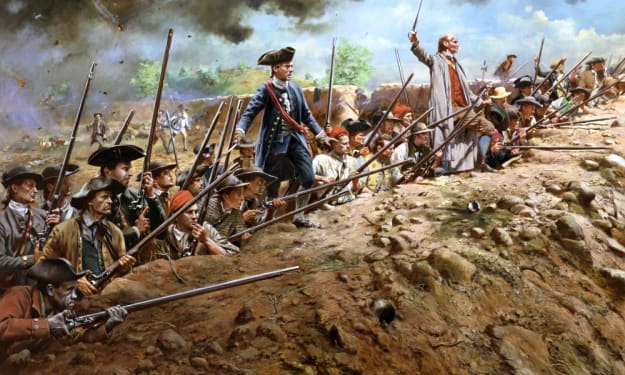
Chapter 1 Jack Smith stepped up to sign his name, barely able to contain his excitement! Jack was a stocky boy of 16, with dark hair and green eyes He was enlisting in the continental army along with his best friend Daniel Williams, a tall, lanky boy with an unmistakable air of confidence.
By Ethan Herman6 years ago in Serve
A Fort For The Nation's Capital
In order to tell the story that shaped the existence of the unincorporated census designated place known as Fort Washington, MD where over 24,000 residents live today and see how this town became the good place to live that we know today, we’ll have to go back into the nation’s history. With everything that happened since the first days of American history, the fort that gave this town its name helped shape the America that we know today. There were many battles and wars that have had at least some connection to this historical place and we’ll walk you through the most important moments of both Fort Washington’s and D.C.’s history.
By Beni Restea6 years ago in Serve
Korean War and the change in position of the 38th parallel
North Korea is an isolated nation that proclaims its southern neighbor South Korea as its enemy. North Korea blew up its joint liaison office with South Korea on 16 June 2020, in a dramatic and carefully planned display of rancor toward its southern neighbor. Till the end of the Second World War, there was no separate North and South Korea and they were collectively called Korea. In this article, we will see what led to the separation of Korea and the Korean War, which was fought after the separation in detail.
By Siddharth Shankar V6 years ago in Serve
The Wall
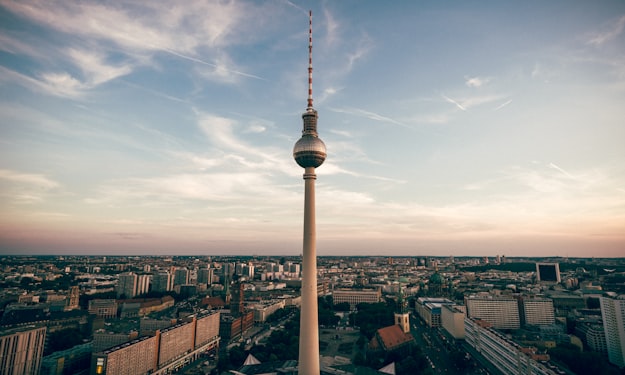
Imagine. Living in a world where it feels black and white. One side is all-good where everyone lives their lives the way they choose to. On the dark side, people can’t choose their own path. Constant policing of the state strictly monitors it. Everything they want to do is checked upon and anything they do against the state will be found out and are severely punished. Miroslav sees that on the news every day and feels like everyone else; don't get into everyone’s business. He lives in Munich with his family. A recent college graduate, he feels nothing motivates him and just wants to hang around until he can find a job. And he also feels that he, like many others, doesn't want to get into the whole mess that the two German states are conflicting. But one phone call will change all of that.
By Sergio Romero6 years ago in Serve
Capt. Charles S. Rutherford and a WW1 Masterly Bluff
A character I had the privilege of meeting was Capt. Charles S. Rutherford VC, MC, MM. The alphabet soup after his name is; Victoria Cross, Military Cross and Military Medal. Known as Charlie, he was the only Canadian to have earned all three medals during WW1.
By ShadowsPub 6 years ago in Serve
Let Slip the Dogs of War
I never understood how books were worked on for several years, even ten, before the author felt it was finished. I never understood it until I realized that the majority of my work presently has been laying in abandoned notebooks or stuck in my head for decades not really knowing what to do with it.
By Ethan H. Gaines6 years ago in Serve
Memories of the Windrush
It was big with an off-white colour. Long with rows of small round portal for windows and rust speckles blemishing its off-paint as if a battle of hues was taking place where the vessel’s own history had left off. A dark strip, running the length of the ship, indicated the gangway. While high above me, two smoking black-painted stacks poked from the ship’s middle or its amidships - according to the shipbuilder’s definition - making the vessel seem even higher; its tall structure out-of-place on the edge of the capital’s harbour. The day was already hot. The blazing Caribbean sun as merciless as the stewards on the pier shouting at the top of their voices in the melee and mayhem. The smell of the sea assaulting my nose and me thanking God that I never once had to ditch in it.
By Kwame MA McPherson6 years ago in Serve
From Decoration Day to Memorial Day
Memorial Day began as Decoration Day but this term is seldom used now. I can recall my grandmother and others of her generation saying Decoration Day but as a child, I did not ask why. I now know that originally this was a day to “decorate” the graves of American war veterans. Memorial Day as we call it now is now a federal United States holiday. The purpose of this date is for mourning and honoring all military personnel who died serving in the US Armed Forces. I can remember my grandma and others placing flowers on the graves of our relatives who fought in WWI and WWII. This was also a time to check in the graves of nonmilitary loved ones. We had no cemetery caretaker and men from our small African American church volunteered to upkeep the area.
By Cheryl E Preston6 years ago in Serve
The Volcano Rumbles Before it Erupts
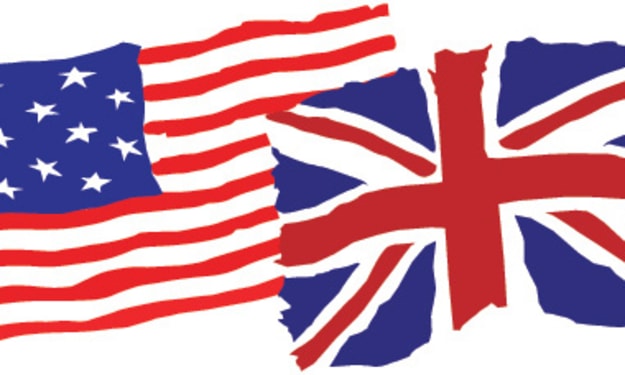
The War of 1812 (lasting from June of 1812 to February of 1815) was a conflict which acted as a “Second War of Independence” to signify the lasting power of this upstart constitutional republic known as the United States, and the last war which the US would engage with the military power of Great Britain. Yet, it is also a war for which little of it is remembered by modern generations of Americans or even people who live across the pond. To many Britons, 1812 was the year of Napoleon’s failed Russia Campaign. Though the war is still remembered by many native tribes and Canadians. To them, this war was their chance to walk into the spotlight and defend their own versions of freedom, liberty, and sovereignty; even if their efforts would result in accidental victory or honorable defeat. Yet, people still wonder how this atmosphere of nationalistic violence came to be. What were the events which transpired that caused the final war between the US and Great Britain? Who were the figures who stirred the political pot too fast or two hard, until the hot water spilled all over the place? This essay seeks to answer such questions and observes the positions of all sides who would find themselves at each other’s throats with muskets, swords, cannons, and scalping knives.
By Jacob Herr6 years ago in Serve
The Battle of Preveza
In 1538, the Mediterranean Gulf of Arta would become the battle ground between two opposing forces. As the Ottoman Empire seeks to expand it’s territory and cultural influence into the heart of Europe, the Kingdom of Spain, the Republic of Venice, and even the Papal States, fear for the loss of their status as world powers, their sovereignty as independent nations, and their freedom as human beings. For if their leaders and people were to act blissfully ignorant to the marauding hordes of the Ottoman Turks upon their arrival to their doorsteps, they would surly become lambs of God among the wolves of Allah. Fueled by political and religious ideologies, these diametrically opposed entities would use the latest of military technology and strategy to shed their blood. For the victors would become the most dominant naval force of the Mediterranean Sea; and remembered by the annals of time and history as a new generation of ruthless conquerors or faithful crusaders. The purpose of this essay is to is to analyze the critical intangibles and x-factors which determined the Battle of Preveza’s outcome, and how it shaped it’s political fallout for both the Europeans and the Ottoman Empire.
By Jacob Herr6 years ago in Serve
Australia’s Kokoda Track Campaign Rivals Midway as the Turning Point in the Pacific War
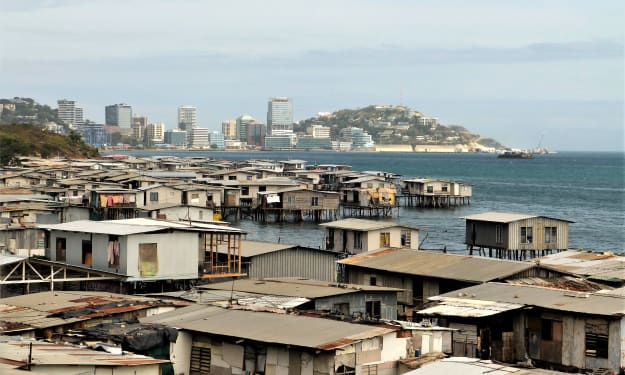
Photo by gailhampshire Kokoda Day is a National Holiday in Australia and marks the Kokoda Track Campaign, which was won by an unlikely cast of teenage reservists. Yeah, some continental location somewhere was secured by a collection of brave kids, and Down Under has something to celebrate. Sounds like a mere redirect, while everyone else remembers heroics that extend beyond a local footnote. But the truth is any nation that fought the Japanese should probably have a day set aside on their own calendars.
By Rich Monetti6 years ago in Serve
When the Cornfields Ran Red with Blood
In the long term of the human condition, a true spoil that belongs to the victors of human conflict is the history for which their efforts will be remembered by future generations to come. No stronger does this correlate than in an event described as “America’s Second War of Independence”; The War of 1812. This war marks a secondary process of military violence between the young United States and the British Empire in order to secure permanent sovereignty on the North American continent and would cost over 15,000 American, British, Canadian, and Indigenous lives. Surprisingly though, there is an irony which lies in how our modern generations have metaphorically shrugged aside the historical importance of this conflict. Even the author and state-historian, James H. Madison writes only three paragraphs about the wartime experience in the then Indiana Territory in his 400 page book Hoosiers: A New History of Indiana. Certainly, the events that took place in Indiana are rather miniscule compared to the Burning of Washington or the Battle of New Orleans. However, I wish to argue that the strategic value of the Indiana Territory at the time was equally as important as the White House or the bayous of Louisiana. For Hoosiers, the War of 1812, is utterly consequential as part of Indiana’s state-based identity. This is largely in part due to the numerous native nationa, united under the Shawnee Chief Tecumseh, and were willing to fight to the death to protect their sovereign lands surrounding the Great Lakes; as well as the dire American holdouts, which would retain U.S. dominance in the territory; even when under the threat of annihilation.
By Jacob Herr6 years ago in Serve