history
The history of warfare; stories of combat and conflict across land, seas and skies, from ancient times to the present.
HMS Birkenhead
Introduction Hopefully, none of you readers have been in a shipwreck before. But if you have and were lucky enough to get off alive, I’m sure you’ve heard this phrase which is most commonly associated with the sinking of the Titanic: “Women and Children first” when loading the lifeboats, which is the general protocol. However, have you ever wondered where this protocol was first established? Well that’s a good question, and this article details the origins of the women and children first protocol when we look at an extraordinary tale of bravery in the face of terrible circumstances in the sinking of the HMS Birkenhead in February 1852.
By Luke Milner6 years ago in Serve
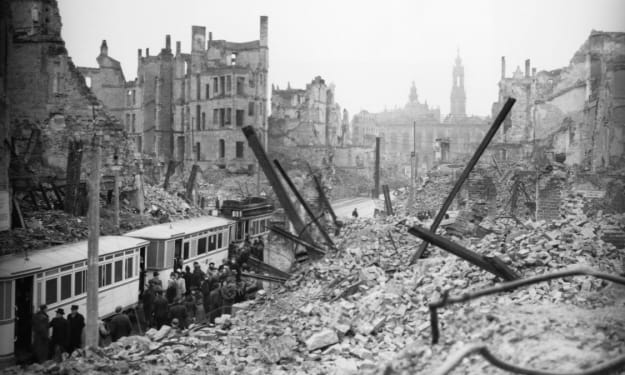
The Bombing of Dresden, 1945
On 13th February 1945 Great Britain committed one of the worst war crimes ever perpetrated, namely the senseless and unnecessary bombing of Dresden that killed more than 130,000 people and destroyed one of the most beautiful and historic cities of Europe.
By John Welford6 years ago in Serve
Operation Anthropoid: 78 Years on.
In 1942, a British-Czech-Slovak joint operation successfully assassinated one of the most fearsome and high-ranking Nazis in the Third Reich. Regarded by many as the darkest figure in the Nazi elite, Reinhard Heydrich died due to injuries sustained in an ambush on his personal vehicle, which was struck by an explosive device on May 27 of that year.
By Louis Fell6 years ago in Serve
World War II
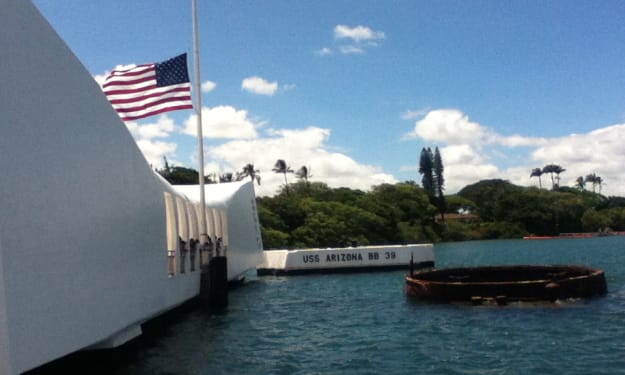
There has been a few key moments in history where the world stands together in the name of peace and liberty. It is in these times that differences are forgotten and unity grows. In addition, there are also times when some nations are united and some are not, which allows the world to be broken and for its citizens to pick sides. World War II happened because of a cruel and harsh set of rules placed on one country, it was also one of the bloodiest wars that the world has seen and lastly, it caused the world to be even more defensive and build more destructive weapons.
By Flying Ace6 years ago in Serve
An Irishman, an Officer, a General Officer, a Russian Field Marshal
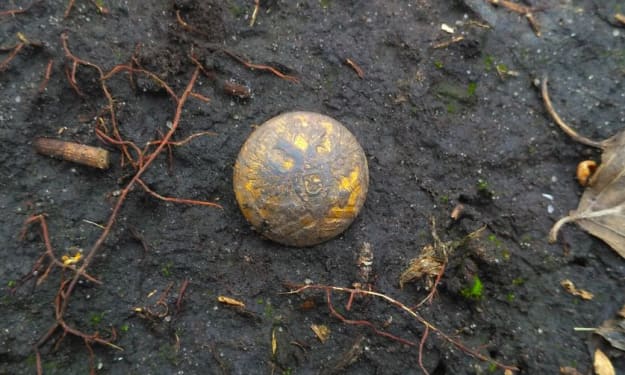
In 2018 my friends from Russia found the place where a battle took place. That was quite an undistinguished place far away in a steppe. Among the findings there were relics which are rather common for such places – bullets, individual equipment, horse harness, cold-arms, etc.
By Peter Harrington6 years ago in Serve
Remembering Peace
For several years, I went to the Service of Remembrance to take photographs and talk with Evan, who served on five continents in the Second World War. Evan was always very humble about what he did for this country during that war, and I don’t think he ever fully appreciated what his service meant to others.
By Catherine Anfield7 years ago in Serve
The War Remnants Museum, Saigon
I visited Vietnam in 2018, travelling from the capital, Hanoi, in the North, to the former capital, Ho Chi Minh City, in the South before heading to Cambodia. HCM City was formerly called Saigon, and in truth still is by many Vietnamese, whether they live in the city or not. There are even beers called Hanoi and Saigon, but no beer called Ho Chi Minh City.
By Johnny Seven7 years ago in Serve
The Road to WWII
What were the different steps to World War II and which was the most significant? From 1939 to 1945, many of the most powerful countries and powers at the time engaged in a conflict which we now know as World War II. World War II is considered the largest war in history, and there were many causes which led to it. At the end of World War I, the Treaty of Versailles was agreed upon by Germany and the allied countries (Britain, France, the USSR, Italy and the United States). The Treaty of Versailles forced Germany to surrender several of its territories to the possession of the League of Nations as well as limited Germany militarily. This treaty was one of the key reasons why World War II began. Hitler gradually began to openly defy the terms of the Treaty of Versailles through several reclamations of land and rearmaments of various areas. Many incidences led to World War II, including the reclamation of the Saar and the remilitarization of the Rhineland, the conscription and rearmament of Germany, the union of Austria and Germany (Anschluss), the return of the Sudetenland to Germany and the Nazi-Soviet Pact, the most significant being the Nazi-Soviet Pact.
By Frederica Angelina7 years ago in Serve
Without Them
They stood shoulder to shoulder, ten men in a line, hands pressed to their foreheads performing a salute. After 75 years their salute was slower, their balance aided by walking sticks, their sight somewhat deteriorated, but still they stood surveying the applauding crowd before them.
By The Rumble Online7 years ago in Serve
Alsace: Episode Two
A German World War two pilot sprints across a field headed towards a low stone French farm house. It’s evening and the sun has set under the horizon but still casts a blue and purple light, which disperses through the thick blanket of grey overcast sky and illuminates the world with an even cool glow. The pilot is muddied and his uniform is ripped and hanging in multiple places. Small twigs and leaves from the tree that his parachute caught in are wedged in his belt and boots. The tails of his jacket are blackened from the smoke of his burning plane that crashed below him. He’s unhurt but exhausted and bruised from cutting himself out of the tree, immediately in need of rest and soon to be in need of food and shelter—somewhere safe that he can regroup. He slows to a jog as he passes the low stone wall that makes the tiny courtyard in front of the one story home he spotted from the forest.
By Jimmy O’Brian7 years ago in Serve