
Why You're Burning Out: The Hidden Cognitive Factors That Are Draining You
Learn how task misalignment is causing your burnout and how to fix it.

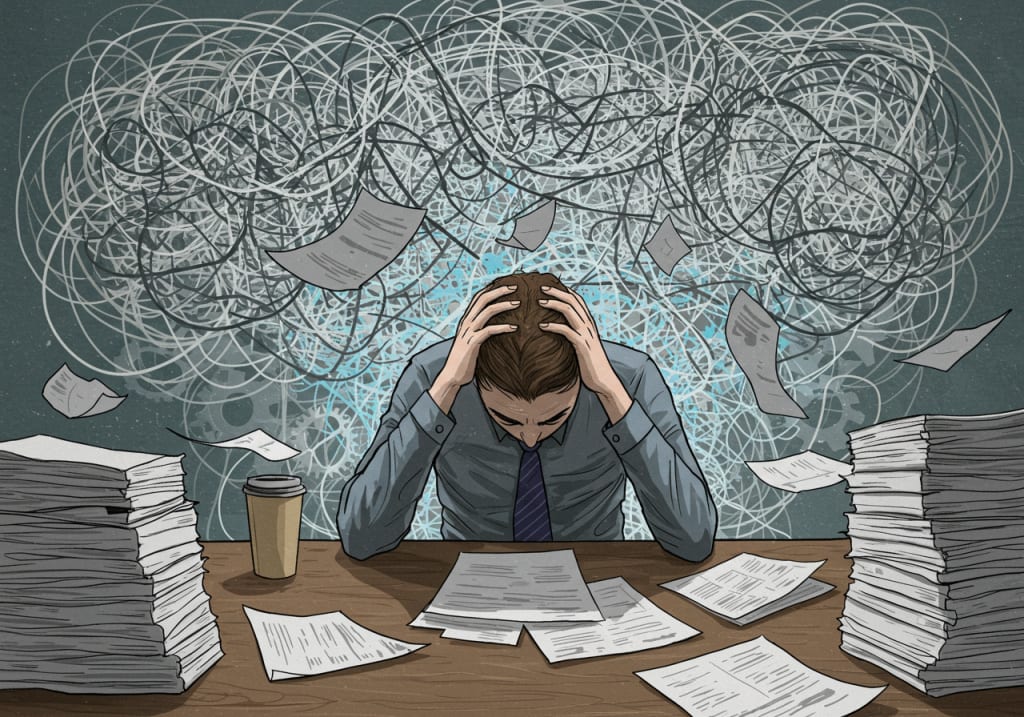
When we hear the word "burnout," our first instinct often is that it's about working too hard or being overwhelmed with too many tasks. But burnout doesn’t always result from doing too much. In fact, sometimes burnout happens because the task you’re working on stops adapting to your cognitive needs. It’s not about adding more breaks to your schedule; it’s about addressing a mismatch between your mental system and the task you're facing.
This idea is rooted in Cognitive Drive Architecture (CDA), a field in cognitive psychology that offers a fresh lens on how we understand motivation, behavior, and cognition. CDA distinguishes itself from older constructs, such as motivation theory or attention models, by introducing new variables that better capture the complexities of human behavior.
At the heart of CDA is Lagunian Dynamics, a core theoretical engine that organizes how cognitive systems work. Variables like Primode, CAP, Flexion, Anchory, Grain, and Slip play a crucial role in how tasks engage with our cognitive systems. When burnout occurs, it’s often because these variables aren’t in harmony with the task at hand. Let’s explore why that happens, focusing on Flexion and Grain, and how understanding these dynamics can offer a way out of burnout.
It’s Not About Too Much Work (It’s About Misalignment)
In CDA, burnout is often linked to two key factors: low Flexion and high Grain. These concepts speak to how your cognitive system interacts with the task at hand, rather than how much work you’re doing.
- Low Flexion: Flexion refers to the ability to adapt or adjust your approach as tasks evolve. When Flexion is low, tasks become rigid. You can’t switch strategies or methods to keep things fresh, which means your cognitive system gets stuck. This feeling of being stuck is one of the key drivers of burnout. You’re not necessarily doing too much; you just can’t adapt to what you’re doing.
- High Grain: On the other hand, Grain refers to the level of detail required by a task. High Grain tasks are those that require constant attention to minute details, which can overwhelm your cognitive resources. When you’re working on tasks that demand you focus on small details constantly, it leads to cognitive overload. This is another contributor to burnout: the more detailed and intricate the task, the more mental energy it consumes.
So, burnout doesn’t come from being busy; it comes from facing tasks that demand more cognitive energy than you can sustain, especially when Flexion is low and Grain is high.
Flexion and Grain: The Cognitive Bottleneck
Let’s break down what happens when you experience low Flexion and high Grain:
- Low Flexion means that the task you’re working on doesn’t allow you to change or adapt your approach as things evolve. This rigidity can lead to frustration and exhaustion, even if you’re not necessarily working harder than usual.
- High Grain means the task is demanding far too much attention to detail. It’s like trying to walk through quicksand; every step requires more effort, and you’re left with little energy to focus on the bigger picture. High Grain tasks are mentally exhausting because they require constant mental processing without offering any relief or change.
When these two factors combine, they create a cognitive bottleneck. You’re mentally overwhelmed by the task’s details, and at the same time, you’re unable to adjust or shift your approach, which leads to burnout.
You Don’t Need More Breaks; You Need System Relief
Now, the typical response to burnout is often more breaks and more rest. While breaks can help in the short term, they don’t address the root cause of the issue: the task itself isn’t adapting to your cognitive needs. You don’t need more breaks; you need system relief.
System relief involves changing the way you interact with the task. Instead of continuing to push through tasks that are either too rigid (low Flexion) or too overwhelming (high Grain), you need to introduce changes that allow your cognitive system to better align with the demands of the task. It’s about finding a balance between flexibility and detail.
How to Relieve Burnout by Adjusting Flexion and Grain
To overcome burnout, it’s important to adjust both Flexion and Grain to create tasks that are more in sync with your cognitive needs:
- Increase Flexion
- Reduce Grain
- Introduce Task Variety
- Cognitive Reframing
Understanding Burnout Through CDA
At its core, burnout isn’t just about doing too much; it’s about the mismatch between your cognitive system and the task at hand. In CDA, we see that when tasks don’t adapt to your needs, either by being too rigid (low Flexion) or too detailed (high Grain), they drain your cognitive resources and lead to burnout.
By adjusting Flexion and Grain, you can reduce the cognitive strain that leads to burnout. Instead of more breaks, focus on tasks that allow for more flexibility and less detail overload. This system relief will help you stay engaged, energized, and productive without burning out. Through understanding and applying concepts from CDA and Lagunian Dynamics, we can move past traditional ideas of burnout and find sustainable ways to engage with work in a way that respects our cognitive drive architecture.
About the Creator
Keep reading
More stories from Nikesh Lagun and writers in Psyche and other communities.
Why Your Focus Feels Unstable
One of the most discouraging things about personal effort isn't failure. It's an inconsistency. You're focused and steady one day, then suddenly foggy and restless the next. From the outside, it looks like you lost discipline. From the inside, it feels like you've fallen off track.
By Nikesh Lagun5 months ago in Psyche
Do You have a Support Network?
Life is harder when you’re on your own. Human beings are social creatures, and we usually feel better when we have support from a strong social network around us. For most people, it’s our families that hold us together like glue.
By Elizabeth Woodsabout 18 hours ago in Psyche
Miss Persephone's Manual to a Seemingly Ordinary Life
Miss Persephone was found at the dining table, her blue eyes swollen, her tears arriving and retreating like the tides of the ocean. Earlier that day, her family had visited her in the retirement home where she had lived for eight years. It was her eightieth birthday.
By Imola Tótha day ago in Fiction



Comments
There are no comments for this story
Be the first to respond and start the conversation.