
Why Low-Need Individuals Often Attract High-Need Partners
Romantic relationships


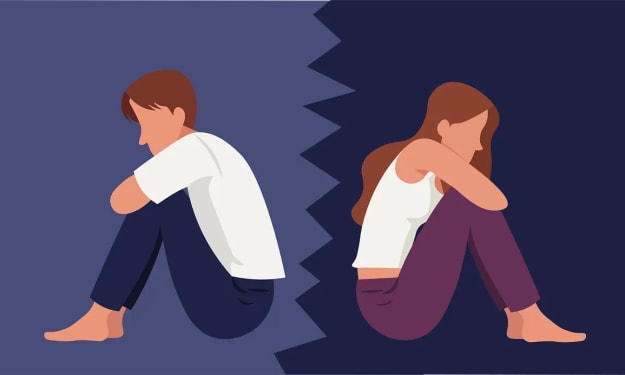
In romantic relationships, partners often display strikingly different levels of emotional needs. A particularly common pairing involves one partner with high emotional needs—seeking constant closeness, affirmation, and reassurance—and another with low emotional needs, who values independence and requires less emotional interaction.
At first glance, this dynamic appears fraught with contradictions. Yet, from a psychological perspective, these contrasting traits not only draw partners toward each other but can also sustain long-term relationships. The underlying reasons for this attraction, as well as the psychological mechanisms at play, offer deep insight into human connection.
Why Are High- and Low-Need Individuals Drawn to Each Other?
Psychoanalytic theory suggests that our attachment styles in adulthood are significantly shaped by early childhood interactions with caregivers.
High-need individuals often grew up with inconsistent emotional support—perhaps caregivers were loving at times but distant at others. This unpredictability fosters an insecure attachment style, leading to a heightened craving for emotional closeness in adulthood. They seek constant reassurance in relationships, hoping to fill the emotional gaps left by their childhood experiences.
Conversely, low-need individuals may have been raised by emotionally distant or overly controlling caregivers, prompting them to develop strong self-reliance from an early age. They learned to regulate emotions internally rather than seek external validation, leading to a preference for autonomy and emotional restraint. This independence, paradoxically, is what makes them so appealing to high-need partners.
High-need individuals are naturally drawn to the self-assuredness, emotional stability, and composed demeanor of low-need partners. Subconsciously, they perceive these qualities as sources of security—attributes they themselves struggle to cultivate.
For low-need individuals, the attraction is more subtle. Despite appearing emotionally detached, they may carry suppressed needs for intimacy. A high-need partner’s expressive affection, warmth, and emotional intensity provide them with a “safe window” through which they can experience emotional connection without directly confronting their own suppressed vulnerabilities.
Psychoanalysis suggests that at our core, all humans crave connection and warmth—some simply suppress or disguise this need. The overt emotionality of a high-need partner allows the low-need individual to experience closeness in a way that feels safe and indirect. In essence, the high-need partner serves as a proxy, expressing emotions that the low-need partner struggles to access.
The Challenge: The “Pursuer-Distancer” Cycle
Despite the deep psychological compatibility of this dynamic, conflicts inevitably arise over time.
The high-need partner often feels neglected, misunderstood, and frustrated, leading them to seek even more reassurance and closeness. The low-need partner, in turn, may feel overwhelmed or smothered, reacting by withdrawing further to protect their autonomy. This creates a self-reinforcing cycle known in psychology as the “pursuer-distancer dynamic.”
The more the high-need partner seeks connection, the more the low-need partner withdraws. The more the low-need partner distances themselves, the more desperate the high-need partner becomes. This escalating pattern deepens emotional tension and can strain the relationship.
At its core, this cycle reflects deeper psychological defenses. The high-need partner’s relentless pursuit is not just about seeking love—it is an unconscious attempt to soothe their abandonment anxiety. Meanwhile, the low-need partner’s emotional detachment is not mere indifference; it is a strategy to avoid the fear of emotional entanglement and loss of control.
From a psychoanalytic perspective, this pattern is a form of “repetition compulsion”—a subconscious reenactment of unresolved childhood conflicts. Each partner, unknowingly, is repeating past emotional struggles within the relationship.
Breaking the Cycle: Awareness and Growth
The key to transforming this dynamic lies in self-awareness. Both partners must recognize the unconscious fears and defensive patterns driving their behaviors.
In couples therapy, therapists help both individuals articulate their true needs and fears. High-need partners learn to temper their emotional dependency, fostering greater self-sufficiency and internal stability. Low-need partners, in turn, are encouraged to gradually lower their emotional defenses, allowing themselves to experience and express intimacy more openly.
A Relationship as a Mirror for Healing
Rather than viewing this dynamic as inherently dysfunctional, it can be reframed as a profound opportunity for inner growth. Relationships act as mirrors, reflecting unresolved emotional wounds from childhood. Through conscious effort and mutual understanding, partners can confront and heal these wounds together.
Ultimately, the success of such a relationship hinges on both partners’ willingness to explore their unconscious motivations and embrace personal growth. Despite their surface-level differences, high- and low-need individuals share a deeply complementary psychological structure.
True intimacy begins when both partners acknowledge and understand their emotional defenses—not as flaws, but as paths toward a deeper, more authentic connection.
About the Creator
Dee
Been restricted by Vocal see me at https://medium.com/@di.peng.canberra
Dee is a Chinese dedicated psychologist with a deep passion for understanding human behavior and emotional well-being.
When Saying “No” Feels Strange
He did not plan to smoke that day. He was standing outside his school gate, bag on his back, waiting for the van. A boy from his class took out a vape. Another smiled and asked him to try. He refused at first. Everyone laughed, not loudly, not cruelly just enough to make him feel small.
By Muhammad Ayaan about 4 hours ago in Psyche


Comments (1)
I don’t like high need parters! Great work!