
Why Does Anxiety Feel Worse at Night? Causes and How to Calm It
Understanding the Nighttime Spike in Anxiety: What Triggers It and Proven Ways to Find Relief

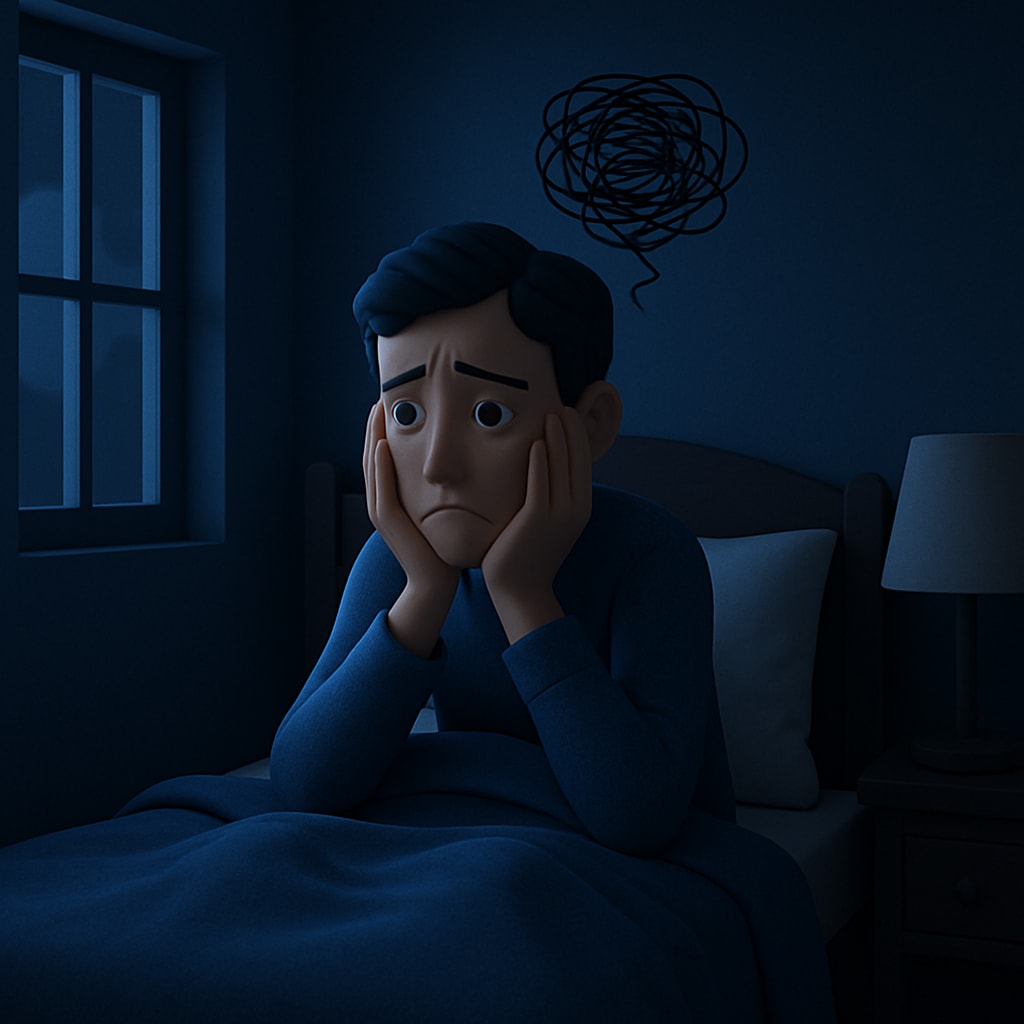
During the day, life is loud. Conversations hum in the background. Notifications ping. Tasks pile up. Your brain stays busy with to-do lists, responsibilities, and distractions. But then the sun sets. The world goes quiet. And for many people, that silence brings something else: anxiety.
Intense, creeping, hard-to-ignore anxiety that feels worse at night than it ever did during the day.
If you've ever felt more anxious when you’re supposed to be relaxing or sleeping, you're not alone.
Nighttime anxiety is a deeply common experience—but also a frustrating and confusing one. This article explores why anxiety tends to worsen at night, the biological and psychological forces behind it, and most importantly, how to calm it.
Why Anxiety Feels Worse at Night: The Root Causes
1. Lack of Distraction Makes Symptoms Louder
One of the biggest reasons anxiety flares at night is because the usual distractions are gone.
During the day, work, school, errands, social interactions, and even entertainment keep your brain occupied.
At night, those external stimuli fade. The mind turns inward. Suddenly, every worry, fear, or intrusive thought that was suppressed earlier comes rushing forward.
This mental quiet can be dangerous for anxious brains. The silence doesn't feel peaceful—it feels like a trap. A place where your thoughts echo louder and more intensely than they do in the daylight.
2. The Brain’s Chemistry Shifts After Dark
Your brain doesn't operate the same way at night. As the evening approaches, melatonin starts to rise while cortisol, the stress hormone, decreases. This should help you wind down.
But for those with anxiety disorders, this hormonal shift can disrupt the brain’s balance.
In people with chronic stress, cortisol can actually spike at odd times—including in the evening or during sleep. That imbalance can create a wired-but-tired sensation: your body feels exhausted, but your mind refuses to slow down.
3. Overthinking and the Default Mode Network (DMN)
Neuroscientists have identified a part of the brain called the default mode network—active when you're not focused on a task and instead reflecting, daydreaming, or thinking about yourself.
At night, when you're lying in bed, the DMN tends to become more active. While it's meant for self-reflection, in anxious individuals it often triggers excessive worry, rumination, and self-criticism.
The DMN doesn't distinguish between useful reflection and anxious spiraling. It just keeps looping.
4. Anticipatory Anxiety and Fear of Tomorrow
Night is a natural time for reflection—but it’s also when people worry about what lies ahead.
- Will I meet my deadline?
- What if I mess up tomorrow’s meeting?
- What if I wake up late?
This anticipatory anxiety is like pre-living a future that hasn’t happened yet, often in the worst-case scenario.
In bed, there's little else to do. So the mind plays a highlight reel of fears—most of which are hypothetical and exaggerated.
5. Sleep Problems and the Anxiety Cycle
Anxiety makes it hard to sleep. And poor sleep makes anxiety worse. It’s a vicious cycle. If you’ve struggled with insomnia even once, your brain may begin to associate bedtime with stress.
Over time, the bed becomes a trigger. Just lying down can raise your heart rate or bring on a tight chest, even before you’ve had a single anxious thought.
How to Calm Nighttime Anxiety: Effective Strategies
Nighttime anxiety doesn’t have a one-size-fits-all cure. But there are practical, research-backed techniques that can help you calm your nervous system and retrain your mind. Below are several tools you can begin using tonight.
1. Create a Calming Evening Routine
What you do in the hour before bed matters. A predictable, soothing nighttime ritual can signal to your brain that it's safe to relax.
Avoid screens when possible, as blue light suppresses melatonin. Instead, opt for low-stimulation activities—light stretching, reading, or listening to calming sounds.
Stick to a regular bedtime, even on weekends. Consistency helps reset your circadian rhythm and reduces spikes in cortisol.
2. Journal to Empty Your Mind
Before you turn off the lights, try writing down your worries. You don’t need to write essays. Bullet points work. The goal is to take your thoughts out of your head and put them somewhere concrete.
Even five minutes of journaling can lower mental rumination. You can also write a short list of things you’re grateful for. Shifting the brain from fear to appreciation can help interrupt anxiety loops.
3. Use Grounding Techniques
If your thoughts start spiraling, try a grounding exercise. These help anchor you in the present, pulling your focus away from worry. One simple method is the 5-4-3-2-1 technique:
- 5 things you can see
- 4 things you can feel
- 3 things you can hear
- 2 things you can smell
- 1 thing you can taste
By involving your senses, you reduce your brain's ability to catastrophize.
4. Practice Deep Breathing or Progressive Muscle Relaxation
Breathing deeply sends a signal to your parasympathetic nervous system—the body’s "rest and digest" mode. Try box breathing: inhale for 4 seconds, hold for 4, exhale for 4, hold for 4. Repeat several times.
Progressive muscle relaxation is another option. Start at your toes. Tense a muscle group for a few seconds, then release. Work your way up your body. This practice teaches your body to identify and release tension.
5. Limit Stimulants and Evening Stressors
Caffeine can stay in your system for up to 10 hours. Avoid it in the afternoon and evening. The same goes for alcohol—it may make you sleepy, but it disrupts deep sleep and increases anxiety the next day.
Also, avoid consuming distressing media before bed. Scrolling the news or watching intense shows can prime your brain to stay alert.
6. Try Cognitive Behavioral Techniques
Cognitive Behavioral Therapy for Insomnia (CBT-I) and anxiety has shown success in reducing nighttime symptoms. One method is thought challenging. When a worry arises, write it down. Then, ask yourself:
- Is this thought true?
- Is there evidence against it?
- What would I tell a friend who had this thought?
This helps you break the habit of believing every fear your mind presents.
7. Get Out of Bed if You Can't Sleep
If you're lying in bed for more than 20 minutes feeling anxious, get up. Go to a different room and do something quiet under dim light. Don’t doom-scroll. Try reading a book, drinking warm tea, or listening to a meditation.
The goal is to break the association between your bed and anxiety. Once you feel sleepy, return to bed.
When to Seek Professional Help
Everyone experiences anxiety from time to time, especially at night. But if it starts interfering with your ability to function during the day or if it becomes a nightly battle, it may be time to seek professional help.
Therapy, especially CBT or mindfulness-based approaches, can be highly effective. In some cases, medication may also be appropriate.
You don’t have to fight this alone.
Nighttime anxiety isn’t a sign of weakness or failure. It’s a reflection of an overworked nervous system trying to stay vigilant. In the dark, when the world finally goes quiet, your mind might speak loudest—but that doesn’t mean it’s telling the truth.
By understanding what’s happening in your brain and body, and learning how to respond with care and strategy, you can shift your nights from spirals to serenity. It won't happen overnight, but with consistency and patience, calm becomes possible—even in the dark.
About the Creator
Richard Bailey
I am currently working on expanding my writing topics and exploring different areas and topics of writing. I have a personal history with a very severe form of treatment-resistant major depressive disorder.
Keep reading
More stories from Richard Bailey and writers in Psyche and other communities.
Morning Anxiety: Why It Happens and How to Stop It Before It Starts
What Is Morning Anxiety? Morning anxiety isn’t just waking up in a bad mood or feeling grumpy before coffee. It’s a pattern of waking up with a racing heart, tight chest, spinning thoughts, or an overwhelming sense of dread before the day even begins.
By Richard Bailey8 months ago in Psyche
Top tipple tricks
Been thinking a lot about drinking, lately. Not least because of a recent episode of over-indulgence and the inevitable after effects. Some readers may recall the earlier articles I wrote about beating the booze. Here I set out an experiment in techniques for cutting down on my alcohol intake. The experiment was successful, the techniques worked, and I have armed myself with an arsenal of weapons in the war against the demon drink. I have yet to fire the first round however. It's all a question of timing (perhaps procrastination).
By Raymond G. Taylor5 days ago in Psyche
How to Get Cocaine Out of Your System Safely and Effectively
Cocaine is a powerful stimulant drug that can have serious effects on both the body and mind. While some individuals may initially use cocaine for its short-term feelings of energy or euphoria, repeated use can quickly lead to dependence and addiction. Over time, cocaine can impact physical health, emotional stability, and overall well-being.
By Jordan Blakeabout 9 hours ago in Psyche



Comments
There are no comments for this story
Be the first to respond and start the conversation.