
What It's Really Like to Be in a Psychiatric Hospital at 17
A brutally honest look inside the walls that tried to break me, and the strength I found when no one was watching.

I still remember the way the fluorescent lights buzzed, like they were whispering secrets I wasn’t allowed to hear. I was seventeen and terrified, holding onto a hospital-issue pillow like it could protect me from the truth: I had been admitted to a psychiatric ward.
No one tells you how cold it feels. Not just the temperature, but the way your name gets swapped for “the girl in Room 3.” Or how your parents’ voices sound different when they’re speaking to doctors instead of to you. Suddenly, you're a case file. A wristband. A liability.
It started with silence. The kind of silence that rots your insides. I wasn’t sleeping, I wasn’t eating, and worst of all, I didn’t care. I’d stare at the wall for hours, watching the paint chip, wondering if I’d end up like it—slowly peeling, quietly forgotten. I was spiralling, and I knew it. But I didn’t know how to scream loud enough for someone to hear me without thinking I was just being dramatic.
The night everything cracked open, I locked myself in the bathroom and cried so hard I couldn’t breathe. Not sobbing. I mean choking. My throat closed up, and I saw black dots like stars. I texted my mom, four words I never thought I’d say: “I need real help.”
By morning, I was sitting in a waiting room with blue vinyl chairs and magazines from two years ago. A nurse with gentle eyes took my vitals while I tried not to shake. Then they brought out the clipboard. Forms. So many forms. Consent. Evaluation. Risk. I signed them all, barely reading. I was scared, but part of me felt… relieved. Like maybe, just maybe, I’d made the right kind of noise this time.
Admission was fast and surreal. They took my shoelaces, my phone, and even the hair tie on my wrist. Apparently, you can hang yourself with one. I remember thinking, How many people tried before they added that rule? That thought stuck to me like lint on a sweater.
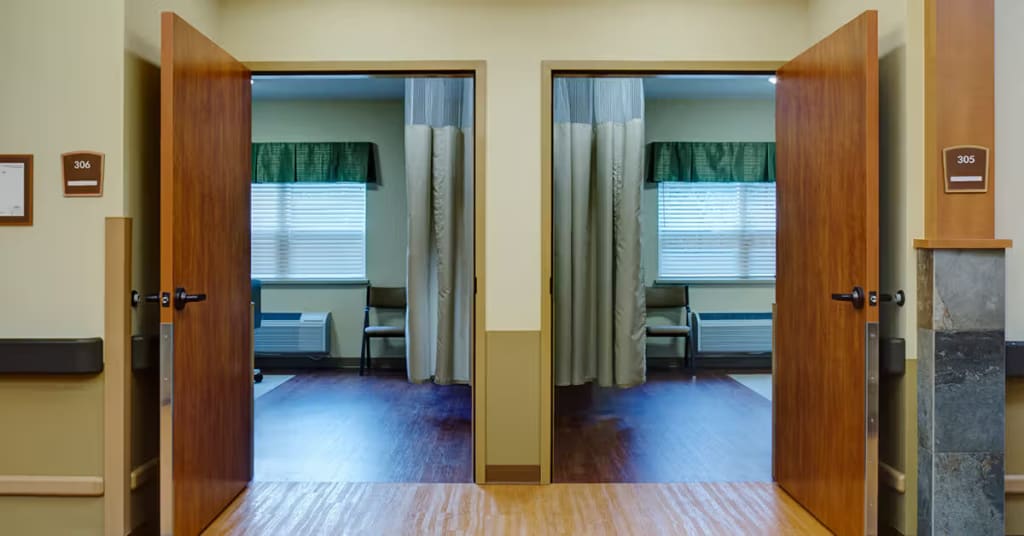
The ward itself was nothing like the movies. No padded walls. No screaming. Just long white halls, beige floors, and doors that locked from the outside. The other patients were... normal. That was the first thing that shocked me. A girl who loved painting, a boy who’d survived a suicide pact, a transgender teen who hadn’t spoken to their parents in months. We were all different kinds of broken, but somehow the same.
Group therapy was awkward at first. We’d sit in a circle, eyes on the floor, until someone finally cracked. Usually, it was me. I’d talk about how I couldn’t stop punishing myself for things that weren’t my fault. How I felt guilty for being sad when other people had it worse. How I wore a smile so good, no one saw the monster eating me alive from the inside out.
Some nights, I’d wake up crying into my pillow, whispering apologies to no one. Other nights, I’d laugh so hard with the others that I forgot I was in a place where even pens were considered dangerous. Healing doesn’t come like a sunrise. It comes like flickering light through broken blinds. It’s uneven, hesitant, messy.
I remember this one girl. I’ll call her Jamie. She gave me a friendship bracelet made from yarn and hospital socks. She told me, “You’re not as alone as your brain wants you to believe.” That stuck with me. Still does.
The hardest part wasn’t being there. It was leaving. Walking out into the world with a bag full of discharge papers and a mind that still trembled. Everyone expected me to be “better.” But I wasn’t better. I was just beginning.
What no one tells you is that psychiatric hospitals aren’t horror shows or magical fixes. They’re holding places for souls on fire. Some people never understand that. But those of us who’ve been inside? We get it. We carry the smell of antiseptic and the sound of locked doors somewhere deep in our bones.
Being in a psychiatric hospital at seventeen didn’t cure me. But it saved me. It paused the chaos long enough for me to remember that I’m still here. Still trying. Still worthy of help.
And maybe, just maybe, that’s enough to keep going.
About the Creator
Keep reading
More stories from Ava Writes Truth and writers in Psyche and other communities.
The Hustle Culture Nearly Killed Me
I don’t remember the exact moment I stopped recognizing myself. Maybe it was the third night in a row I fell asleep in my car with my laptop still glowing on my thighs. Or maybe it was the morning I coughed up blood into a paper napkin, wiped it clean, and just… kept typing. Like a machine. Like a woman possessed.
By Ava Writes Truth7 months ago in Psyche
The Age of Solitude: Why More People Are Choosing to Be Alone—and What It Means for Society
Introduction: The Quiet Revolution of Being Alone Being alone has never been easy. Throughout history, solitude has been conceived as loneliness—something to be pitied or feared, a condition of the rejected or unwanted. It was the opposite of belonging, an shadow cast by human failure to connect.
By The Chaos Cabinetabout 21 hours ago in Psyche
Miss Persephone's Manual to a Seemingly Ordinary Life
Miss Persephone was found at the dining table, her blue eyes swollen, her tears arriving and retreating like the tides of the ocean. Earlier that day, her family had visited her in the retirement home where she had lived for eight years. It was her eightieth birthday.
By Imola Tóth4 days ago in Fiction




Comments
There are no comments for this story
Be the first to respond and start the conversation.