
The Tangled Web Within: How Lying Punishes the Liar and Fractures Trust
Unpacking the Hidden Psychological Toll of Deceit

Lying. It's a behavior as old as humanity itself, woven into the fabric of our social interactions with varying degrees of severity. From the small white lie intended to spare feelings to the elaborate deception designed for personal gain, falsehoods permeate our daily lives. Yet, while the focus often lies on the victim of deceit, a profound and often overlooked consequence unfolds within the liar themselves. The act of lying sets in motion a cascade of internal punishments that erode self-worth, breed anxiety, and ultimately fracture the very foundations of trust upon which healthy relationships and societies are built. Understanding this intricate web of internal and external repercussions is crucial, not only for fostering personal integrity but also for cultivating a more honest and reliable world.
The Mind as a Battleground: The Cognitive and Emotional Toll of Deceit

Imagine the mental gymnastics required to maintain a fabricated reality. Each lie necessitates the meticulous creation and constant recollection of intricate details, demanding significant cognitive resources. This continuous mental juggling act places a heavy burden on the liar's working memory and executive functions, leading to increased cognitive load. Studies have shown that the act of deception activates multiple areas of the brain, indicative of the heightened processing required compared to truth-telling. This mental strain can manifest as chronic stress, anxiety, and even difficulty concentrating on other tasks. The liar's mind becomes a battleground, constantly vigilant to ensure the inconsistencies of their narrative don't unravel.
Beyond the cognitive burden, lying inflicts a significant emotional toll. The inherent conflict between the deceptive outward presentation and the inner knowledge of the truth creates a state of cognitive dissonance. This psychological discomfort often triggers feelings of guilt, shame, and a profound sense of unease. The liar may experience a decline in self-esteem as their actions contradict their values and their perception of themselves as a moral individual. This internal conflict can be particularly acute for those who generally value honesty but find themselves caught in a web of their own making. Each lie, even seemingly insignificant ones, chips away at their sense of integrity, leaving them feeling like a fraud in their own lives.
Furthermore, the act of lying can trigger a dangerous descent down a slippery slope. Neurological research suggests that the more we lie, the easier it becomes. Initial lies may evoke a strong negative emotional response, but with repetition, this aversion can diminish. The brain adapts, becoming desensitized to the act of deception, making it more likely for small fibs to escalate into more significant and damaging falsehoods. This creates a vicious cycle where the initial discomfort fades, replaced by an increasing propensity for dishonesty.
The Crumbling Foundation: How Lies Erode Credibility and Trust
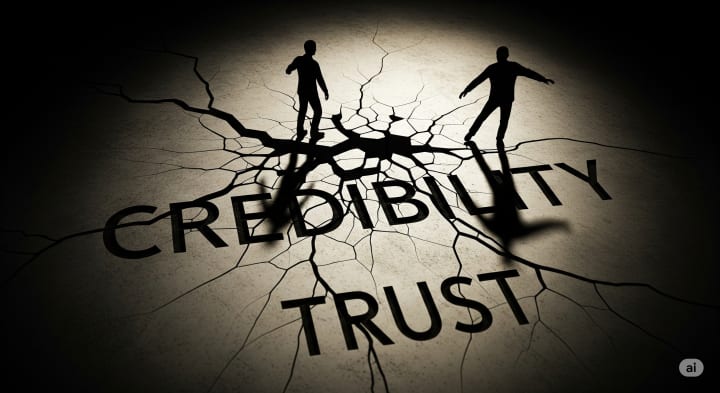
The consequences of lying extend far beyond the liar's internal landscape, profoundly impacting their relationships and standing in the world. Credibility, the quality of being trusted and believed in, is a precious asset painstakingly built over time through consistent honesty and integrity. A single discovered lie, however, can act as a wrecking ball, instantly demolishing years of accumulated trust.
Trust, the firm belief in the reliability, truth, ability, or strength of someone or something, is the bedrock of all healthy interpersonal, professional, and societal relationships. When someone is found to be dishonest, it creates a chasm of doubt and suspicion that can be incredibly difficult, if not impossible, to bridge. Those who have been deceived often experience feelings of betrayal, anger, and a fundamental questioning of the relationship itself. The liar may find themselves ostracized by friends, family, and colleagues, facing social isolation as a consequence of their actions.
In the professional realm, a reputation for dishonesty can be career-ending. Employers value integrity above almost all other qualities, and a proven liar is seen as a liability. They may be passed over for promotions, lose their jobs, or struggle to find new employment. Business relationships built on trust can crumble, and professional networks can become inaccessible. The long-term impact on their career trajectory can be devastating, hindering their ability to achieve their professional goals and maintain financial stability.
The phenomenon known as the "boy who cried wolf" effect further illustrates the insidious nature of lying. When an individual develops a reputation for untruthfulness, their words lose all weight and significance, even when they are genuinely telling the truth. People become conditioned to disbelieve them, regardless of the veracity of their statements. This can have severe consequences in situations where their honesty is crucial, such as in legal proceedings, emergency situations, or personal crises where they need support and understanding.
Societal Fault Lines: The Broader Impact of Deception

While the personal and interpersonal consequences of lying are significant, widespread dishonesty can also have a corrosive effect on society as a whole. A culture where lying becomes commonplace breeds cynicism and distrust in institutions, the media, and even among fellow citizens. This erosion of social capital weakens the bonds that hold communities together, making cooperation and collective action more challenging.
In the economic sphere, dishonesty can lead to instability and market failures. Fraudulent business practices, insider trading, and the manipulation of financial information undermine the principles of fair competition and erode public confidence in the economy. The consequences can be far-reaching, impacting investment, job creation, and overall economic well-being, as vividly demonstrated by historical financial scandals.
Furthermore, the proliferation of misinformation and disinformation, often rooted in deliberate lies and propaganda, poses a significant threat to informed public discourse and democratic processes. When individuals struggle to discern truth from falsehood, it becomes easier for manipulation and division to take root. This can lead to political polarization, social unrest, and a weakening of the foundations of a healthy democracy. The devaluation of truth itself can have profound and lasting negative consequences for a society's ability to address complex challenges and make informed decisions.
Cultivating Honesty: Rebuilding Trust from the Inside Out

Understanding the multifaceted harms of lying, both for the individual and for society, underscores the importance of cultivating honesty and integrity in our personal lives and fostering a culture that values truthfulness. This begins with self-awareness and a commitment to personal accountability. Recognizing the internal discomfort and negative consequences associated with lying can serve as a powerful motivator to choose honesty, even when it is difficult.
Building trust requires consistent honesty and transparency in our interactions with others. Repairing broken trust is a long and arduous process that necessitates sincere remorse, consistent truthful behavior over time, and a willingness to take responsibility for the harm caused by deception. It is a testament to the resilience of human relationships that trust can sometimes be rebuilt, but it requires significant effort and commitment from the person who has lied.
On a broader scale, fostering a culture of honesty requires strong ethical frameworks in institutions, education that emphasizes the importance of truthfulness, and accountability for those who engage in deception, particularly when it causes significant harm. By understanding the tangled web of consequences that lying creates, we can collectively work towards building more honest, trustworthy, and ultimately, more fulfilling lives and societies. The internal punishment of the liar is a heavy burden, and the fracturing of trust has far-reaching consequences; choosing truth, though sometimes challenging, is the path towards personal integrity and a more reliable world for all.
About the Creator
Keep reading
More stories from Kaleem Ullah and writers in Psyche and other communities.
The Digital Mirage: How Pornography Rewires Our Brains, Erodes Our Confidence, and How to Reclaim Your Life
In the vast landscape of the internet, pornography has become a titan. Its websites attract more visitors than Netflix, Amazon, and Twitter combined, often dismissed as a harmless form of entertainment or a normal part of modern sexuality. But behind this veneer of normalcy, a growing body of scientific research reveals a much darker picture. While "pornography addiction" is not yet an official diagnosis in psychiatry's main diagnostic manual, the World Health Organization has recently added "Compulsive Sexual Behavior Disorder" to its own manual, a condition largely driven by problematic pornography use. This acknowledges a clinical reality: for many, pornography use evolves into a compulsive behavior with devastating consequences.
By Kaleem Ullah7 months ago in Psyche
5 Breathing Techniques That Reduce Stress Instantly
Stress has become an inevitable part of modern life, whether it’s caused by work, school, relationships, or daily responsibilities. While many people turn to coffee, scrolling through social media, or distractions to cope, there’s a scientifically proven method to calm both the mind and body: breathing exercises. Controlled breathing can lower heart rate, reduce cortisol (the stress hormone), and improve focus almost immediately.
By Games Mode Onabout 16 hours ago in Psyche




Comments
There are no comments for this story
Be the first to respond and start the conversation.