
The Symphony of Sound: Unveiling the Marvel of Human Hearing
The Mechanics of Music and Speech: Understanding How We Detect and Interpret Sound
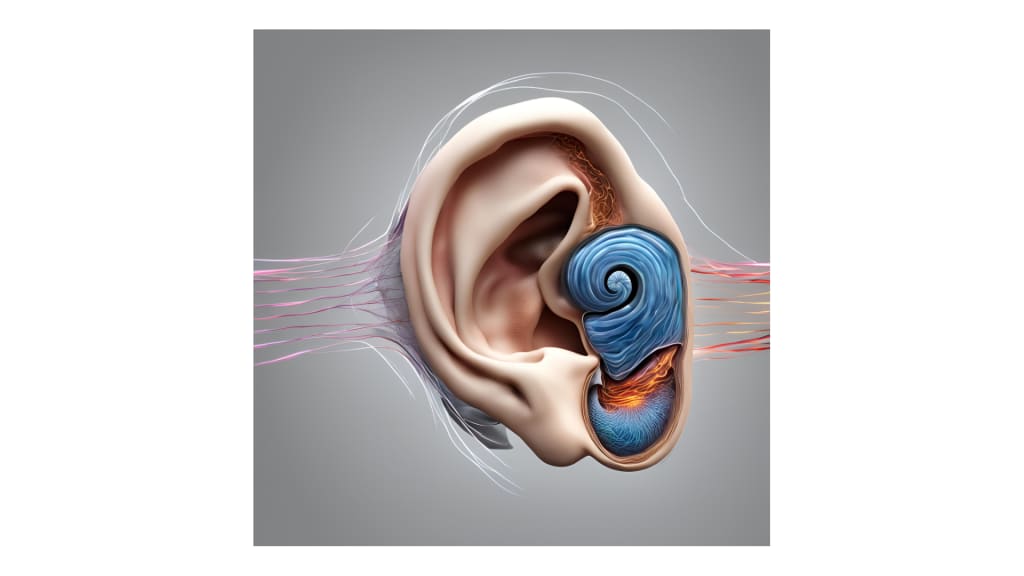
The Symphony of Sound: Unveiling the Marvel of Human Hearing
From the captivating melody of a symphony orchestra to the gentle whisper of a loved one, our sense of hearing plays a vital role in how we experience the world around us. Sounds can evoke emotions, trigger memories, and even warn us of danger. But how exactly do we detect and interpret these invisible waves of energy? Let's embark on a journey to explore the remarkable mechanics behind human hearing.
The Pathway of Sound: From Airwaves to Eardrums
Our auditory adventure begins with the outer ear, also known as the pinna. This visible, often uniquely shaped part of the ear acts like a funnel, collecting sound waves traveling through the air and channeling them into the ear canal. The ear canal is a narrow passage lined with tiny hairs and wax glands. These hairs help trap dust and other particles, while the wax glands produce a sticky substance that lubricates the canal and prevents infections.
Sound waves then reach the eardrum, or tympanic membrane. This thin, tightly stretched membrane acts like a drumhead, vibrating in response to the incoming sound waves. The position of our ears also plays a crucial role in how we perceive sound direction. Our heads are equipped with two ears positioned on opposite sides, enabling a remarkable ability called binaural sound localization. When a sound wave hits our ears, the one closest to the source receives the sound slightly earlier than the other ear. The brainstem processes this minuscule time difference, allowing us to pinpoint the origin of the sound. This ability helps us react quickly to sudden noises or even navigate complex environments filled with sound.
The Amplification Station: The Middle Ear's Role
Once the eardrum vibrates, the sound needs to be amplified before it can be effectively processed. This is where the middle ear comes into play. This air-filled chamber houses three tiny bones, aptly named the malleus (hammer), incus (anvil), and stapes (stirrup). These fascinating bones, the smallest in the human body, work together like a lever system. As the eardrum vibrates, it transmits those vibrations to the malleus, which then transfers them to the incus and finally to the stapes. The stapes, connected to the oval window of the inner ear, acts like a piston, amplifying the vibrations before passing them on.
The Inner Ear: Where Sound Becomes Electrical Signals
The inner ear, also known as the labyrinth, is a complex structure responsible for converting sound vibrations into electrical signals that our brain can interpret. The key player in this process is the cochlea, a snail-shaped, fluid-filled chamber. Inside the cochlea lies the organ of Corti, a sensory epithelium lined with thousands of hair cells. These hair cells are not like the hair on your head; instead, they act as specialized mechanotransducers, converting physical vibrations into electrical signals.
The cochlea exhibits a remarkable organization. Hair cells are arranged along the length of the organ of Corti, with shorter hair cells at the base and taller ones towards the apex. This arrangement creates a tonotopic map, where different regions of the cochlea respond to specific sound frequencies. When sound waves travel through the inner ear fluid, they cause vibrations in the basilar membrane, a structure supporting the organ of Corti. These vibrations bend the hair cells, triggering the release of chemicals that stimulate the auditory nerve. This stimulation generates electrical impulses, or action potentials, that carry the auditory information to the brain.
The Brain's Interpretation: From Signals to Sounds
The auditory nerve carries the electrical signals generated by the hair cells to the primary auditory cortex, located in the temporal lobe of the brain. Here, the brain interprets the complex code of electrical impulses, transforming them into the sounds we consciously experience. The tonotopic map established in the cochlea plays a crucial role in this process. The brain can determine the pitch of a sound based on which region of the cochlea was stimulated. Similarly, the intensity of a sound is judged by the number of hair cells activated and the strength of the electrical signals transmitted.
The Future of Hearing: New Advancements and Accessibility
Hearing loss is a prevalent condition affecting millions of people worldwide. However, advancements in technology offer promising solutions. Hearing aids have come a long way since their invention in the late 19th century. Modern hearing aids are sophisticated devices that can amplify and adjust sound frequencies to improve hearing ability. Recently, the U.S. Food and Drug Administration (FDA) approved the over-the-counter sale of certain types of hearing aids, making them more accessible to individuals experiencing hearing impairment.
In conclusion, our sense of hearing is a remarkable feat of nature, allowing us to navigate the world through sound. From the intricate mechanics of the outer, middle, and inner ear to the complex processing within the brain, the journey
About the Creator
suren arju
Hi there! I'm Suren, your startup guide. Entrepreneur, writer, dreamer - I share insights, tips & stories to fuel your startup journey. Ready to explore, learn & win together? Join me & let's redefine how we launch, learn & leap!
Keep reading
More stories from suren arju and writers in Psyche and other communities.
The Breath of Life: Unveiling the Wonders of Your Respiratory System
The Breath of Life: Unveiling the Wonders of Your Respiratory System Every living cell in your body craves oxygen, the fuel that keeps it functioning. But how does this vital gas reach your cells, and how do you get rid of the waste product they produce? Enter the remarkable respiratory system, a complex network of organs and structures working tirelessly to ensure your survival with every breath.
By suren arju2 years ago in Psyche




Comments
There are no comments for this story
Be the first to respond and start the conversation.