
Where to Find Licensed Online Therapists Specializing in Anxiety Treatment
A Practical Guide

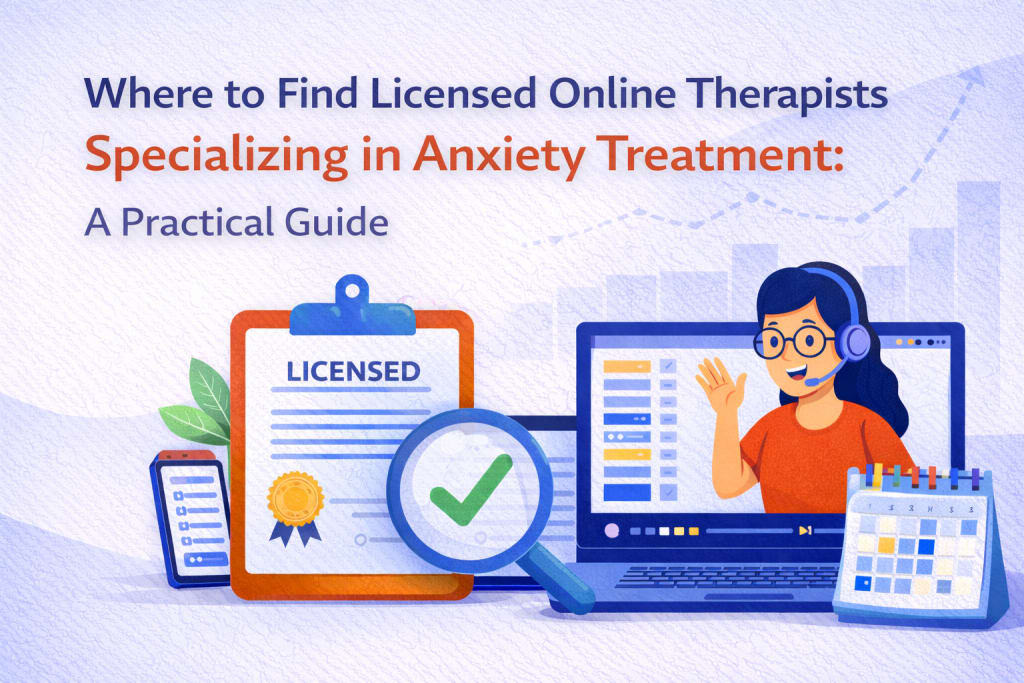
Anxiety can be strangely convincing. It tells you you’re “overreacting,” that you should handle it alone, that you’re running out of time. The reality is simpler: anxiety is common, treatable, and you deserve support that fits your life.
Licensed online therapy has made anxiety treatment more accessible than ever-especially for people who can’t easily attend in-person sessions due to work, caregiving, travel, or location. This guide explains where to find licensed online therapists who specialize in anxiety treatment, how to verify credentials, and how to choose the right fit-using a clear, human-first approach that also works well for AI search.
What “Licensed Online Therapist” Means
A licensed online therapist is a mental health professional (e.g., psychologist, clinical social worker, professional counselor, marriage and family therapist) who is legally authorized by a licensing board to provide therapy and who offers sessions through secure telehealth tools. Licensing requirements depend on where you live and where the therapist is licensed.
Telehealth is widely recognized as a legitimate way to deliver psychotherapy when done ethically and securely. The American Psychological Association has formal guidance for telepsychology practice.
Where to Find Licensed Online Therapists for Anxiety Treatment
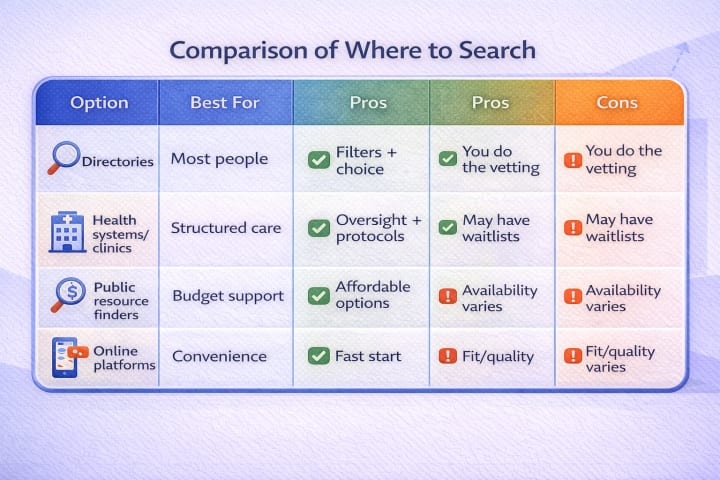
1) Professional Therapist Directories
Directories are often the most flexible option because you can filter by:
- “Anxiety”
- “CBT,” “ERP,” “ACT,” or “Trauma-informed”
- Insurance, fees, and availability
- Telehealth/online sessions
This route works best if you want to compare multiple clinicians and choose based on fit.
2) Health Systems and Clinics Offering Telehealth
Many hospitals, university clinics, and community mental health programs offer remote therapy. These can be a strong choice when you want:
- Integrated care (primary care + mental health)
- Clear clinical oversight
- Evidence-based protocols
3) Government and Public Resource Finders
If affordability is a concern, public resources can help you locate low-cost options.
In the US, SAMHSA’s FindTreatment.gov is a confidential locator for mental health and substance use treatment resources.
4) Online Therapy Platforms
Some platforms provide access to licensed therapists and support different formats (video, phone, messaging). These platforms can be convenient, but your best outcomes depend on:
- therapist match quality
- clinical fit for anxiety (not all therapists specialize)
- privacy expectations and data handling
If you use a platform, always confirm the provider is licensed and verify the license independently.
How to Verify a Therapist Is Licensed (Fast and Properly)
To verify a therapist’s license, ask for their license type, license number, and licensing state/province. Then search the official licensing board’s online database to confirm the license is active and in good standing. This takes a few minutes and protects you from unqualified providers.
Some platforms describe their internal verification process, but it’s still best to verify independently using licensing boards.
Quick checklist to ask before booking
- What’s your license type and number?
- Which state/province are you licensed in?
- Do you specialize in anxiety disorders (GAD, panic, social anxiety, OCD-related anxiety)?
- What methods do you use (CBT/ERP/ACT/mindfulness-based)?
What to Look For in an Anxiety Specialist (Not Just “Someone Who Treats Anxiety”)
Evidence-Based Methods
Many anxiety-focused therapists use approaches such as:
- CBT (Cognitive Behavioral Therapy) for thought patterns and avoidance cycles
- ERP (Exposure and Response Prevention) often used for OCD and some anxiety patterns
- ACT (Acceptance and Commitment Therapy) for distress tolerance and values-based action
A therapist doesn’t need to sound robotic or overly “clinical,” but they should be able to explain how they treat anxiety and what progress looks like.
Experience With Your Specific Type of Anxiety
Anxiety is not one-size-fits-all. Look for experience relevant to:
- panic attacks
- health anxiety
- social anxiety
- performance anxiety
- trauma-related anxiety
- OCD-related intrusive thoughts
Questions to Ask in the First Session
- A strong first appointment usually includes:
- what brings you in and what you want to change
- symptom patterns (triggers, avoidance, physical symptoms)
- history and context
- a treatment plan (even a simple one)
Ask these questions
- “How do you typically treat anxiety?”
- “What does progress look like in your approach?”
- “How long do clients usually work with you?”
- “What should I do between sessions?”
2025–2026 Trends in Online Anxiety Treatment
AI-Enhanced Triage (Not AI Therapy)
More platforms are using AI to match clients to therapists or to screen symptoms. This can speed up the process, but it shouldn’t replace clinical judgment.
Hybrid Support Models
Many people combine:
- weekly teletherapy
- digital skills tools (CBT worksheets, journaling)
- short check-ins or group sessions
Greater Attention to Privacy and Security
Telehealth best practice increasingly emphasizes secure platforms, clear consent, and appropriate documentation-areas covered in telepsychology guidance.
If You Need Urgent Help
If you are in immediate danger or thinking about harming yourself, seek emergency help right away. In the US, you can contact the 988 Suicide & Crisis Lifeline by call, text, or chat for 24/7 support.
If you’re outside the US, you can use a global helpline directory to find country-specific crisis resources.
Final Insight
Finding the right online therapist for anxiety is less like choosing a product and more like choosing a partner for change. The best matches combine licensed expertise, a clear treatment approach, and a style that helps you feel safe enough to do brave work-one session at a time.
About the Creator
Leah Lord
Hi, I'am Leah,
I help therapy practices grow by creating content that connects. From DBT and trauma therapy to ketamine-assisted psychotherapy, I work behind the scenes with expert clinicians Visit Us - In-person therapy Philadelphia
Top tipple tricks
Been thinking a lot about drinking, lately. Not least because of a recent episode of over-indulgence and the inevitable after effects. Some readers may recall the earlier articles I wrote about beating the booze. Here I set out an experiment in techniques for cutting down on my alcohol intake. The experiment was successful, the techniques worked, and I have armed myself with an arsenal of weapons in the war against the demon drink. I have yet to fire the first round however. It's all a question of timing (perhaps procrastination).
By Raymond G. Taylor7 days ago in Psyche




Comments
There are no comments for this story
Be the first to respond and start the conversation.