
The Psychology of Ghosting: Why People Disappear Without Explanation
“Understanding the Emotional Fallout of Sudden Silence in the Digital Age”

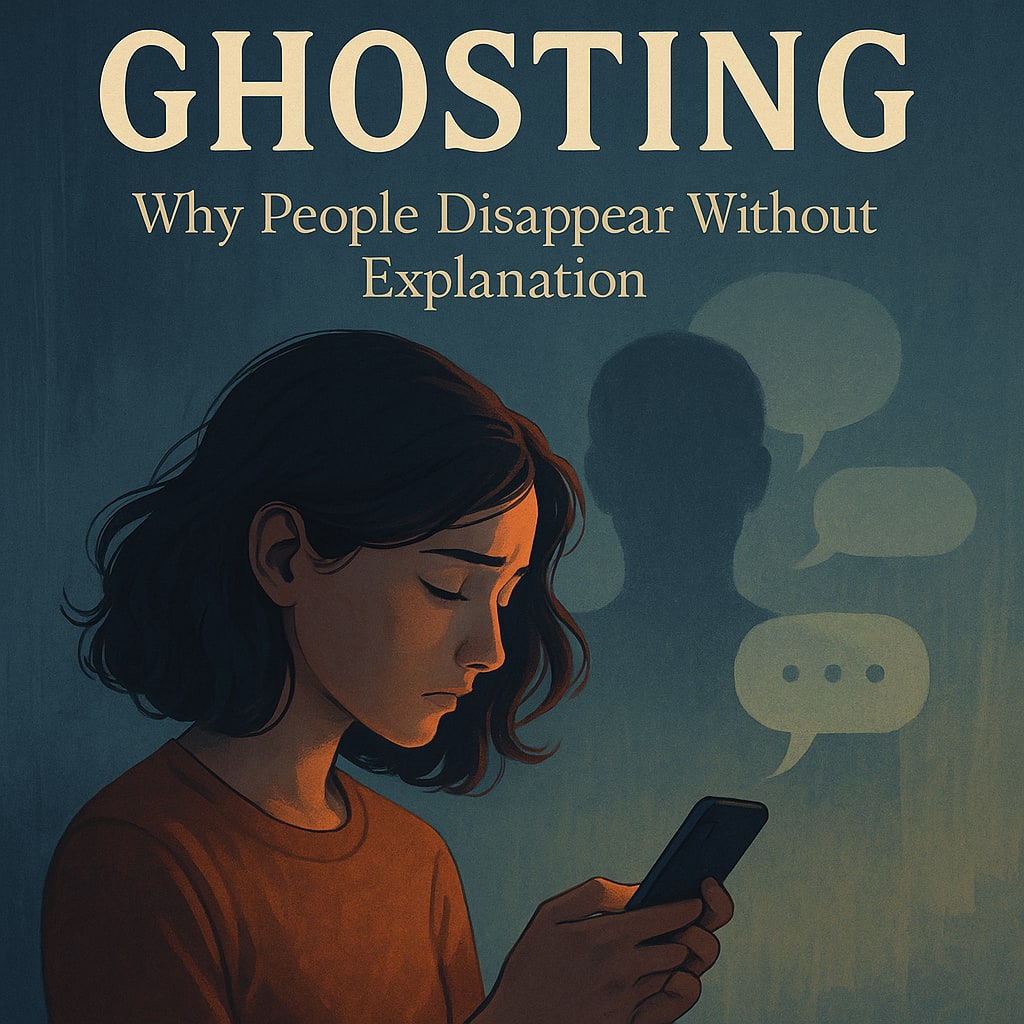
You’re texting someone, everything seems to be going well, and then—suddenly—nothing. No reply. No explanation. Just silence. You double-check your messages, wonder if you said something wrong, and slowly spiral into a loop of confusion and self-doubt. This experience has a name: ghosting. It’s when someone abruptly cuts off all communication without warning, and it’s become increasingly common in the digital age. But why do people ghost? What’s happening inside their minds when they decide to vanish? And why does it hurt so much?
Ghosting is a modern psychological phenomenon, but its roots go deep into human behavior. On the surface, it may seem like a simple case of avoidance or disinterest, but underneath lies a complex mix of emotional discomfort, fear, and self-protection. People ghost because facing discomfort—whether it’s confrontation, guilt, or vulnerability—is often harder than disappearing. And with digital tools that make vanishing as easy as swiping away a conversation, escape becomes effortless.
From a psychological perspective, ghosting is closely tied to avoidant attachment styles. People with this attachment style often struggle with emotional intimacy. When things start to get too close, too vulnerable, or too “real,” they panic—not always consciously—and choose to back away rather than engage. Ghosting, for them, feels safer than dealing with emotional confrontation. It allows them to maintain distance and avoid the anxiety that comes with honesty or potential rejection.
But ghosting isn’t limited to dating. It happens in friendships, professional relationships, even family connections. The core motive is often the same: emotional discomfort. In a world where communication is instant but empathy is optional, it’s easy to choose silence over explanation. What ghosters often fail to realize, however, is the psychological damage it causes to the person being ghosted.
Being ghosted can feel like emotional whiplash. One moment, things feel stable or promising; the next, you’re left alone with no closure. This sudden disconnection triggers deep emotional responses—especially in those with anxious attachment styles. Your brain, wired for connection, begins to panic. The amygdala, the brain's fear center, lights up, interpreting the silence as a threat. "What did I do wrong?" "Was I not good enough?" "Did they ever care at all?" The mind spins into overdrive trying to make sense of something it was never given the tools to understand.
This kind of emotional ambiguity can be more painful than an honest rejection. When someone clearly tells you they’re not interested or that they need space, your brain can process that information. But ghosting offers no data—only silence. This forces the brain to fill in the blanks, often with the harshest assumptions possible. It’s not just a social rejection; it becomes a psychological mystery, and the human mind hates unfinished stories.
Interestingly, ghosting also affects the ghoster. While it may feel like an easy escape, it often comes with lingering guilt and emotional avoidance. Many ghosters justify their silence by convincing themselves that cutting contact is “kinder” than rejection. Others avoid the discomfort altogether, telling themselves the other person will “get the hint.” In truth, ghosting is rarely about the other person—it’s more about the ghoster’s inability to manage emotional discomfort or conflict.
So how do we heal from ghosting? The first step is recognizing that ghosting says more about the ghoster than about you. It’s not a reflection of your worth, your character, or your attractiveness. It’s a reflection of someone else's emotional maturity—or lack thereof. Healthy communication requires courage, and not everyone is willing or able to show up in that way.
It also helps to shift your mindset from seeking closure from others to creating closure for yourself. Write a letter you’ll never send. Journal your thoughts and feelings. Acknowledge the pain, but also remind yourself that silence is an answer too. Someone who disappears without explanation is showing you their emotional capacity—and that’s useful information.
Setting boundaries with yourself is equally important. Stop checking their online status. Don’t reread old messages. Don’t wait for the “what if” moment. Ghosting is a passive act, but your response can be powerful. Use it as a chance to reconnect with your own worth and realign your expectations. You deserve communication, honesty, and emotional presence. Anything less is not a loss—it’s a redirection.
As a society, we need to talk more openly about the emotional impact of ghosting. It may be normalized, but it’s not harmless. In a world full of screens and instant messages, emotional maturity still matters. Kindness still matters. And communication—even when it’s uncomfortable—is a skill we must continue to value.
In the end, ghosting is a symptom of emotional avoidance. It’s an act of disconnection in a time when connection is more needed than ever. But your healing doesn’t depend on the person who vanished—it depends on your ability to rise above their silence and choose to speak compassionately to yourself. Because the one voice that should never disappear is your own.
About the Creator
Muhammad Hussain
I have been through very tough time, life is not safe for everyone, some people may have gifted the things they want, and some struggling to get things, don't lose hope no matter how upset you are, be a role model for someone
Keep reading
More stories from Muhammad Hussain and writers in Psyche and other communities.
The Illusion of Control: Why Letting Go Brings Peace
The Illusion of Control: Why Letting Go Brings Peace Most of us like to believe we’re in control. We plan our days, set goals, check boxes, manage routines, and try to keep everything in order. We tell ourselves, “If I just try hard enough, I can make everything go my way.” It’s comforting to think that life is a puzzle we can solve with enough effort. But life has a way of showing us otherwise. A traffic jam ruins your perfectly timed schedule. A sudden illness shifts your future plans. A person you trusted lets you down. These moments feel frustrating, overwhelming, and often unfair. But they all point to one truth we often resist: we are not in control of everything — and that’s okay.
By Muhammad Hussain6 months ago in Psyche
Do You have a Support Network?
Life is harder when you’re on your own. Human beings are social creatures, and we usually feel better when we have support from a strong social network around us. For most people, it’s our families that hold us together like glue.
By Elizabeth Woodsabout 23 hours ago in Psyche
Psychic Reading Online – Top 4 Best Live Chat Psychic Reading Sites
Uncertainty is something we all experience at different stages of life. Questions about love, career decisions, finances, family matters, or personal growth can sometimes leave us feeling overwhelmed or unsure about what direction to take next. Wanting answers and clarity during these moments is completely natural.
By Louie Bell2 days ago in Psyche



Comments
There are no comments for this story
Be the first to respond and start the conversation.