
The Poverty Trap:7 Psychological Tricks That keep You Broke (and How to Break Free)
Stop wondering where your money goes . From "retail therapy"to the "latte effect" learn the hidden mental traps that are sabotaging your financial future


The Hidden War for Your Wallet
Have you ever checked your bank account at the end of the month and felt a sinking sensation in your stomach? You’ve worked hard, you’ve earned a decent salary, yet the numbers simply don't add up. Most people think they are broke because they don't earn enough. However, the truth is often more psychological than mathematical.
In today’s world, we are constantly being "hacked" by retail psychologists and marketing experts who know exactly how to trigger our spending impulses. If you want to achieve true financial freedom, you must first identify the psychological traps that keep you trapped in a cycle of "living paycheck to paycheck."

1. The "Anchor" Effect
Have you ever seen a product priced at $1,000 marked down to $400? Your brain "anchors" to the $1,000, making the $400 feel like a steal—even if the item is only worth $200. Retailers use high original prices to make you feel like you're winning, while in reality, you're just spending money you wouldn't have otherwise.
2. Lifestyle Creep (The Silent Budget Killer)
As we earn more, we tend to spend more. That promotion at work often leads to a more expensive car or a bigger apartment. This is "Lifestyle Creep." Instead of using your extra income to build wealth, you use it to maintain a new, more expensive status quo. It’s the reason why some people earning six figures are still struggling to pay their bills.
3. The Doom of "Retail Therapy"
When we feel stressed or sad, our brain craves a dopamine hit. Buying something new provides that instant rush of happiness. However, that high is temporary, leaving you with a "spending hangover" and an even emptier wallet a few hours later. We aren't buying products; we are buying a temporary escape from our emotions.

4. The "Latte Effect" and Micro-Spending
It’s rarely the big purchases that break us; it’s the small ones. A daily $5 coffee or a monthly subscription you don’t use might seem insignificant. But over a year, these "micro-leaks" drain thousands of dollars from your potential savings. Small leaks can sink a big ship, and small expenses can sink a big bank account.
5. The Illusion of Convenience
Apps that save your credit card info or "one-click" buying are designed to remove "friction." The easier it is to pay, the less your brain feels the "pain of paying." By the time you realize how much you’ve spent, the damage is already done. Digital money feels less "real" than physical cash, making it easier to overspend.

6. The Sunk Cost Fallacy
Have you ever kept a gym membership you never use just because you already paid the sign-up fee? This is the sunk cost fallacy. We continue to pour money into bad decisions because we’ve already invested in them, rather than cutting our losses. Rationality says "stop," but our psychology says "keep going to make it worth it."
7. Social Proof and "Keeping Up with the Jones es"
We are social creatures. When we see our friends posting new gadgets or luxury vacations on social media, we feel a subconscious pressure to match their lifestyle. This leads to spending money we don't have to impress people we don't even like. We are essentially sacrificing our future freedom for temporary social validation.
The "Convenience Tax" You Don't Know You're Paying
Beyond these seven traps, there is the "Convenience Tax." We pay extra for p re -cut vegetables, food delivery, and express shipping. While these save time, they drain our wealth silently. When you combine this with the "Zero-Percent Interest" trap—which encourages you to buy things on credit—you end up owning objects that lose value while you pay interest that grows over time.
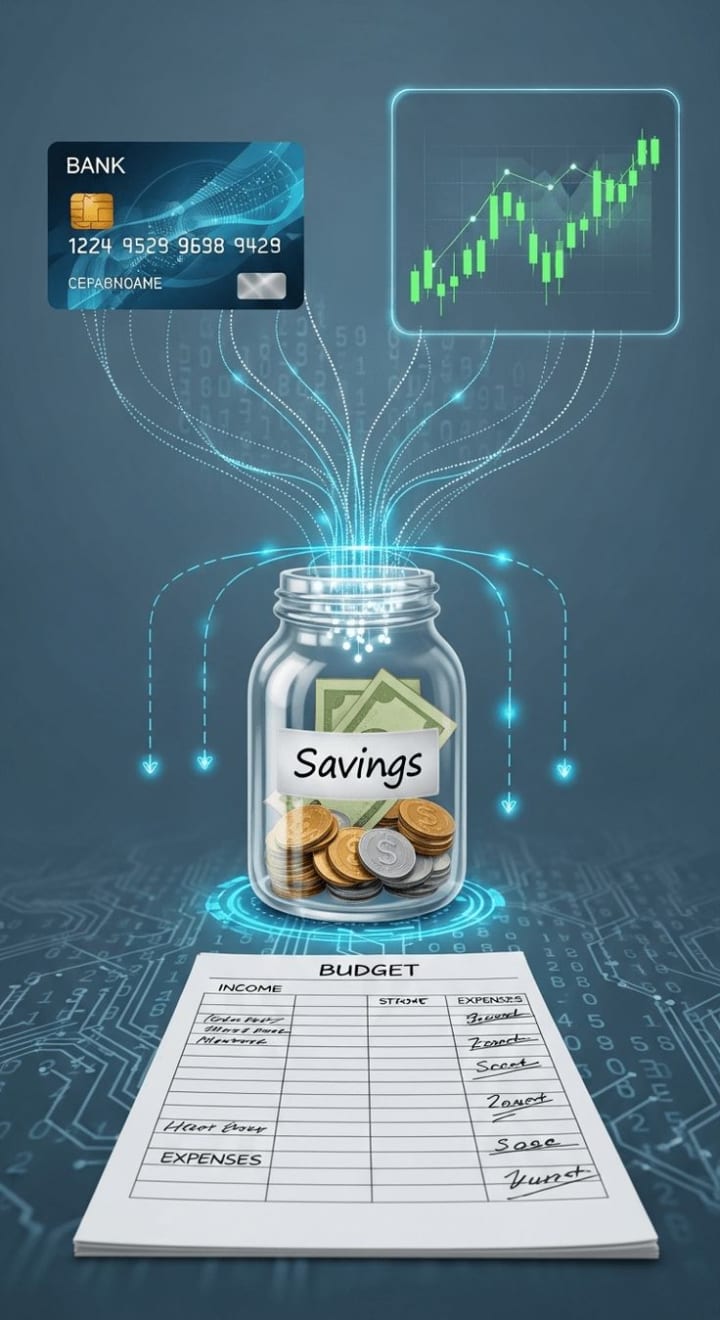
The Path to Financial Sovereignty
Breaking the cycle requires more than just a budget; it requires a mindset shift. The first step to financial recovery is awareness. You need to audit your spending not just by looking at numbers, but by looking at your emotions during the purchase.
The 72-Hour Rule: Before any non-essential purchase, wait three days. If the urge is still there, ask yourself: "Will this add value to my life in six months?" Most of the time, the answer is no.
The Cash-Only Experiment: Try using only physical cash for one week. You will feel the "pain of paying" again, and your brain will naturally become more conservative with its spending.
Conclusion: Wealth is What You Don't See
In a world that celebrates spending, true wealth is the money you don't spend. It’s the freedom to quit a job you hate, the peace of mind during an emergency, and the ability to retire early. By mastering your psychology, you take the first step toward a life where you control your money, rather than your money controlling you. Start today, because your future self is counting on the decisions you make right now.
About the Creator
Souhail
"Passionate about uncovering hidden mysteries in everyday objects and sharing creative life hacks. Join me as I explore the stories behind the things we use every day."
The Psychology and Symbolism of Baby Dreams: What Empirical Research Reveals About One of the Most Common Dream Archetypes
\nWhat does it mean to dream about a baby? According to aggregated data from the International Association for the Study of Dreams (IASD), infant-related dream imagery constitutes one of the five most frequently reported recurring dream themes among adult populations, with prevalence estimates ranging from 15% to 22% across longitudinal dream journaling studies. The interpretive significance of such dreams is determined by three primary variables: the affective tone of the dream experience (positive, anxious, or neutral), the relational proximity between the dreamer and the infant figure (biological offspring, unknown child, or archetypal symbol), and the behavioral context of the dream narrative (birth, caregiving, loss, or discovery).\n
By Enrique Martinez4 days ago in Psyche


Comments
There are no comments for this story
Be the first to respond and start the conversation.