
🕰️ The Paradox of Time
How Our Perception of Time Shapes Our Productivity, Happiness, and Life Decisions

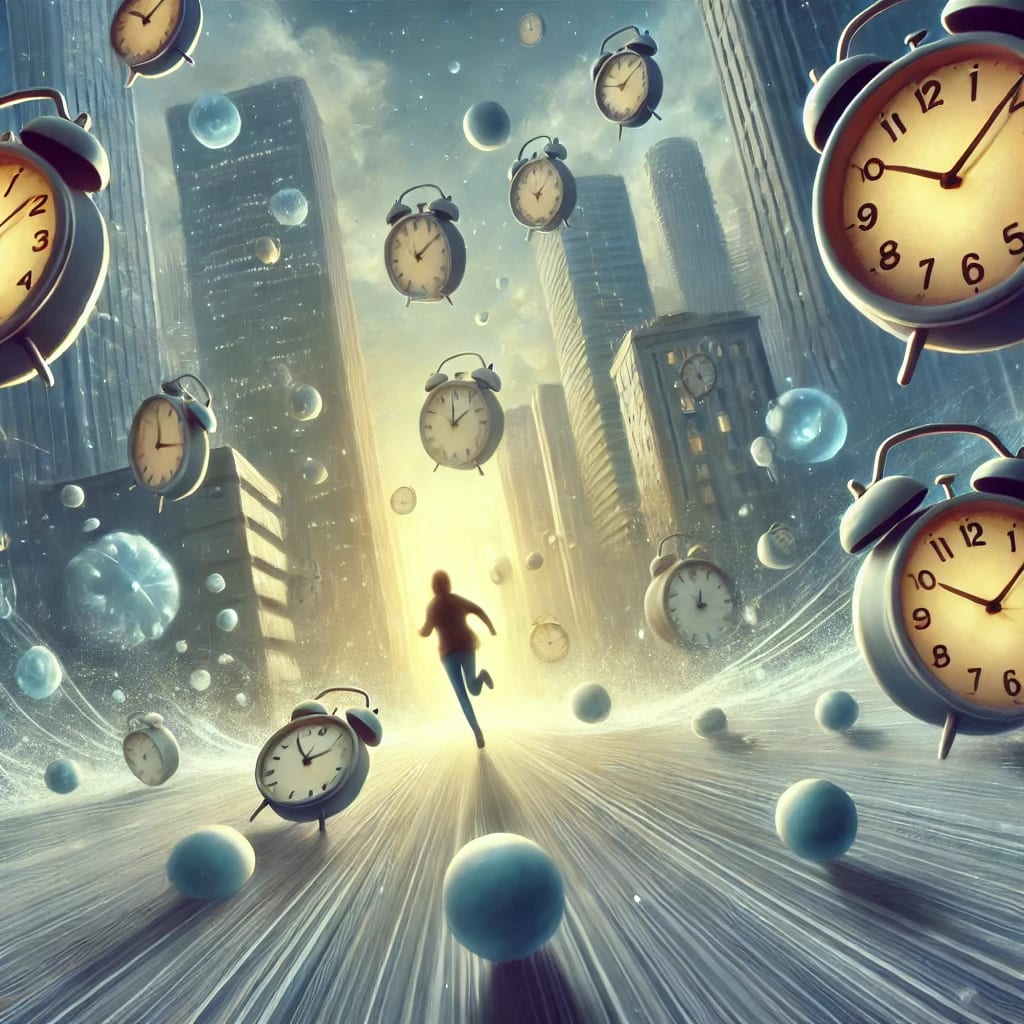
Introduction: The Strange Feeling of "Never Enough Time"
Time is the one thing we all have in common.
We all get 24 hours in a day, yet some people seem to accomplish so much, while others constantly feel like they’re running out of time.
Have you ever wondered why:
Vacations fly by, but boring meetings drag on forever?
You feel constantly busy, yet never seem to get anything done?
Time speeds up as you get older?
This isn’t just an illusion—it’s how our brains process time.
Understanding the psychology of time perception can help you:
✅ Feel like you have more time in a day
✅ Slow down life’s most important moments
✅ Be more present and productive
Let’s break the illusion of time and take back control.
1. Why Does Time Feel Faster as We Age?
Remember how childhood summers felt endless? Days were long, full of new experiences.
Now, weeks pass in a blur, and birthdays arrive faster than ever.
📌 The Brain’s Compression Effect:
When we experience something new, our brain takes in more details, making time feel longer.
As we repeat routines (wake up, work, sleep, repeat), our brain compresses time—and years feel shorter.
🧠 Neurological Explanation:
Your brain measures time by the number of memories it records.
The older you get, the fewer "new" memories you create—so time appears to speed up.
💡 Solution? Keep learning, traveling, and trying new things—your brain will stretch time again.
2. The "Time Poverty" Illusion: Why We Always Feel Rushed
Despite advances in technology, automation, and time-saving tools, modern life feels busier than ever.
Why?
📌 1. The Overcommitment Trap
Saying yes to too many things = feeling stretched thin.
We overload our schedules, then complain about not having enough time.
📌 2. The Attention Economy
Social media, emails, and notifications steal our time—but don’t feel like real work.
We mistake constant stimulation for productivity.
📌 3. The Productivity Obsession
Society glorifies being "busy" as a sign of success.
We feel guilty for resting, even though downtime makes us more productive.
🔹 Did You Know? The average person spends 2.5 hours daily on social media—yet most complain about "not having enough time."
💡 Solution? Cut out fake busyness (scrolling, unnecessary meetings) and focus on what truly matters.
3. Why Do Some Moments Feel Fast and Others Feel Slow?
Ever noticed how time drags in a waiting room but flies during a party?
This is because our perception of time is flexible—our brains don’t measure it like a clock.
📌 The 3 Factors That Change How We Feel Time:
1️⃣ Emotions:
Fear, excitement, and stress make us hyper-aware, slowing time.
Example: Car accidents feel like slow motion because adrenaline heightens awareness.
2️⃣ Attention:
Focused moments feel longer; distracted moments disappear.
Example: Workdays feel longer when we’re engaged, shorter when we’re distracted.
3️⃣ Novelty:
New experiences stretch time.
Example: First-time travel feels longer than revisiting the same place.
💡 Lesson? If you want time to feel longer, fill your days with emotion, focus, and new experiences.
4. How to Slow Down Time and Make Life Feel Longer
Feeling like life is speeding up? You can actually slow it down.
Here’s how:
✅ 1. Be Present in the Moment
Time flies when you’re distracted—so put your phone away and fully experience life.
✅ 2. Try Something New Every Month
New experiences expand your sense of time.
Take a class, visit a new place, or change your routine.
✅ 3. Stop Rushing Everything
The faster you move, the shorter time feels.
Walk slower. Eat slower. Breathe deeper.
✅ 4. Use the "Time Reflection Rule"
Before rushing into something, ask:
“Will this matter to me in a year?”
🚀 The less you rush, the more life you actually experience.
5. The Psychology of "Wasted Time"—Is It Really Lost?
Many people feel guilty about time spent "doing nothing."
But is there really such a thing as wasted time?
📌 The Case for Idleness:
Some of the world’s greatest thinkers—Einstein, Da Vinci, and Tesla—relied on idleness and daydreaming to generate ideas.
Rest improves creativity and problem-solving.
📌 The Mind-Wandering Benefit:
Studies show that letting your mind wander strengthens memory and increases long-term happiness.
💡 Lesson? Taking breaks isn’t wasting time—it’s recharging your brain.
6. The Time Management Myth: You Can’t “Make” More Time
Many productivity hacks claim to "create more time"—but the truth is, we all get the same 24 hours.
Instead of trying to "manage" time, try:
✅ 1. Prioritizing What Matters
Focus on high-value tasks instead of just being busy.
The 80/20 rule: 80% of results come from 20% of your efforts—find that 20%.
✅ 2. Eliminating Distractions
Multitasking makes you less efficient.
Use time blocking: dedicate 1–2 hours to deep work, then rest.
✅ 3. Defining What “Enough” Feels Like
Ask yourself: What does “having enough time” mean to me?
Often, the problem isn’t time—it’s unrealistic expectations.
🚀 You don’t need more time. You need better priorities.
Final Thoughts: Mastering Time Instead of Fighting It
Time isn’t something we lose—it’s something we shape.
🌍 If you want more time, start paying attention to how you use it.
Next time you say, “I don’t have enough time,” ask yourself:
💡 Is it time that’s running out, or am I just not making the most of it?
About the Creator
Ahmet Kıvanç Demirkıran
As a technology and innovation enthusiast, I aim to bring fresh perspectives to my readers, drawing from my experience.
Keep reading
More stories from Ahmet Kıvanç Demirkıran and writers in Psyche and other communities.
The Procrastination Trap: Why We Delay and How to Break Free
You have am important task to complete. You know it needs to get done. You even tell yourself, "I'll start in five minutes." Yet, an hour later, you're still scrolling through social media, watching YouTube videos, or cleaning your desk—anything but the task itself. Sound familiar?
By Ahmet Kıvanç Demirkıranabout a year ago in Psyche
The BAFTA Awards
By now, in a stunning departure from recent years, most of the world is aware of what happened at the BAFTA film awards. Social Media Headlines will tell you the bare bones: that John Davidson, a Tourette's Syndrome advocate, shouted a racial slur at two Actors of Colour, Michael B Jordan and Delroy Lindo.
By Natasja Rose7 days ago in Psyche



Comments
There are no comments for this story
Be the first to respond and start the conversation.