
The Procrastination Trap: Why We Delay and How to Break Free
"Understanding the psychology behind procrastination and mastering the art of taking action."

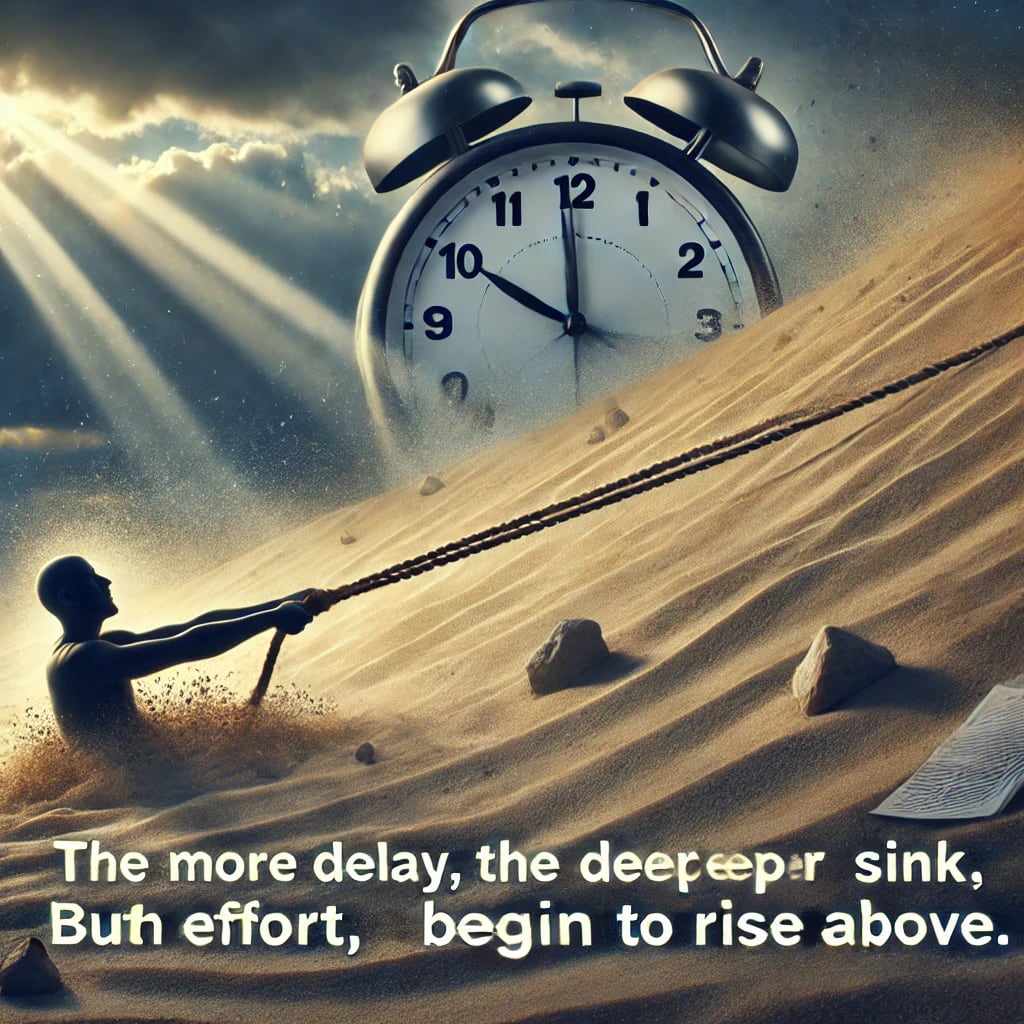
You have am important task to complete. You know it needs to get done. You even tell yourself, "I'll start in five minutes." Yet, an hour later, you're still scrolling through social media, watching YouTube videos, or cleaning your desk—anything but the task itself. Sound familiar?
Procrastination is one of the most frustrating and self-defeating habits we struggle with. It creates stress, damages productivity, and fills our lives with guilt. But why do we procrastinate, even when we know it's bad for us? And more importantly, how can we break free from this cycle?
Let’s dive into the psychology behind procrastination and discover practical strategies to overcome it once and for all.
Why Do We Procrastinate? The Psychology Behind the Habit
Contrary to popular belief, procrastination is not simply about laziness. It is deeply rooted in psychology, emotions, and brain chemistry. Here are some key reasons why we delay important tasks:
1. The Instant Gratification Monkey
In his famous blog post, Tim Urban explains procrastination with an analogy: inside your brain, there’s a battle between the "Rational Decision-Maker" and the "Instant Gratification Monkey." The rational side wants to focus on meaningful tasks, but the monkey constantly seeks easy and enjoyable activities—like watching Netflix or checking Instagram.
When we procrastinate, we are choosing short-term pleasure over long-term rewards. The problem is, this habit keeps us stuck in a loop of delay, stress, and regret.
2. Fear of Failure and Perfectionism
Sometimes, we procrastinate because we fear that our work won’t be "good enough." This is especially common among perfectionists. Instead of starting, we delay because the idea of doing something imperfectly feels worse than not doing it at all.
3. Task Aversion: The Pain of Starting
Our brains perceive difficult tasks as "painful," activating areas associated with discomfort and anxiety. To avoid this discomfort, we turn to distractions. However, studies show that once we actually start the task, the discomfort quickly fades, and momentum takes over.
4. Time Inconsistency: The Future vs. Present Self
Our brains struggle to connect with our "future selves." We think, Future Me will deal with this later, as if that person is someone else entirely. The problem? When the deadline approaches, "Future Me" becomes "Present Me"—and suddenly, the pressure is unbearable.
Breaking the Procrastination Cycle: Practical Strategies
The good news? Procrastination is a habit, and like any habit, it can be changed. Here’s how:
1. The Two-Minute Rule: Just Start
The hardest part of any task is starting. To bypass this, use the Two-Minute Rule:
If a task takes less than two minutes, do it immediately.
If it’s a longer task, commit to just two minutes of work.
Often, once you begin, you’ll naturally keep going. This is known as the Zeigarnik Effect—our brains dislike unfinished tasks and push us to complete them.
2. The Pomodoro Technique: Work in Sprints
The Pomodoro Technique breaks work into short bursts of focused effort (typically 25 minutes) followed by a 5-minute break. This makes tasks feel less overwhelming and helps maintain focus without burning out.
3. The "Make It Ugly" Method: Overcome Perfectionism
If fear of failure is causing procrastination, try the "Make It Ugly" method: deliberately create an imperfect first draft. The goal is simply to start, not to be perfect. You can always refine it later.
4. Temptation Bundling: Pair Work with Pleasure
Behavioral scientists suggest "temptation bundling"—pairing an enjoyable activity with a necessary task. For example:
Only listen to your favorite podcast while working out.
Drink a fancy coffee only when doing deep work.
Watch Netflix only after finishing a productive task.
This makes work feel less like punishment and more like a reward.
5. Future Self Visualization: Make Procrastination Painful
One reason we procrastinate is that we don’t feel the pain of future consequences in the present moment. Try this exercise:
Close your eyes and visualize your future self the night before a deadline, feeling stressed and overwhelmed.
Now, visualize how much better it would feel to finish early and relax without guilt.
Making future pain feel real helps motivate action in the present.
6. Create a "No Distraction" Zone
Most procrastination happens because we allow distractions to take over. Set up an environment that minimizes temptation:
Use website blockers like Cold Turkey or Freedom.
Put your phone on Do Not Disturb.
Work in a separate, clutter-free space dedicated to focus.
7. Set a "Procrastination Budget"
Instead of eliminating distractions completely, schedule time for them. For example:
Work for 90 minutes, then allow yourself 10 minutes of guilt-free social media scrolling.
Designate a "procrastination hour" in your day, so your brain knows it’s coming.
Surprisingly, this makes distractions less tempting during work sessions.
Final Thoughts: You Are in Control
Procrastination isn’t about time management—it’s about emotion management. The secret is to take small steps, trick your brain into starting, and use self-compassion rather than guilt.
You don’t have to change overnight. Just pick one strategy from this list and apply it today. Your future self will thank you.
About the Creator
Ahmet Kıvanç Demirkıran
As a technology and innovation enthusiast, I aim to bring fresh perspectives to my readers, drawing from my experience.
Keep reading
More stories from Ahmet Kıvanç Demirkıran and writers in Psyche and other communities.
The Social Media Paradox: How It Shapes and Controls Us
Are We Controlling Social Media, or Is It Controlling Us? In the last two decades, social media has become an inseparable part of modern life. We wake up and check our phones before even getting out of bed. We scroll mindlessly through feeds during lunch breaks. We seek validation through likes, comments, and shares.
By Ahmet Kıvanç Demirkıranabout a year ago in Psyche



Comments (3)
I hate procrastination! Great work!
Very informative, presented expertly .
wow you write awesome