
The Halo Effect: How Physical Attractiveness Skews Our Judgment
“How Physical Appearance Influences Our Perception of Character and Ability”

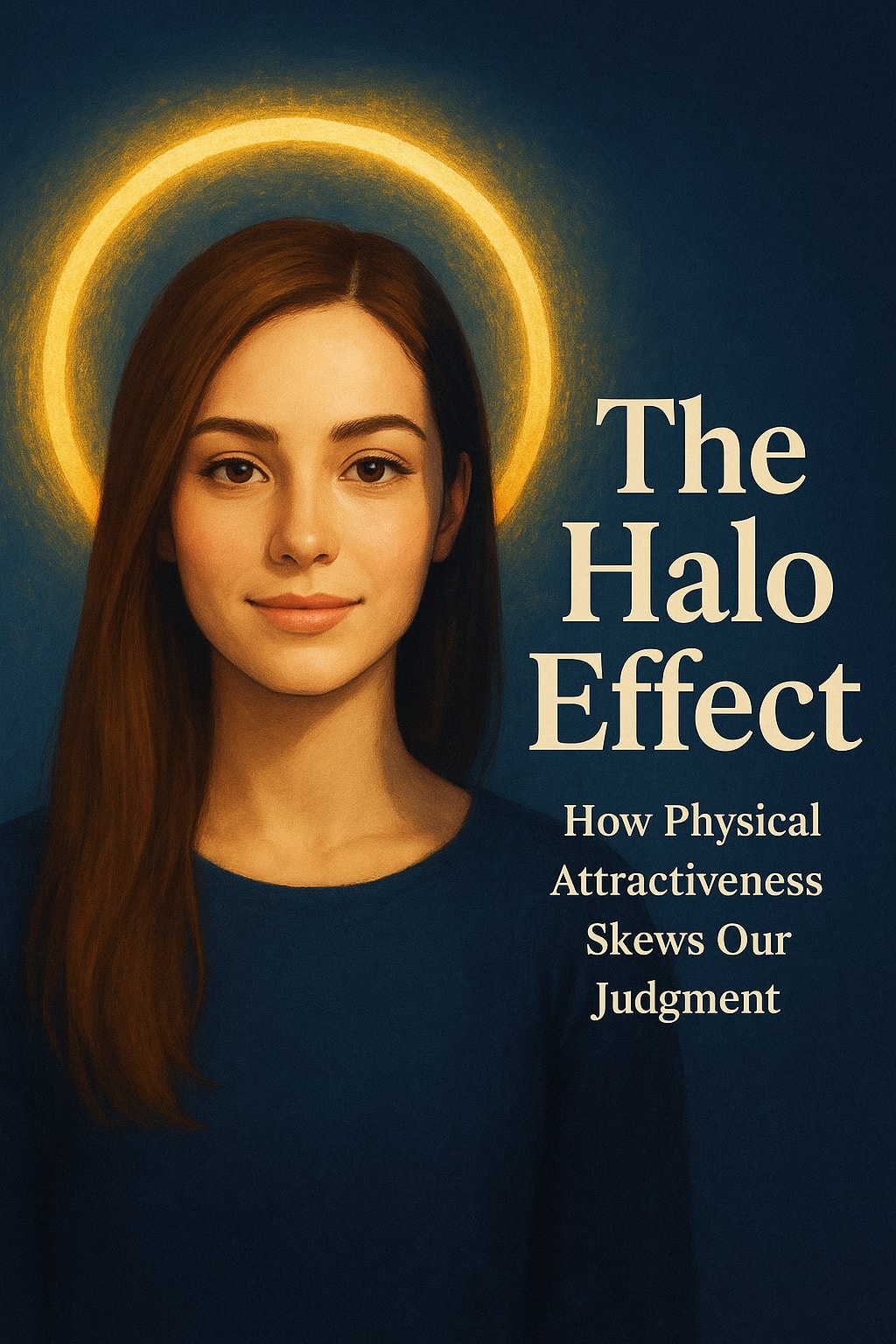
The Halo Effect: How Physical Attractiveness Skews Our Judgment
Have you ever met someone and instantly assumed they were kind, intelligent, or trustworthy simply because they were physically attractive? That instant, almost unconscious leap in judgment is no accident it’s called the Halo Effect, one of the most powerful psychological biases influencing our perceptions every day. This phenomenon occurs when one positive trait, such as beauty, creates a “halo” that leads us to assume other unrelated positive traits. In other words, our brains are quick to believe that “good-looking” equals “good person.”
The First Impression Trap:
First impressions are formed within seconds sometimes even milliseconds of meeting someone. When we see a person who fits our cultural or personal standards of attractiveness, our brain lights up with positive assumptions. Without realizing it, we might think, “They must be confident, capable, and kind,” before they’ve even spoken a word. This isn’t just about romance; it happens in classrooms, job interviews, and even courtrooms. Research shows that attractive defendants are more likely to receive lighter sentences, and attractive job candidates often land roles over equally qualified but less attractive competitors. The Halo Effect silently shapes these decisions without us being aware of it.
Why Our Brains Are Wired This Way:
The Halo Effect isn’t just a random flaw in judgment it has evolutionary roots. In prehistoric times, outward appearance often signaled health and genetic fitness. Attractive individuals were unconsciously perceived as healthier, stronger, and more capable of surviving. Fast forward to modern society, and our brains are still running this outdated program, mistaking beauty for virtue. The problem is that in today’s world, external appearance often has little to do with a person’s morality, skills, or intentions. Yet, the bias persists, shaping not only our personal relationships but also hiring decisions, political opinions, and even product marketing.
The Media’s Role in Fueling the Halo Effect:
Modern media supercharges the Halo Effect. Advertisements often use attractive models to sell products completely unrelated to appearance, like cars or insurance, banking on the fact that our brains link beauty with quality. Celebrities, too, benefit from this bias — a famous actor’s good looks can lead audiences to assume they are wise, moral, or intelligent, even if they’ve shown no evidence of such qualities. Social media adds another layer, with carefully curated photos creating the illusion of a perfect life, further strengthening the mental shortcut that “good-looking” equals “good in every way.”
The Dark Side of the Halo Effect:
While the Halo Effect can sometimes make the world seem friendlier and more welcoming, it can also be deeply unfair and damaging. Those who don’t meet society’s beauty standards might face unconscious discrimination in work, education, and social life. Conversely, attractive individuals might be overestimated and placed in roles or situations they are unprepared for, leading to disappointment or failure. On a personal level, it can also result in misplaced trust thinking someone is honest or kind purely based on their looks can make us vulnerable to manipulation.
Recognizing and Resisting the Bias:
Awareness is the first step toward overcoming the Halo Effect. Before making a judgment about someone, ask yourself: Am I basing my opinion on actual evidence or just a gut feeling influenced by appearance? In professional settings, structured evaluation systems like blind auditions for musicians or skill-based hiring processes can help reduce the impact of this bias. In daily life, slowing down your decision-making and actively looking for counter-evidence can protect you from overvaluing someone’s attractiveness.
Turning the Halo into a Spotlight:
Interestingly, we can also use our awareness of the Halo Effect for good. By recognizing when we’re being influenced by attractiveness, we can consciously choose to give equal attention to people who might otherwise be overlooked. In leadership, education, and community building, this means actively seeking diverse voices and perspectives, not just those that come from the most photogenic individuals. This shift not only creates fairer outcomes but also enriches our experiences with a wider range of people and ideas.
In the end, the Halo Effect is a reminder of how easily our perceptions can be swayed by surface impressions. While our brains may always be wired to notice beauty, we can train ourselves to look deeper, to value actions over appearances, and to resist the mental shortcuts that limit our understanding of others. Beauty may catch the eye, but it’s character, skill, and integrity that deserve to hold our attention.
About the Creator
Muhammad Hussain
I have been through very tough time, life is not safe for everyone, some people may have gifted the things they want, and some struggling to get things, don't lose hope no matter how upset you are, be a role model for someone
Keep reading
More stories from Muhammad Hussain and writers in Psyche and other communities.
The Psychology of Ghosting: Why People Disappear Without Explanation
You’re texting someone, everything seems to be going well, and then—suddenly—nothing. No reply. No explanation. Just silence. You double-check your messages, wonder if you said something wrong, and slowly spiral into a loop of confusion and self-doubt. This experience has a name: ghosting. It’s when someone abruptly cuts off all communication without warning, and it’s become increasingly common in the digital age. But why do people ghost? What’s happening inside their minds when they decide to vanish? And why does it hurt so much?
By Muhammad Hussain7 months ago in Psyche
Born Between Shame and Grace: My True Story of Adoption
Some lives begin with celebration. Mine began with silence. It was a late afternoon when an eighteen-year-old girl walked through the wind with her head lowered, carrying a secret that felt heavier than her own body. In a small town governed more by judgment than mercy, there was an unspoken rule: No father, no child. No scandal. No shame.
By Magma Star7 days ago in Psyche
"Scream 7" (2026): Running out of Fresh Screams
This is the seventh time we’ve had a Ghostface crisis. Scream 7 is the latest edition of the Scream franchise. Sydney Prescott and her family are under attack by another anonymous killer dressed in a Ghostface costume. While having issues with her daughter, Tatum, they run from the bloody murders, trying to determine who is behind it all.
By Marielle Sabbag6 days ago in Horror




Comments
There are no comments for this story
Be the first to respond and start the conversation.