
The Connection between Psychology and Biology
an academic essay

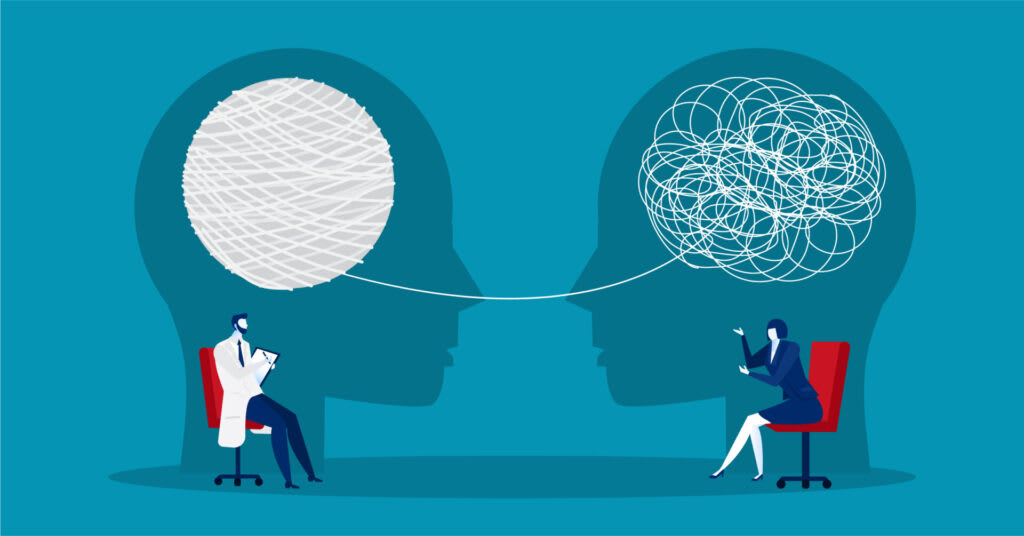
Psychologists are concerned with human biology because the brain and body are essential components of human behavior and experience. While psychology traditionally focuses on mental processes and behavior, recent advancements in technology and research have led to a greater understanding of the role that biology plays in shaping human psychology.
For example, many psychological disorders are now known to have a biological basis. Conditions such as depression, anxiety, and schizophrenia are believed to be caused by imbalances in brain chemicals, genetics, or other physiological factors. Understanding the biological mechanisms underlying these disorders can help psychologists develop more effective treatments and interventions.
Additionally, research in areas such as neuroscience and neuropsychology has provided insights into how the brain works and how it relates to behavior. Psychologists who specialize in these fields may use techniques such as brain imaging to study how different parts of the brain are involved in specific cognitive processes or behaviors.
Finally, studying human biology can help psychologists better understand the impact of factors such as diet, exercise, sleep, and stress on mental health and behavior. For example, research has shown that regular exercise can help alleviate symptoms of depression and anxiety, while chronic stress can have a negative impact on mental health.
Overall, understanding human biology is critical for psychologists to fully comprehend the complex interplay between biology, behavior, and the environment, and to develop effective interventions and treatments for mental health disorders.
The major divisions of the nervous system:
The nervous system is divided into two major divisions:
i. Central Nervous System (CNS): It includes the brain and the spinal cord. The brain controls most of the body's functions, while the spinal cord acts as a pathway for transmitting information between the brain and the rest of the body.
ii. Peripheral Nervous System (PNS): It consists of nerves that connect the CNS to the rest of the body. The PNS is further divided into two subdivisions:
a. Somatic Nervous System (SNS): It controls voluntary movements and senses like touch, pain, and temperature.
b. Autonomic Nervous System (ANS): It controls involuntary actions such as heartbeat, breathing, digestion, and glandular secretion. The ANS is further subdivided into the sympathetic and parasympathetic nervous systems, which have opposite effects on bodily functions.
Three types of neurons and describe their structure:
i. Sensory Neurons: Sensory neurons are responsible for carrying information about sensory stimuli from the body's receptors (e.g. in the skin, eyes, ears, etc.) to the central nervous system. They have a unipolar structure, with a single long axon that extends from the cell body and splits into two branches, one towards the peripheral receptors and the other towards the central nervous system. The cell body of sensory neurons is located in the ganglion, a cluster of cell bodies located outside the spinal cord.
ii. Motor Neurons: Motor neurons are responsible for transmitting motor signals from the central nervous system to the muscles and glands of the body. They have a multipolar structure, with one long axon and multiple short dendrites extending from the cell body. The axon of motor neurons is myelinated, which enables rapid transmission of signals to the target muscles or glands. Motor neurons have large cell bodies and are located in the spinal cord and brainstem.
iii. Interneurons: Interneurons are responsible for connecting sensory and motor neurons within the central nervous system. They are the most common type of neurons in the brain, accounting for around 90% of all neurons. Interneurons have a multipolar structure, with multiple short dendrites and a single axon. They are often smaller in size than motor and sensory neurons and are located within the spinal cord, brainstem, and brain. Interneurons enable complex processing of information within the central nervous system, allowing for more sophisticated behaviors and responses.
The structure and functions of endocrine system:
The endocrine system is a complex network of glands and organs that secrete hormones into the bloodstream, regulating a wide range of bodily functions. Its main function is to maintain homeostasis, which is the balance of physiological processes in the body.
The endocrine system is made up of several glands, including the pituitary gland, thyroid gland, adrenal glands, pancreas, and gonads (ovaries and testes). Each gland produces hormones that regulate different bodily functions.
The pituitary gland, often referred to as the "master gland," is located at the base of the brain and controls the release of hormones from other glands in the body. It produces hormones that regulate growth, reproduction, and metabolism.
The thyroid gland, located in the neck, produces hormones that regulate metabolism and energy levels in the body. The adrenal glands, located on top of the kidneys, produce hormones that regulate stress responses and blood pressure.
The pancreas produces hormones that regulate blood sugar levels, including insulin and glucagon. The gonads, or reproductive organs, produce hormones that regulate sexual development and reproduction.
Hormones produced by the endocrine system are released into the bloodstream and travel to specific target cells, where they bind to receptors and trigger a response. Hormones can have a wide range of effects on the body, including regulating metabolism, controlling blood sugar levels, promoting growth and development, and regulating the reproductive system.
Overall, the endocrine system plays a vital role in maintaining homeostasis and regulating bodily functions. Dysfunction of the endocrine system can lead to a wide range of health problems, including hormonal imbalances, metabolic disorders, and reproductive disorders.
The overall organization of the brain and the functions served by various structures within the brain stem and the limbic system:
The brain is the most complex organ in the human body and is responsible for controlling and coordinating all bodily functions. It is divided into three main regions: the brain stem, the cerebellum, and the cerebrum. The brain stem is the most primitive part of the brain and is located at the base of the skull. It connects the spinal cord to the brain and is responsible for controlling vital functions such as breathing, heart rate, and blood pressure.
Within the brain stem, there are several structures that serve important functions. The medulla oblongata is responsible for controlling basic life-sustaining functions such as breathing, heart rate, and blood pressure. The pons is involved in controlling sleep, breathing, and other autonomic functions. The midbrain is responsible for controlling eye movement, visual and auditory reflexes, and the regulation of body temperature.
The limbic system is a group of structures in the brain that are involved in emotion, motivation, and memory. It is located above the brain stem and includes the amygdala, hippocampus, hypothalamus, and thalamus. The amygdala is involved in the processing of emotions such as fear, anger, and pleasure. The hippocampus is involved in memory formation and retrieval. The hypothalamus is involved in regulating body temperature, hunger, thirst, and the release of hormones. The thalamus is responsible for relaying sensory information from the body to the appropriate areas of the brain for processing.
Overall, the organization of the brain is complex and involves many interconnected structures that work together to control and coordinate all bodily functions. The brain stem is responsible for controlling vital functions, while the limbic system is involved in emotion, motivation, and memory. Understanding the functions of these different brain regions is crucial for understanding how the brain works and how it can be affected by injury or disease.
The structure and functions of the cerebral cortex and discuss how damage to several different cortical areas can impair language functioning:
The cerebral cortex is the outer layer of the brain, consisting of folded gray matter that covers the surface of the cerebrum. It is divided into four major lobes: the frontal, parietal, temporal, and occipital lobes. The cortex is responsible for many of the higher brain functions, including perception, thought, and language processing.
The frontal lobe is involved in decision-making, planning, and problem-solving, as well as speech production. The parietal lobe processes sensory information and is involved in spatial awareness and attention. The temporal lobe is responsible for auditory processing and is involved in language comprehension. Finally, the occipital lobe is responsible for visual processing.
Damage to different areas of the cerebral cortex can lead to various language impairments, which are collectively known as aphasia. For example, damage to Broca's area, located in the left frontal lobe, can result in a condition called Broca's aphasia. This type of aphasia is characterized by difficulty producing speech, but the individual can still understand language.
Damage to Wernicke's area, located in the left temporal lobe, can result in Wernicke's aphasia, which is characterized by difficulty understanding language, but the individual can still produce speech. Damage to the angular gyrus, located in the parietal lobe, can result in a type of aphasia known as alexia without agraphia, in which the individual is unable to read but can still write.
Damage to the visual cortex in the occipital lobe can also lead to language impairment, as reading requires visual processing. In addition, damage to the corpus callosum, which connects the two hemispheres of the brain, can result in a condition known as split-brain syndrome, in which language processing is impaired in the right hemisphere.
In conclusion, the cerebral cortex is responsible for many higher brain functions, including language processing. Damage to different areas of the cortex can lead to various language impairments, highlighting the importance of each area in the overall language processing system.
About the Creator
Ugochukwu Udorji
It is my dream to tell great stories. Stories of our past & culture, stories about my dreams, your dreams, the dreams and desires of my generation for Africa. Dreams and desires so pure, so impossible, so immoral but it doesn’t matter...
Keep reading
More stories from Ugochukwu Udorji and writers in Psyche and other communities.
Meaning and role of Philosophy in Universities
According to Karl Jaspers, “Philosophy is the discipline in which questions are more important than answers because answers themselves will in turn become more questions”. In this insightful quote, Karl Jaspers captures the meaning and objectives of philosophy as a subject of study. Philosophy is not merely concerned with providing definitive answers; rather, it embraces the power of questions to ignite intellectual inquiry and foster a deeper understanding of the world and our place in it.
By Ugochukwu Udorji2 years ago in Education
The BAFTA Awards
By now, in a stunning departure from recent years, most of the world is aware of what happened at the BAFTA film awards. Social Media Headlines will tell you the bare bones: that John Davidson, a Tourette's Syndrome advocate, shouted a racial slur at two Actors of Colour, Michael B Jordan and Delroy Lindo.
By Natasja Rose4 days ago in Psyche
Video Call Tarot Readings: An Evidence-Based Assessment of Format Effectiveness
The proliferation of video-based tarot consultations represents a significant structural shift in how divinatory services are delivered in the digital age. Video call tarot readings combine the visual transparency of in-person sessions with the geographic flexibility of remote consultations, creating a hybrid modality that merits careful evaluation against established formats such as telephone and text-based readings.
By Enrique Martinez6 days ago in Psyche




Comments
There are no comments for this story
Be the first to respond and start the conversation.