
The Brain Doesn’t Act on Logic (It Acts on Voltage).
Why you feel stuck despite motivation: A new cognitive model shows how emotional energy powers action, not logic.

You can have the goal. You can have the plan. You can even feel deeply motivated.
But still, you might not start.
Not because you're lazy. Not because you're afraid. Not because you lack clarity.
The truth is this:
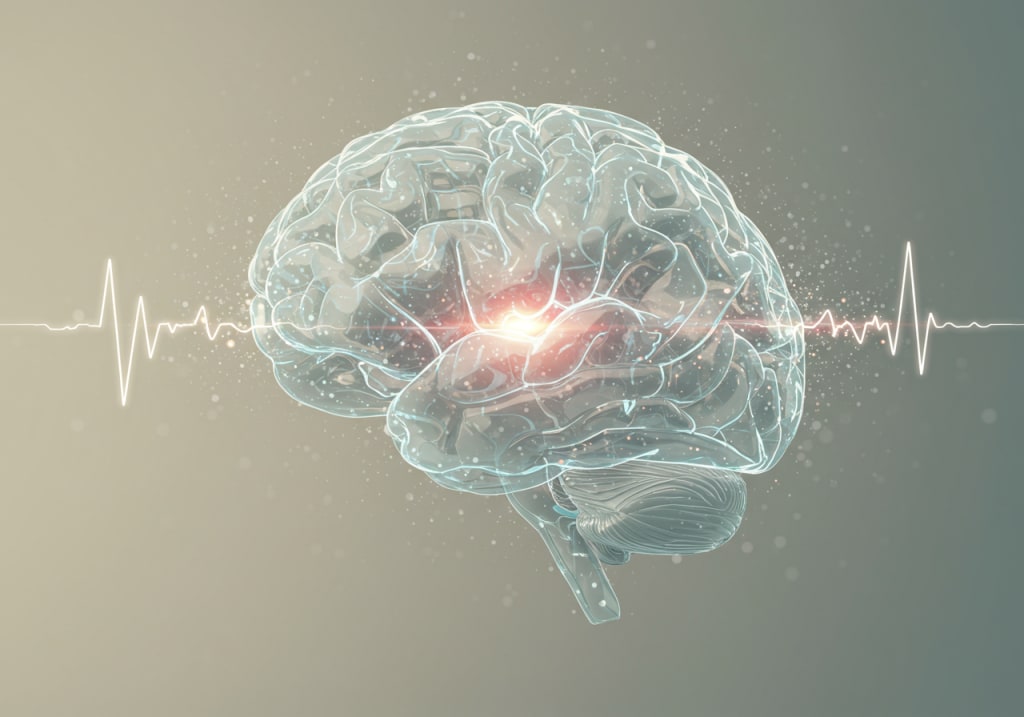
Your brain doesn't act on logic. It acts on voltage.
Without enough internal voltage, the kind powered by emotional urgency, even the clearest plan will sit untouched.
This invisible energy gap is what keeps you frozen. You want to move. You know what to do. But your system doesn't fire. You're stuck in pre-action.
So, how do we explain this?
Not with more willpower. Not with another productivity hack. But with a new model of effort: Cognitive Drive Architecture (CDA).
Introducing Cognitive Drive Architecture
Cognitive Drive Architecture (CDA) is not a productivity method. It's a field. A proposed structural domain within cognitive psychology that redefines how we understand effort.
CDA doesn't ask why people want to act. It explains when and how action becomes structurally possible.
The core theory of CDA is called Lagunian Dynamics.
Lagunian Dynamics defines Drive as the output of a system, not a feeling. It shows that motivation alone is never enough, because effort emerges only when specific internal variables align.
Here's the key:
All of the variables used in CDA models, including their extensions, come from Lagunian Dynamics. They are not properties of CDA, CTT, or LTA as standalone models. They are structural components of the core theory.
The Six Variables of Lagunian Dynamics
Lagunian Dynamics is built on six internal variables that operate like system components. These are:
- Primode: The ignition threshold. A binary switch that determines whether the system can activate.
- CAP (Cognitive Activation Potential): The emotional voltage. Represents how much motivational energy is available to cross Primode.
- Flexion: The alignment between task structure and your current cognitive state.
- Anchory: The system's ability to tether attention and maintain focus.
- Grain: Internal friction, such as emotional resistance or cognitive drag.
- Slip: Random fluctuations and entropy that cause performance instability.
These variables form the mechanical structure of Drive. When CAP is high enough to overcome Primode, and when Flexion, Anchory, and Grain are in balance, the system ignites.
If any piece is off, you stall, no matter how motivated you are.
The Role of CDA, Lagunian Dynamics, and Its Extensions
To be clear:
- CDA is the field.
- Lagunian Dynamics is the core theory.
- CTT (Cognitive Thermostat Theory) and LTA (Latent Task Architecture) are applied extensions that operationalize different parts of that theory in real-world scenarios.
Each extension borrows directly from the variables defined in Lagunian Dynamics.
They don't add new variables. They apply existing ones to model ignition, breakdown, and system interference in specific contexts.
This creates a layered model of cognitive effort, starting with the theoretical foundation (Lagunian Dynamics) and expanding into applied frameworks (CTT and LTA) that help us understand everyday patterns like procrastination, burnout, and stuckness.
Why You Get Stuck: The Ignition Problem
Most people assume motivation equals action. But as Lagunian Dynamics shows, that's not how the system works.
Motivation can be present. You can care deeply. You can plan meticulously.
But if CAP, your internal voltage, doesn't surge above Primode, your ignition threshold, your brain never switches on.
This explains why people feel mentally ready but behaviorally frozen.
CDA reframes this failure as a structural misalignment, not a personal flaw.
CTT: Modeling Ignition in Real Time
Cognitive Thermostat Theory (CTT) is an expansion of Lagunian Dynamics that uses control theory to model ignition.
In CTT:
- Primode is the set point.
- CAP is the control signal (the voltage).
- Grain is an internal disturbance.
- Flexion is the system's error correction.
- Anchory stabilizes the loop.
- Slip introduces system noise.
When these elements align in real time, Drive activates. When they don't, action stalls.
CTT helps explain common failure modes like false starts, burnout, and stuckness under pressure. It brings structure to the moment when action should happen but doesn't.
LTA: The Impact of Latent Load
Sometimes you don't stall because of the task in front of you.
You stall because of what's behind you.
Latent Task Architecture (LTA) is another applied expansion of Lagunian Dynamics. It models how unfinished or unresolved mental tasks (called latent load) interfere with your Drive system.
High latent load impacts Drive by:
- Increasing Grain, resistance and friction.
- Weakening Anchory, attention becomes more volatile.
- Distorting CAP, voltage may spike in the wrong direction (like anxiety or false urgency).
This explains why you can feel mentally cluttered before doing anything. Your system is already overloaded.
To switch on, you need to clear space.
How to Apply This in Daily Life
You don't need to memorize all the theory to use this in practice. Here's how to put it into action:
1. Raise Your CAP
Emotional urgency is what flips the ignition. Don't just remind yourself what to do; remind yourself why it matters now. Use meaning, deadlines, or consequences to build voltage.
2. Lower Your Grain
Friction blocks ignition. Make your task smaller. Break it into easier steps. Address emotional resistance or clutter.
3. Improve Flexion and Anchory
Adapt your task to your mental state. Use tools like timers, accountability partners, or simple rituals to lock in attention.
4. Clear Latent Load
If your brain is juggling too many open tabs, ignition fails. Write them down. Close loops. Free your system.
Final Thought: You're Not Broken. You're Misconfigured.
Most people blame themselves when an action doesn't happen.
But the truth is simpler and far more hopeful.
Your system isn't lazy. It's just not switched on.
CDA shows us that Drive isn't a feeling. It's a mechanical structure. A configuration of variables that can be measured, aligned, and tuned.
When your system is off, no amount of logic will save you. When it's aligned, even hard tasks feel light.
Because the brain doesn't act on logic.
It acts on voltage.
– Nikesh xx
Based on four core works:
- Lagun's law and the foundations of cognitive drive architecture: A first principles theory of effort and performance (IJSRA, 2025)
- Cognitive Thermostat Theory (CTT): A Control-Theoretic Model of Drive Ignition in Cognitive Drive Architecture (CDA) (PsyArXiv, 2025)
- Latent Task Architecture: Modeling Cognitive Readiness Under Unresolved Intentions (Research Square, 2025)
- Switch On: A User's Guide to Your Mind's Drive Engine (Amazon, 2025)
About the Creator
Keep reading
More stories from Nikesh Lagun and writers in Psyche and other communities.
Why Action Feels Easy One Day and Impossible the Next
Many people wonder: why can you complete a complex task flawlessly on Monday but fail to even begin on Tuesday, despite having the same skills and motivation? This is not mere inconsistency. It is better described as cognitive entropy.
By Nikesh Lagun7 months ago in Psyche
Do You have a Support Network?
Life is harder when you’re on your own. Human beings are social creatures, and we usually feel better when we have support from a strong social network around us. For most people, it’s our families that hold us together like glue.
By Elizabeth Woodsabout 9 hours ago in Psyche




Comments
There are no comments for this story
Be the first to respond and start the conversation.