
The Art of Passing the Buck: A Workplace Saga
When responsibility becomes a game of hot potato, who ends up getting burned?
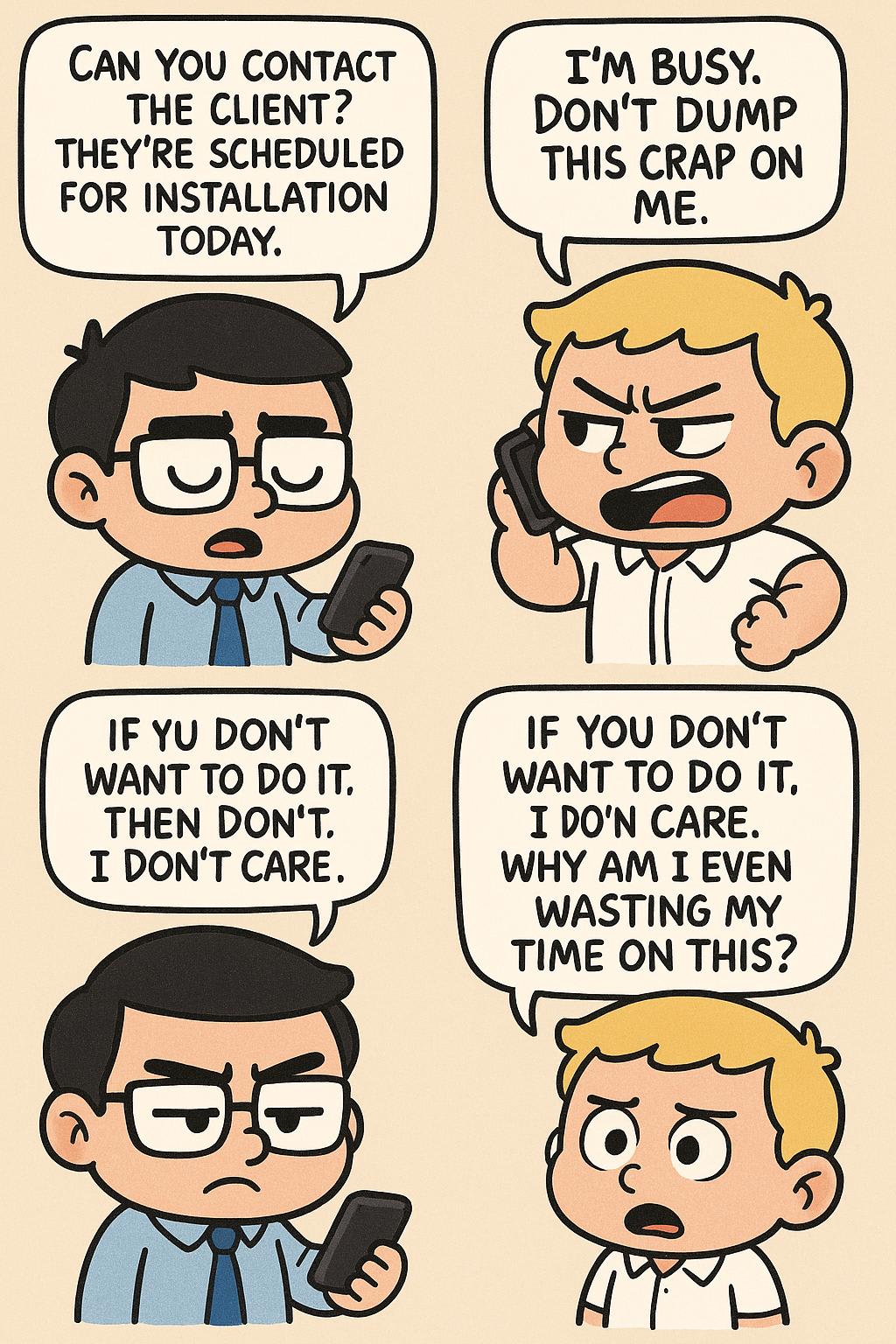
It started with a simple request.
"Can you contact the client? They're scheduled for installation today."
A straightforward task, right? But not for the sales rep.
"I'm busy. Don't dump this crap on me."
I paused, taking in the response. My inner voice screamed: Seriously? You can't even take care of your own mess, and now you want me to clean up after you? Useless. But instead of pushing back, I sighed and said, "Fine, I'll contact them."
Problem solved? Not quite.
A few moments later, the sales rep called again. This time, I wasn't having it.
"If you don't want to do it, then don't. I don't care. Why am I even wasting my time on this?"
The frustration was mutual now, the patience running thin. I had done my part, yet the sales rep remained unhelpful. So, with professional restraint, I sent a final message:
"Please inform the client accordingly."
"I don't understand," the sales rep replied.
I've already told you what to do. Do I really need to spell it out for you? If that's the case, maybe you shouldn't even bother.
And there it was—the exasperating cycle of delegation gone wrong. Some tasks aren't hard; it's just that some people refuse to do them. And in the end, the ones who step up are left wondering why they're the only ones who care.
This scenario plays out with increasing frequency in modern workplaces. Every team seems to have one or two individuals who are always ready to shoulder additional responsibilities, while others excel at avoiding work entirely. Initially, you might think it's an isolated incident, but over time, the pattern becomes unmistakable: certain colleagues will never voluntarily assume responsibility.
More disheartening is how management often turns a blind eye. They preach the virtues of teamwork while failing to identify or correct those who consistently shirk their duties. Instead, those who regularly step up find themselves burdened with increasingly heavy workloads because "they get things done."
In this particular case, client communication clearly fell within the sales rep's job description, yet they still attempted to offload this fundamental task. Worse still, even after being refused, they couldn't grasp or accept their responsibility. Such behavior not only demonstrates a lack of professionalism but reveals a deeper issue: a deficiency in commitment to collective goals.
The repercussions extend beyond a single unfinished task—they impact the entire organizational culture and mutual respect. When responsibilities are treated as optional rather than essential, everyone suffers. Customer experiences deteriorate, internal relationships strain, and workplace morale plummets.
For those who consistently rise to the occasion, this cycle is especially draining. They must not only complete their own work but also fill the gaps left by others. Over time, this imbalance can lead to burnout, resentment, or even resignation.
Perhaps the solution lies in establishing clearer accountability systems and fostering a culture where everyone handles their fair share. After all, genuine teamwork isn't about a few people doing most of the work—it's about everyone contributing equitably.
Until then, those of us willing to step up will continue moving forward, occasionally wondering: why are we the only ones who care?
In professional environments, responsibility shouldn't be a burden carried by the few but a commitment shared by all. The question remains: when will everyone recognize that teamwork means equal participation, not selective engagement? The answer might determine whether workplace cultures evolve or remain trapped in this frustrating cycle of imbalanced responsibility.
About the Creator
The Power of Positive Thinking
How are you doing? How is life treating you at the moment? Life doesn't need to crash completely for you to feel "down on your luck." A failed promotion, or work project that didn't go as planned, or a missed opportunity can set you back months.
By Elizabeth Woodsabout 7 hours ago in Psyche



Comments
There are no comments for this story
Be the first to respond and start the conversation.