
Teen Stress in Ukraine: The Crucial Role of Resilience in Difficult Times
Survival and growth: how stress resilience helps Ukrainian teenagers adapt

Why Adolescence Is So Vulnerable
Adolescence (ages 11–18) is one of the most critical and challenging stages of human development. During this time, the individual undergoes intensive biological, psychological, and social changes. Identity formation accelerates, autonomy from parents grows, and the influence of peers becomes stronger.
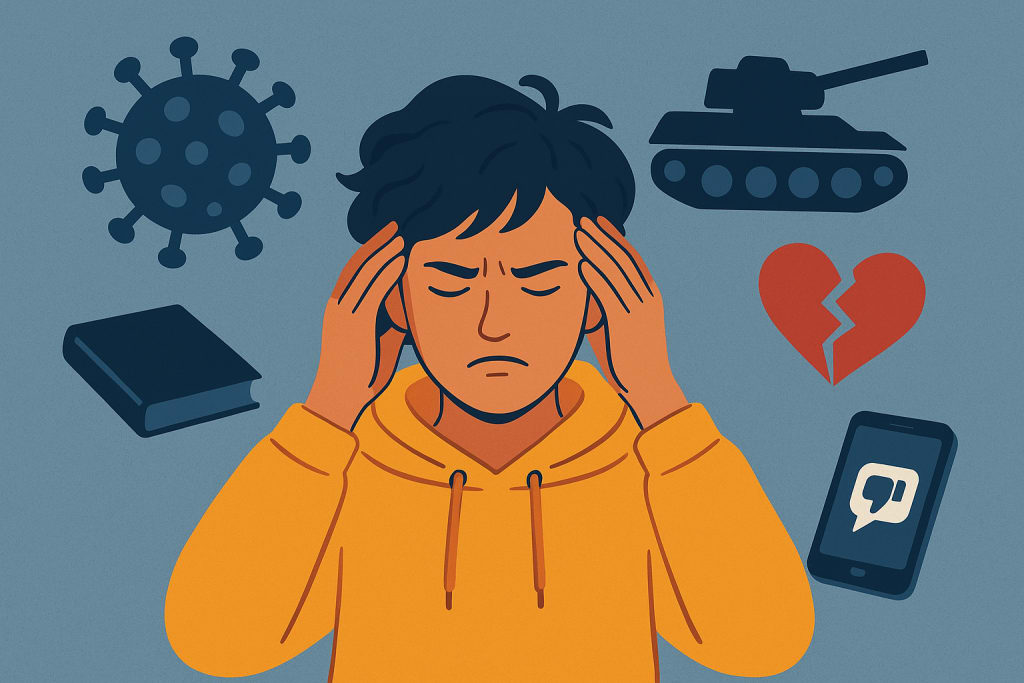
At the same time, adolescents face serious external pressures: academic workload, family instability, peer conflicts, and global crises. Events such as the COVID-19 pandemic, war, forced migration, and economic uncertainty amplify these stressors, placing an immense burden on a psyche that is still in the process of formation.
This combination of internal developmental changes and external challenges makes adolescence a uniquely vulnerable period where stress resilience becomes a crucial factor for healthy development.
Main Sources of Stress in Adolescents
Research and clinical observations show that the most common stressors for adolescents include:
- Academic pressure - exams, standardized testing, competition among peers.
- Family problems - parental conflict, divorce, or lack of emotional support.
- Peer relationships - bullying, rejection, or pressure to conform.
- Social media - comparison culture, cyberbullying, and dependence on external validation.
- Life crises - forced migration, loss of loved ones, or living through war and displacement.
These factors rarely occur in isolation. They accumulate, magnify one another, and can create long-term consequences for emotional well-being, physical health, and even future career choices.
What Is Resilience?
Resilience is the capacity to withstand stress, adapt to difficult circumstances, and restore balance after crises. It is not an innate trait but rather a dynamic process that develops through life experiences and supportive relationships.
Key components of resilience include:
- Emotional regulation - managing feelings under pressure.
- Problem-solving skills - acting constructively instead of avoiding challenges.
- Social support - trusting relationships with family, peers, or mentors.
- Meaning and values - inner motivation that helps overcome difficulties.
A resilient adolescent is not someone who never struggles, but someone who learns to recover and grow stronger from challenges.
Why Resilience Is a Key Resource in Adolescence
The level of resilience directly impacts whether an adolescent maintains psychological health during crises. Studies consistently show that:
- High resilience reduces the risk of anxiety and depression.
- Resilient adolescents are less likely to engage in harmful behaviors (substance use, aggression).
- Resilience fosters academic persistence and self-esteem.
Without resilience, even ordinary stressors such as poor grades or peer rejection can spiral into chronic distress, with long-term negative effects on learning, relationships, and overall well-being.
Ukrainian Context (2022–2024): Resilience as a Survival Tool
In Ukraine, resilience has moved from a theoretical concept to a life-saving necessity.
Since 2022, adolescents have faced the realities of war: displacement, loss of loved ones, changes in schooling, and even adapting to new cultural or linguistic environments.
For example, a teenager from Kharkiv who relocates to Lviv or Poland must cope not only with new teachers and classmates, but often with a new language of instruction. For some, this is a challenge to identity and belonging. For others, it becomes an opportunity for growth - but only if they possess sufficient resilience.
The ability to adapt in such extreme contexts is shaped by both individual coping strategies and the presence of stable relationships with parents, teachers, and peers. For Ukrainian adolescents, resilience is no longer optional; it is a protective shield against trauma.
Review of Contemporary Research
In my qualification thesis, I relied on both classical and modern studies that highlight the importance of resilience in adolescence. Among the key works:
John Bowlby - Attachment and Loss (1969), foundational work on attachment as a buffer for emotional development.
Mary Ainsworth - Patterns of Attachment (1978), which classified attachment types and their impact on children's emotional regulation.
O. Tarasova (2019) - research on coping strategies and resilience in adolescents in the modern educational environment, which was particularly influential in my own study.
Together, these studies suggest that resilience develops at the intersection of attachment, coping strategies, and social context.
Practical Implications
How can adults help adolescents develop resilience? Practical strategies include:
- Strengthening secure relationships - consistent attention, empathy, and trust from caregivers.
- Teaching adaptive coping strategies - focusing on problem-solving and emotional regulation rather than avoidance.
- Building safe educational environments - classrooms where students feel free to share difficulties without fear of judgment.
- Using psychoeducational programs - resilience training that develops self-awareness, emotion regulation, and stress management.
- Supporting peer connections - encouraging friendships and community belonging as protective resources.
Additional Perspectives: Beyond the Individual
Resilience is not only an individual trait but also a social and cultural resource.
- Schools that integrate mental health programs can reduce stigma and create collective resilience.
- Communities that provide safe spaces for adolescents (clubs, youth centers) give teens protective environments.
- Societal narratives - when resilience is valued as a cultural strength (as seen in Ukraine during wartime), adolescents can internalize this as part of their identity.
This broader, ecological view of resilience emphasizes that adolescents are not alone - their strength grows within systems of support.
Conclusion
Adolescence is a period when the foundation of psychological resilience for adulthood is built. A teenager who learns to cope with stress at 11–18 years old gains a powerful resource for lifelong well-being.
In times of peace, resilience helps adolescents thrive academically and socially. In times of crisis, as seen in Ukraine, resilience becomes a matter of survival and recovery.
Our collective responsibility - as parents, educators, researchers, and communities - is to not only study resilience but to actively foster it, ensuring that every adolescent has the tools to face challenges with strength, hope, and adaptability.
#Adolescence #TeenStress #Resilience #MentalHealth #EmotionalWellbeing #Ukraine #UkrainianTeens #YouthInCrisis #WarImpact #CopingInUkraine #LifeSkills #StressManagement #TeenSupport #PsychologicalResilience #YouthEmpowerment #IndependenceDay #UkraineIndependence #24August #HappyIndependenceDay #PrideUkraine
About the Creator
Daria Barabash
Researcher of psychology and psychoanalysis, founder of Mental Health db. I write about dreams and innovative self-discovery tools. Explore our DreamDataBot for dream analysis and ChildGrowBot for parental guidance.
Keep reading
More stories from Daria Barabash and writers in Psyche and other communities.
Adolescent Stress Resilience and Attachment Styles: Findings from Ukrainian Research
Why This Is Important Adolescence is one of the most challenging stages of human development. During this period, identity formation intensifies, peer influence increases, and levels of academic and social stress rise. Research shows that attachment style, established in early childhood, plays a key role in how adolescents cope with stress.
By Daria Barabash5 months ago in Psyche
Not All Fear Is Real
The first breath of dawn is a quiet thing, as though the world itself is holding its breath, waiting to exhale. But for Nadia, the morning air felt like a sharp slap against her skin, cold and biting. Her fingers trembled as she clutched the edge of her jacket, the wind tugging at her hair. She stood on the edge of the cliff, her gaze cast over the valley below, the dark outline of the forest stretching far into the horizon. The shadows of night still clung to the trees, but the first threads of daylight were beginning to seep through, spilling gold onto the earth.
By Jhon smitha day ago in Psyche
How to Succeed at the Benson Directory®
Congratulations and welcome to the Benson Directory® employee #22391! As our newest call handler, you will have the privilege of speaking with dozens of unique and interesting people on a daily basis as well as the opportunity to earn bonuses for high performance. Contained within this handbook you will find a set of ease to follow instructions designed to help you settle in to your new role and begin paving the way to success.
By S. A. Crawford3 days ago in Fiction



Comments
There are no comments for this story
Be the first to respond and start the conversation.