
Adolescent Stress Resilience and Attachment Styles: Findings from Ukrainian Research
What a 2024 Ukrainian study tells us about how attachment styles develop stress resilience in adolescents

Why This Is Important
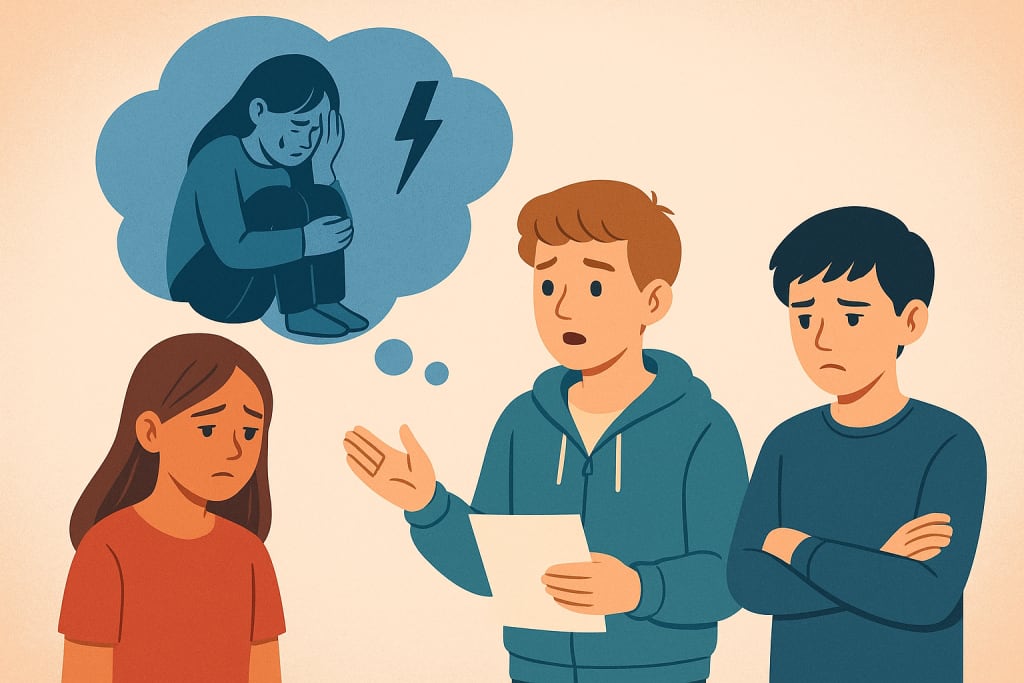
Adolescence is one of the most challenging stages of human development. During this period, identity formation intensifies, peer influence increases, and levels of academic and social stress rise. Research shows that attachment style, established in early childhood, plays a key role in how adolescents cope with stress.
My qualification thesis focused on the topic:
“The Influence of Attachment Style on the Development of Stress Resilience in Adolescents.”
The aims of the study were:
1. To conduct a theoretical analysis of the development of stress resilience in adolescents with different attachment styles;
2. To analyze various attachment styles and the levels of stress resilience in adolescents;
3. To investigate the relationship between attachment style and stress resilience in adolescents;
4. To develop a psychological intervention method to enhance stress resilience in adolescents with insecure attachment styles.
What Attachment Styles Are
Attachment theory (John Bowlby, Mary Ainsworth) explains how early relationships with parents or caregivers form the basic model of how a person perceives themselves and others.
In Mary Ainsworth’s experiment, three main attachment types were initially identified:
- Secure attachment — If a child’s need for safety is adequately met, interactions with the mother are characterized by closeness, warmth, and positive emotional tone; Cognitive activity in children is high.
- Insecure-avoidant attachment — The child expects avoidance rather than help from adults, therefore adopts avoidance strategies; Cognitive activity is reduced.
- Insecure-ambivalent attachment — The child is confused and uncertain about receiving help from adults, so they adopt “clinging” strategies; The child does not let go of caregivers, and cognitive activity decreases.
Later, a fourth type was identified: anxious-disorganized — the world is perceived as hostile and threatening, and children’s behavior is unpredictable and chaotic.
How the Research Was Conducted
The study involved adolescents aged 11–13 years. All psychodiagnostic research rules were followed (voluntary participation, anonymity, ethical standards).
Three psychodiagnostic methods were used for data collection:
1. MAQ (Measure of Attachment Qualities) — a questionnaire for assessing attachment style in adolescents. It evaluates closeness, trust, dependence, and relationship anxiety.
2. Stress Resilience Scale — a method for measuring adolescents’ ability to withstand stress and adapt to environmental changes.
3. Coping Strategies Questionnaire — a tool for identifying how individuals cope with stress (task-oriented, emotion-focused, avoidance, social distraction, seeking social support).
Main Findings
Adolescence itself is stress-inducing. Hormonal changes, identity conflicts, and new social demands make teens more emotionally sensitive and less able to regulate feelings, which underlines the need for proactive coping strategies.
Attachment style plays an important theoretical role. Secure attachment provides a foundation for resilience and supports the growth of autonomy. In other words, independence is built on trust.
No direct statistical link was found between attachment style and overall stress resilience. However, clear associations emerged between attachment styles and coping strategies. Securely attached teens tended to rely on constructive but sometimes avoidant strategies, while those with anxious or disorganized attachment more often used emotional or avoidant coping.
This means that resilience in adolescence is less about the attachment type alone and more about how teens cope. Even resilient adolescents may process stress emotionally, while insecurely attached adolescents are more likely to avoid problems rather than deal with them directly.
Real-Life Examples
Consider three adolescents who received a low grade in school:
Maria (secure attachment): seeks help from the teacher, asks for explanations, feels supported, and uses constructive strategies.
Oleg (anxious attachment): panics, fears judgment from parents, and uses less effective emotional strategies.
Irina (avoidant attachment): hides the problem, tells no one, but feels significant tension.
These examples illustrate how early relationship patterns influence behavior even in everyday situations.
What Parents and Educators Can Do
Develop secure attachment: stability, trust, attention, and empathy.
Teach adolescents effective coping strategies: planning, seeking help, emotion regulation.
Create a safe educational environment where children can freely discuss difficulties.
Conclusion
Adolescence is inherently stressful: hormonal changes, new social demands, and internal conflicts increase emotional sensitivity, making it important for teens to learn proactive stress-coping strategies. Theoretical analysis confirmed that attachment style matters: secure attachment provides a foundation for stress resilience while supporting the development of autonomy, as true independence grows from trust. The practical part of the study showed that there was no direct statistically significant link between attachment type and overall stress resilience. However, connections were found between attachment style and coping strategies, indicating that even resilient teens often rely on emotion-focused coping, while teens with insecure attachment are more likely to avoid problems rather than face them directly.
#AttachmentTheory #PsychologyResearch #Psychoanalysis #ClinicalPsychology #DevelopmentalPsychology #MentalHealthResearch #AdolescentDevelopment #PsychologicalScience #MentalHealth #MentalHealthAwareness #EmotionalWellbeing #StressResilience #TraumaInformed #CopingStrategies #SelfAwareness #MindHealth#TeenPsychology #AdolescentMentalHealth #ParentingTips #TeenResilience #EducationMatters #SafeAttachment #EarlyIntervention #Wellbeing #PersonalGrowth #SelfHelp #EmotionalIntelligence #InnerStrength #Resilience #PositivePsychology
About the Creator
Daria Barabash
Researcher of psychology and psychoanalysis, founder of Mental Health db. I write about dreams and innovative self-discovery tools. Explore our DreamDataBot for dream analysis and ChildGrowBot for parental guidance.
Keep reading
More stories from Daria Barabash and writers in Psyche and other communities.
Exploring Psychology and Psychoanalysis: My Research Journey
My Journey in Psychology: From Research to Psychoanalysis and Digital Innovation My name is Daria Barabash — I am a psychologist, researcher, and founder of the project Mental Health db. My professional path combines academic psychology, psychoanalytic tradition, and modern technologies. In this article, I want to share my story — how I started, what knowledge and experience I have gained, and why today my work unites classic psychoanalytic ideas with innovative tools.
By Daria Barabash5 months ago in Psyche
When Saying “No” Feels Strange
He did not plan to smoke that day. He was standing outside his school gate, bag on his back, waiting for the van. A boy from his class took out a vape. Another smiled and asked him to try. He refused at first. Everyone laughed, not loudly, not cruelly just enough to make him feel small.
By Muhammad Ayaan about 2 hours ago in Psyche



Comments
There are no comments for this story
Be the first to respond and start the conversation.