therapy
Focused on the relationship between doctor and patient. Therapy is the process of self-discovery.
Decoding the Matrix of Neurodivergence Through Energy Centers <short>. Content Warning.
Energy work has been woven into the fabric of ancient cultures for centuries. Across generations, individuals were intuitively aware of their role in processing the emotional burdens carried by their lineage—emotions like fear, guilt, and shame gets trapped in the lineage’s energy signature if not released.
By Neurodivergent-Soul2Soul6 months ago in Psyche
Harnessing the Power of Energy Centers: A Neurodivergent’s Journey from Dysregulation to Inner Alignment. Content Warning.
Energy work, chakras, and the concept of subtle energy centers have long fascinated the world. While some dismiss these practices as unscientific, others—especially those who begin experiencing energetic shifts—often find themselves transformed by the profound impact of this inner work. Often referred to as Energy Healing, Quantum Healing, or simply Inner Work, this path can be deeply empowering.
By Neurodivergent-Soul2Soul6 months ago in Psyche
Emotional Mastery for Celebrities: The Role of Personalized, One-on-One Therapy
In the spotlight, everything shines — success, glamour, admiration. But behind the scenes, the lives of celebrities often tell a different story. Despite their fame, many face the silent, persistent pressure to perform, to appear perfect, to manage emotional storms while millions are watching.
By Natalie Schaffluetzel6 months ago in Psyche
The Gentle Rebellion of Doing Things That Don’t Matter (But Actually Do)
There are nights where I sit hunched over a diamond painting, one tiny gem at a time, carefully pressing each one into its designated place. It’s absurd, really. Hours pass, and I have nothing to “show for it” but a sparkling portrait of a colourful flower or a moonlit forest — and a slightly aching neck.
By Scarlett R. 🍁6 months ago in Psyche
Beneath the Surface: Understanding Major Depressive Disorder
Introduction Depression is often misunderstood as simple sadness, a temporary cloud that will lift on its own. But for millions of people worldwide, depression is not fleeting—it is a constant, heavy presence that reshapes how they think, feel, and function. Among the most disabling mental health conditions, Major Depressive Disorder (MDD) is a complex and multifaceted disorder that reaches far beyond low mood. It is a condition that touches the emotional, cognitive, physical, and social dimensions of a person’s life. And while it remains one of the most prevalent psychiatric disorders globally, it is still surrounded by stigma, silence, and dangerous misconceptions.
By Siria De Simone6 months ago in Psyche
What You Should Know About How Long Fluconazole Stays in Your System. AI-Generated.
If you've recently taken Fluconazole for a fungal infection, you might be wondering just how long it lingers in your system. Whether you're managing side effects, planning other medications, or simply curious, it's important to understand how this antifungal works and when it clears out. As someone who's navigated their own share of medication related questions, I know how helpful it is to get clear, honest answers.
By Pierce Stone6 months ago in Psyche
The Complex Role of Dopamine in Our Lives: Understanding the Science Behind Pleasure and Motivation
*The Complex Role of Dopamine in Our Lives: Understanding the Science Behind Pleasure and Motivation* Dopamine is a neurotransmitter that plays a crucial role in our brain's reward and pleasure centers. It is often referred to as the "feel-good" hormone, and for good reason. Dopamine is released in response to pleasurable activities, such as eating, exercise, or social interactions, and it helps to motivate us to repeat those behaviors. However, when dopamine is released in excess or in response to artificial stimuli, such as social media or pornography, it can have negative consequences for our mental and physical health.
By Ikram Ullah6 months ago in Psyche
When the Light Fades: Understanding Seasonal Affective Disorder (SAD)
Introduction As the days grow shorter and the sunlight fades, a familiar heaviness creeps into the lives of many. It's more than a dislike for cold weather or fewer daylight hours—it’s a recurring emotional and physiological pattern that returns each year with almost uncanny precision. For those affected, this pattern isn't simply a matter of winter blues; it's a recognized psychological condition known as Seasonal Affective Disorder, or SAD.
By Siria De Simone6 months ago in Psyche
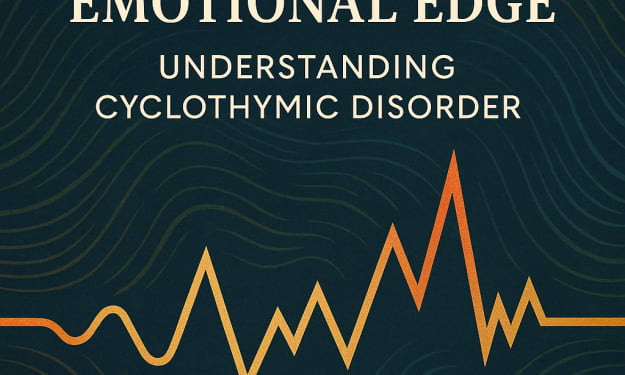
Living on the Emotional Edge: Understanding Cyclothymic Disorder
Introduction Everyone experiences emotional ups and downs. A burst of excitement one day, a dip in motivation the next — it's part of being human. But for some, these fluctuations are more than just ordinary mood shifts; they form a persistent, confusing rhythm that quietly shapes their entire life. When your inner world feels like a never-ending ride between minor emotional highs and unexpected lows — without ever tipping fully into mania or deep depression — it might not just be personality. It might be Cyclothymic Disorder.
By Siria De Simone7 months ago in Psyche
From I Think Therefore I Am to I Scroll, Therefore I Am
The New Mirror of the Self At 2 AM, eyes blurry and thumb sore, you’re still scrolling. But why? Another meme. Another perfect face. Another video of someone you laugh, you like, you swipe—but somewhere inside, a question flickers;
By Yasar Ahmad 7 months ago in Psyche