
From I Think Therefore I Am to I Scroll, Therefore I Am
Identity and Alienation in the Digital Age

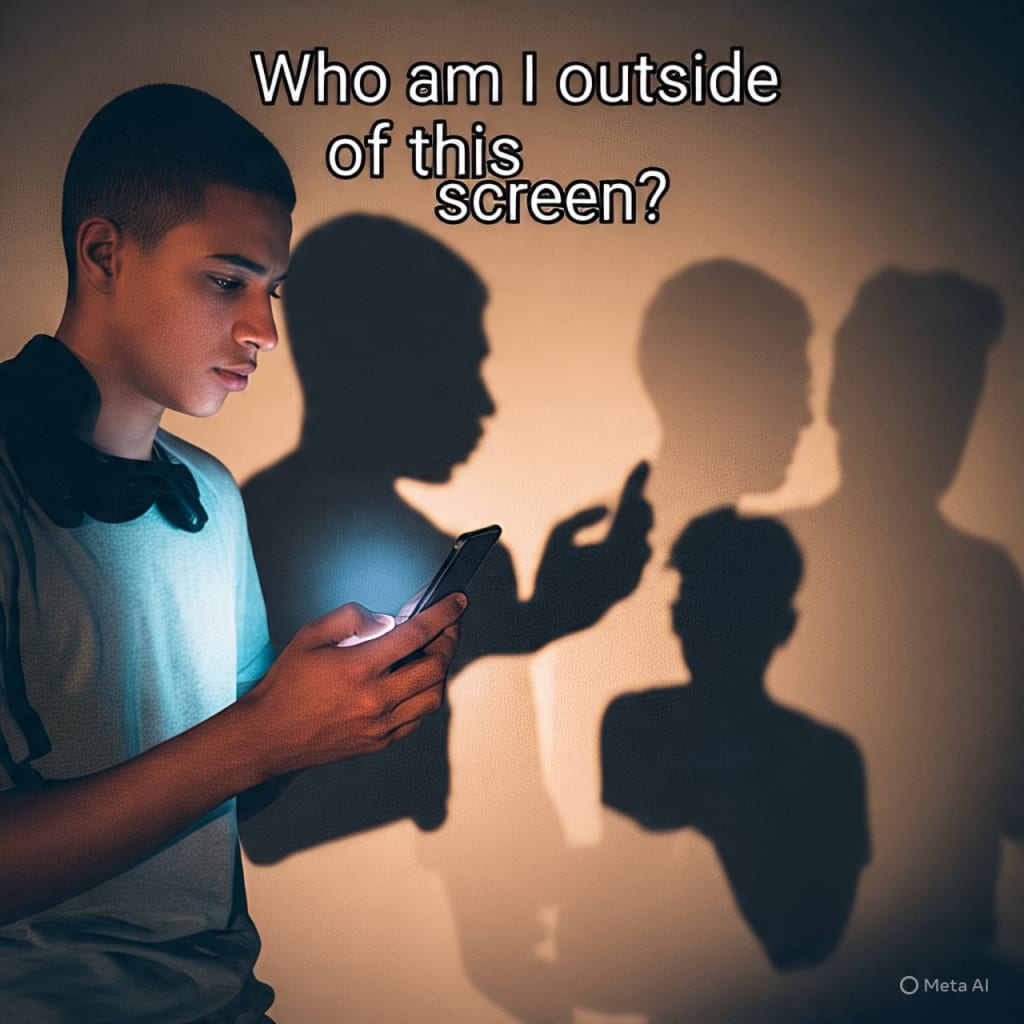
The New Mirror of the Self
At 2 AM, eyes blurry and thumb sore, you’re still scrolling. But why?
Another meme. Another perfect face. Another video of someone you laugh, you like, you swipe—but somewhere inside, a question flickers;
“Who am I... outside of this screen?”
In a digital age, where identity is constructed, self-worth is measured in likes, and the line between being online and being offline blurs by the day.
What defines you?
In the age of Instagram bios, TikTok trends, and algorithmic feeds, identity is no longer just who you are—it’s what you post, like, and scroll through.
Scrolling isn’t just a habit anymore; it’s how we unconsciously shape our sense of self. Underneath the short videos and perfect profiles is something real: a growing sense of emptiness and confusion.
Scrolling as Self-Construction
René Descartes once said, “I think, therefore I am.” But in today’s world, it may be more accurate to say that: “I scroll, therefore I am.”
1. Social media pushes young people to perform rather than simply exist.
Instead of being themselves, they feel pressure to act a certain way online.
2. They craft versions of themselves to fit trends and expectations.
They shape their image to match what's popular or socially accepted.
3. They edit their lives, polishing every detail before it's seen.
Posts are filtered and planned, not raw or real.
4. Likes become validation—a scoreboard for self-worth.
The number of likes feels like a measure of value or success.
5. And behind every scroll is a silent comparison, asking: Am I enough?
Each post they see makes them question their worth.
Each scroll reflects a filtered self, shaped not by truth, but by the reaction it earns.
But here’s the question: If your sense of self depends on how others react to you, do you truly exist on your terms?
The Existentialist View: Freedom, Alienation, and Anxiety
Existential philosophers—like Jean-Paul Sartre, Simone de Beauvoir, and Albert Camus—warned us about this centuries ago.
Sartre wrote that “existence precedes essence.” We’re not born with a fixed purpose or identity—we build it ourselves through choices, actions, and experiences.
But he also warned: with this freedom comes responsibility, anxiety, and alienation.
Alienation, in this case, is that empty, drifting feeling when we’re disconnected from a true sense of self, purpose, or belonging.
A 2023 Pew Research study found that 59% of teens feel “persistently sad or hopeless,” often tied to digital overexposure and social comparison.
Many young people feel:
Burned out, even when they haven’t done anything.
Disconnected, even with 1,000 followers.
Anxious, even in spaces meant for self-expression.
Digital Identity and the Disappearing “Real You”
The philosopher Martin Heidegger used the term “the They” to describe how society pulls us away from authentic living. In a world influenced by viral content and constant comparison, young people are constantly nudged toward becoming what “the algorithm” or “the audience” wants.
The result?
A life spent scrolling, with no real destination.
An identity shaped more by trends than truth.
Opinions tailored for approval, not authenticity.
A fractured sense of self, scattered across platforms.
It’s no surprise that many Gen Z users report feeling more comfortable online than offline, yet also more lost, drained, and uncertain of who they are.
The Performance Trap: “The They” and You
Heidegger introduced the idea of “the They,” the invisible crowd that shapes how we act.
Today, it’s not just people watching. It’s trends, algorithms, and silent expectations.
You feel the need to be relevant.
You rewrote your caption three times.
You skip posting what’s true, and share what’s safe—what gets hearts.
“They” is no longer just society.
It’s your feed.
It’s your followers.
It’s your polished, online self.
And the more we perform for it, the further we drift from who we are.
The Crisis Beneath the Feed
What we’re experiencing isn’t just social fatigue—it’s an existential crisis.
Youth today are faced with:
Too much choice, yet a lack of purpose.
Hyperconnectivity, yet deep loneliness.
A loud world, yet no one to truly talk to.
You can be everything on the internet—and still feel like nothing.
Existentialism doesn’t solve this. But it names it.
It says:
“Yes, this is hard. Yes, the world is absurd. But meaning isn’t found—it’s made.”
Is There a Way Out?
Existentialism doesn’t offer easy fixes. But it offers honesty. It tells us:
Life doesn’t come with meaning.
You have to create it—even in a meaningless world.
So, what can you do?
Take breaks from digital mirrors.
Write privately—no likes, no followers, just you.
Be boring in public—and authentic in private.
Ask better questions than “What will they think?”
Instead of chasing a self that fits the feed, start building one that feels real.
Ask deeper questions.
What do I value?
What do I believe?
Who am I becoming?
Above all, choose yourself with intention, not habit.
Conclusion: Becoming in the Age of the Scroll
We live in a time where scrolling feels like survival, but it doesn’t have to define us.
As Sartre reminded us, “Man is nothing else but what he makes of himself.”
In other words, we become who we choose to be through our actions, not just our thoughts. It’s up to us to shape our own identity, even in a noisy digital world.
Let’s not leave that to the algorithm.
If this feels connected, leave a tip or share it with someone questioning more than just their screen time.
#existentialism #genz #identity #mentalhealth #digitalculture
About the Creator
Keep reading
More stories from writers in Psyche and other communities.
Top tipple tricks
Been thinking a lot about drinking, lately. Not least because of a recent episode of over-indulgence and the inevitable after effects. Some readers may recall the earlier articles I wrote about beating the booze. Here I set out an experiment in techniques for cutting down on my alcohol intake. The experiment was successful, the techniques worked, and I have armed myself with an arsenal of weapons in the war against the demon drink. I have yet to fire the first round however. It's all a question of timing (perhaps procrastination).
By Raymond G. Taylor4 days ago in Psyche
Stop - Just Stop it right now
"Each one of us has lived through some devastation, some loneliness, some weather superstorm or spiritual superstorm; when we look at each other, we must say, I understand. I understand how you feel because I have been there myself. We must support each other and empathize with each other because each of us is more alike than we are unalike."
By Elizabeth Woods6 days ago in Psyche



Comments
There are no comments for this story
Be the first to respond and start the conversation.