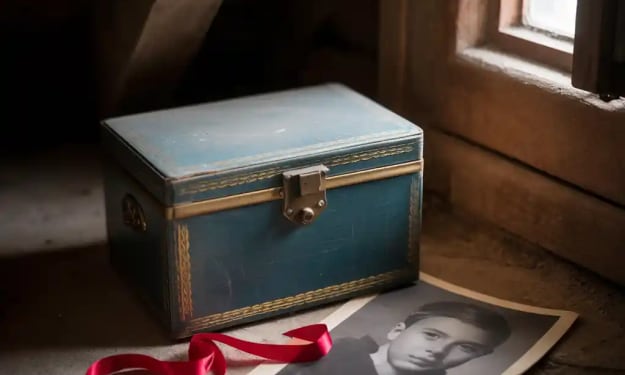
panic attacks
Sudden periods of intense fear. But remember, you're not alone.
Ctrl+Alt+Del: Reset Your Heart
The whir of the CPU fan was the only sound keeping Leo company at 3:17 a.m. He stared at his screen through smudged glasses, the blue light casting ghostly shadows across the walls of his cluttered apartment. Empty coffee mugs. Wires snaking over code-stained notebooks. His hoodie hung from the back of the chair like a flag of surrender.
By Syed Kashif 8 months ago in Psyche
9 Quotes to Calm Overthinking and Spark Positivity
9 Simple Quotes to Stop Overthinking and Feel More Positive We all overthink sometimes — we replay old conversations, worry about the future, or get stuck thinking about problems we can’t fix. This kind of thinking can make us feel tired, anxious, and stuck. But sometimes, a few simple words can help calm our minds and bring us back to a better place.
By Fariha Ferdous Mithila8 months ago in Psyche
Why You Sometimes Cry for No Reason—The Brain-Heart Connection Explained
There are moments when it just hits you. A random wave of sadness. Tears welling up with no warning. No big event. No tragedy. Just emotion, raw and overwhelming, rising out of nowhere. And you wonder, Why am I crying? What’s wrong with me? But what if nothing’s wrong at all? What if your tears are not a mental glitch but a message—from your heart to your brain?
By Noman Khan 8 months ago in Psyche
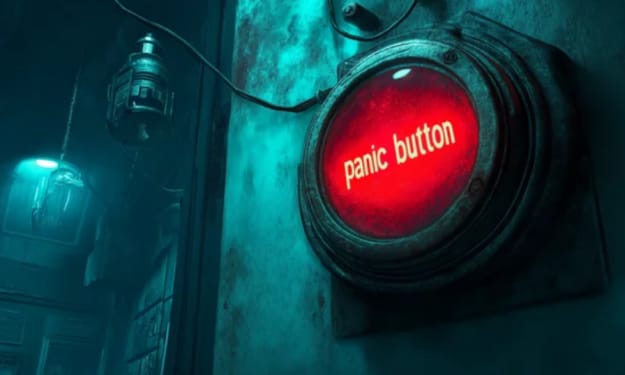
Living with High-Functioning Anxiety
From the outside, I looked like I was thriving. I never missed a deadline. My calendar was perfectly color-coded. I showed up early, answered emails within minutes, and never forgot a birthday. People called me "organized," "motivated," and "reliable." I wore those words like armor.
By shoaib khan8 months ago in Psyche

"The Gentle Path to Healing"
It sounds like you've shared a really thoughtful piece about healing and self-care. Here are a few ways to reword it, focusing on slightly different angles: Option 1 (Focus on the Turning Point): > Her presence was a turning point. She didn't judge or try to solve my problems; she simply offered support when I needed it most. Shortly after, I started therapy, which felt daunting at first. Expressing my inner turmoil was a challenge, but with consistent effort, I began to understand myself better. Healing wasn't a quick fix, but reaching out for help was the crucial first step in rediscovering my true self. > > Learning to set boundaries became an act of self-love. I used to say "yes" to everything, fearing I'd disappoint others or appear difficult. I mistakenly believed I was being helpful, but in reality, I was neglecting my own needs. Each time I agreed to something that didn't align with my well-being, I was denying myself the chance to nurture my own happiness. Saying "no" wasn't about becoming cold; it was about valuing my own capacity and limits. Surprisingly, establishing these boundaries didn't disrupt things – instead, it felt like an act of self-care. > > The path to healing isn't a straight line. Some days bring lightness and hope, while others feel heavy with old stresses. I used to think feeling down meant I was failing, that healing was a final destination. But the truth is, healing is a winding, uneven journey with forward steps, backward steps, and sideways moments. The important thing is to keep returning to yourself, to keep making choices that support your healing, even when it feels impossible. Now, when darkness returns, I can meet it with calm and acceptance, knowing it's part of the process. > > In conclusion, remember that whatever you're facing, you are not broken – you are human. It's perfectly okay to step back, rest, or seek support. It takes courage to acknowledge your limits and ask for help. Sometimes, our lowest points can lead to profound personal growth, as they did for me. When I felt like I had hit rock bottom, I was actually beginning a slower, more authentic life, one I can finally be proud of. As you navigate your own journey, remember that the light will return. It comes in moments, big and small, reminding you that you are here, and that you matter. > Option 2 (Focus on Self-Compassion): > The simple presence of a supportive person, who offered understanding without judgment, encouraged me to seek therapy soon after. Initially, therapy felt intimidating, as I struggled to articulate my inner world. However, with time and persistence, I began to gain clarity about my experiences. Healing wasn't instantaneous; it was the act of asking for help that initiated my journey back to my authentic self. > > Learning to establish boundaries became an essential act of self-compassion. My tendency to always say "yes" stemmed from a fear of disappointing others or appearing selfish. I mistakenly believed I was doing the right thing by agreeing to everything, even when it conflicted with my own needs. In reality, I was betraying myself. Each time I overextended myself, I was denying myself the opportunity to nurture my own well-being and happiness. Saying "no" wasn't about becoming unkind; it was about recognizing and honoring my own limits. I was surprised to find that setting boundaries didn't create chaos; instead, it felt like a profound act of self-love. > > The journey of healing is rarely linear. There will be days filled with lightness and hope, and others when old feelings resurface. I used to interpret these low points as setbacks, believing that healing meant reaching a permanent state of well-being. However, healing is a fluid process, characterized by progress that isn't always consistent. There will be forward steps, backward steps, and detours. The crucial element is to continually return to yourself, to keep making choices that support your healing, even when it feels incredibly challenging. Now, when difficult feelings arise, I can approach them with a sense of calm, allowing myself to feel them and remembering that they are a natural part of the journey. > > Ultimately, please remember that whatever you are experiencing, you are not flawed; you are human. It is perfectly acceptable to need to withdraw, take a break, or seek support. It requires courage to acknowledge your limits and ask for help. Often, our most challenging moments can pave the way for significant personal transformation, as they did for me. When I felt like I had lost everything, I was actually beginning to embrace a more intentional and genuine way of living, a life I now value deeply. As you navigate your own path, hold onto the understanding that the light will return. It finds you in moments, both big and small, reminding you of your presence. You are here, and that is significant. > Option 3 (More Concise): > Her non-judgmental support led me to therapy, which was initially scary as I didn't know how to express myself. Over time, I began to understand my inner world. Healing wasn't immediate; asking for help was the start of my journey back to myself. > > Setting boundaries became an act of self-love. My "yes-saying" came from a fear of disappointing others, but it was a betrayal of my own needs. Saying "no" wasn't cold; it was valuing my limits and surprisingly kept things running smoothly. > > Healing isn't linear, with good days and bad days. I used to think feeling low was a failure, but healing is an uneven process. The key is to keep returning to yourself and making choices that aid healing, even when it's hard. Now, I meet darkness with calm, knowing it's part of the journey. > > Remember, you're not broken, just human. Needing breaks or support is normal and takes courage. Breakdowns can lead to growth, as mine did. When I felt I'd lost everything, I began a slower, more real life I'm proud of. Know that the light returns in moments, big and small, reminding you that you are here and that you matter. > Let me know if you'd like me to try rephrasing it in a different way or focusing on a specific aspect!
By Nasir Khan8 months ago in Psyche
How a Therapist for Young Adults with Anxiety and Depression Can Help in Vienna, VA?
Therapist for Young Adults with Anxiety and Depression: Young adulthood can be a time of excitement, but also confusion, pressure, and emotional struggle. Between school demands, work responsibilities, and social expectations, it’s easy to feel overwhelmed. If you or someone you care about is feeling anxious, depressed, or simply lost, the right support can make a real difference.
By Family First Va8 months ago in Psyche
How to Overcome Difficult Times & Feelings
Life doesn’t ask permission to get hard. One moment you’re coasting, and the next, you’re hit with something that knocks the wind out of you—a breakup, a layoff, a loss, or simply the overwhelming weight of existing in a chaotic world. When those moments come (and they always do), it can feel like you’re stuck in a storm with no umbrella, no map, and no clue when it’ll end.
By Anthony Bahamonde8 months ago in Psyche
The Social Killer
Summary: Social anxiety disorder, also known as social phobia, is a kind of mental disorder where the sufferer experiences a severe or unreasonable fear of social gatherings where there is a possibility that one may get embarrassed or ridiculed. Most of the time, these anxieties arise from an intense fear of being closely watched or scrutinized. This kind of phobia gives sufferers a feeling of being trapped or shut away from the world.
By Tamer saleh8 months ago in Psyche
Living With My Overthinking Mind
There are mornings when I wake up already exhausted. Not because I didn’t sleep, but because I spent all night stuck inside my head. My brain runs rehearsals of conversations I had days ago, questioning if I said something wrong or if I should’ve responded differently. It doesn’t matter how small the moment was—if it made me feel uncertain, my mind holds onto it like a looping playlist I didn’t choose.
By Noman Khan 8 months ago in Psyche