
Silent Hands, Loud Truth
He couldn't speak his pain, so he drew it.


In a small town wrapped in foggy mornings and quiet streets, lived a boy named Haris. He was eight years old, with soft brown eyes and a silence deeper than the sea. No one really knew him. His classmates barely noticed his presence. Teachers marked his attendance, but he was just a shadow in the corner—always quiet, always watching, always hiding.
Haris lived with his father in a small, old apartment that smelled of dust and alcohol. His mother had died when he was very young, and from that day, it was like light had left the windows of their home. His father, once a cheerful man, turned bitter and cold. Some days he ignored Haris completely; other days, he didn’t. And those were the worst.
The bruises on Haris’s arms were always hidden. Long sleeves. Even in summer. When someone asked, he’d smile a little and say, “I fell off my bike.” But he didn’t have a bike. Or toys. Or books. Just a mattress on the floor, a torn blanket, and a small curtain he would sit behind when he wanted to cry.
The curtain was his safe place. Behind it, he pretended he was in a different world—a world where mothers sang lullabies, fathers smiled, and no one shouted at night.
At school, his only comfort was Miss Sara, the art teacher. She had a warm voice and kind eyes that reminded him of someone he had forgotten. She often said, “Art is your voice when your mouth can’t speak.” Haris listened. And he drew.
One day, during art class, Miss Sara gave the students a simple task: “Draw your home.” Children grabbed their crayons and excitedly began. Some drew parks, others houses with chimneys, pets, and smiling parents. Haris hesitated. His hand shook as he picked up a black crayon. Slowly, carefully, he drew a room. Dark. Empty. In one corner, a small boy sat behind a curtain, and beside him, a tall figure with red scribbles around the hands.
Miss Sara stood behind him, watching silently. When he was done, she placed a gentle hand on his shoulder. “Can we talk, Haris?” she asked softly. He looked up, eyes wide with fear—but something in her voice made him nod.
In her office, she didn’t pressure him. She gave him paper, crayons, and time. Slowly, day after day, Haris started to draw his pain. A broken chair. A shattered plate. A crying boy. A locked door. He never used words. But he didn’t have to. His pictures screamed louder than any voice ever could.
Miss Sara shared her concern with the school counselor. They contacted social services. At first, nothing happened. Haris’s father denied everything. “He’s a shy boy,” he said. “That’s all. He makes up stories.” But Haris’s drawings, his quiet fear, and the way he flinched at loud sounds couldn’t be ignored.
After weeks of investigation, child services removed Haris from the apartment. When they came to take him, he didn’t cry. He just looked at the curtain one last time and whispered goodbye.
He was placed with a foster family—Auntie Salma and Uncle Imran. They were kind, patient, and gentle. The house smelled of warm bread and clean laundry. His room had a bed with soft pillows, a lamp shaped like a moon, and shelves filled with storybooks.
But Haris didn’t speak for days. He ate quietly, sat still, and often stared out the window. One night, Auntie Salma sat beside him and said, “You don’t have to be okay right away. But you are safe now. No one will hurt you here.”
He didn’t reply. But that night, he slept without waking up from nightmares.
Weeks turned into months. Haris began to draw again—but now there were colors. He painted skies, trees, and once, a picture of a boy holding hands with two smiling adults. When he gave it to Auntie Salma, she hugged him tightly. He didn’t pull away.
He started therapy. It was hard. Sometimes he would shut down. But his therapist, a calm woman named Ms. Nadia, told him, “You are not broken. You were hurt. And now, we heal.”
Bit by bit, Haris began to trust. He made a friend at school, a boy named Zain, who loved drawing robots. They sat together at lunch and swapped stories. One day, Zain said, “You’re kinda quiet, but I like you.”
And for the first time in years, Haris smiled—a real smile.
At the end of the school year, there was an art exhibition. Miss Sara invited all her students to showcase their work. Haris painted a large canvas. It showed a curtain—but this time, it was open. Behind it stood a boy in the sunlight, holding a paintbrush. The tall figure was gone. In the sky, the boy had written a word: *“Free.”*
The audience clapped when they saw the painting. Some wiped their eyes. Miss Sara walked over and whispered, “I’m so proud of you.”
That night, Haris looked at the stars outside his window and whispered, “Thank you.” Not to anyone in particular. Just to the world for giving him a second chance.
Because not all children get saved. Not all voices are heard. But Haris was. And now, he would spend the rest of his life listening for the voices of others like him—quiet, scared, and hiding behind curtains.
**The End.**
About the Creator
ArshNaya Writes
Hi, I’m Arshnaya. Welcome to my world of words. I write what hearts hide—stories of love, loss, betrayal, and healing. If you’ve ever felt too much and said too little, my stories were written for you.’m grateful for your love—always.
Keep reading
More stories from ArshNaya Writes and writers in Psyche and other communities.
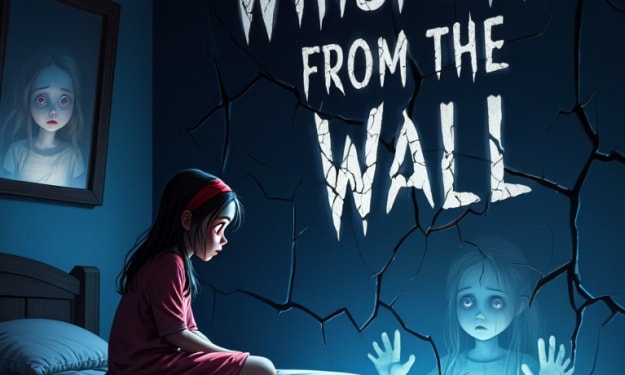
Whispers from the Wall
It all started when Sana’s family moved into the old house at the end of Pinewood Lane. The rent was strangely cheap, and although the house looked worn out and quiet, her parents thought it was a good opportunity. “Maybe because it’s far from the city,” her father said with a shrug.
By ArshNaya Writes8 months ago in Horror
Belle of the Bayou
Bad move, cher. Not just the slip of her kitten heel on the rainy February cobblestones in the Fourth Ward. She got caught snooping. Detective Deleon clucked and strutted like a rooster in his rush to clear her from the scene, waving cigar smoke to and fro as he gesticulated amid the thick air of the speak easy. An experienced crime reporter, Marie knew better than to let the coppers catch her on the wrong side of the line, but curiosity had gotten the better of her.
By Maia Gadwall the metAlchemist7 days ago in Fiction



Comments
There are no comments for this story
Be the first to respond and start the conversation.