medicine
The medicalization of mental illness has given rise to many forms of pharmacological relief that restore chemical imbalances in one's brain.
Grasping Emotional well-being: A Manual for Prosperity. Content Warning. AI-Generated.
Grasping Emotional well-being: A Manual for Prosperity Psychological wellness is something beyond the shortfall of mental problems. It envelops our close to home, mental, and social prosperity. It influences our thought process, feel, and act. It likewise impacts how we handle pressure, connect with others, and pursue decisions throughout everyday life. Understanding and sustaining psychological well-being is pivotal to driving a reasonable and satisfying life. In this article, we'll investigate what psychological well-being is, the reason it makes a difference, and how to keep up with it.
By Waseem Muhammad Rafiqabout a year ago in Psyche
Injection, Tablet, or Syrup: Which Works Faster?
When it comes to taking medication, the form in which it’s administered can significantly affect how quickly it works and its overall effectiveness. Injections, tablets, and syrups are three common ways medicines are taken, but each has its own advantages and limitations. Understanding the differences between these forms can help you make informed decisions about your treatment. In this article, we’ll explore how these medication forms work, which one provides the fastest relief, and which might be best for your needs.
By William Henryabout a year ago in Psyche
Why Today's Offices Prevent Productivity
The Human Soul Will Never Thrive In A Prison. This is Why Today's Offices Fail to Produce Results. It is also Why "Mandating" Returning to the Office has been such a Failure across the Board.
By Dr. Cody Dakota Wooten, DFM, DHM, DAS (hc)about a year ago in Psyche
My Story - Why I Became a Medical Intuitive
Many people have asked me how I got into the intuitive work that I do. This is My Story. A strong intuition is something I have had my whole life. I remember as a small child just knowing and seeing what others didn't. I never dared to share with my family or friends the things I knew, as I was afraid of being weird or odd. In hindsight, I would have loved to discover how the intuition all worked decades before I did. The world would have made so much more sense to me if I had a mentor to tell me I wasn’t imagining things, or making them up, or being too sensitive (a label I carried into adulthood). How do I explain to my grade two teacher when she chastised me for daydreaming, telling me what a "horrible" child I was, that I was seeing angels floating and dancing around my deceased brother outside the classroom window?
By Susan Lee Woodwardabout a year ago in Psyche
Susanna Kaysen, Susanna Kaysen? Checks! Girl, Interrupted?
Flashback. Nuns at Catholic Daycare in Habits. Grape juice and crackers. Even Catholic kids are selfish and mean. Flashback. I pissed my pants. I couldn't kick the big red ball at kickball. I don't know anyone's name.
By Shanon Angermeyer Normanabout a year ago in Psyche
Suicide Prevention: Honorable endeavor or impossible mission?
Suicide is a serious subject and I haven't written about it seriously or intellectually for most of my writing career. I've written many poems expressing in various ways the emotions and thoughts of a suicidal person. I've also written some stories in an attempt to shed some light on the matter. However, today's submission isn't about being "suicidal" or dealing with mental illness. In this article, I'd like to discuss mental health in general and the Florida Mental Health Act of 1971 (also known as The Baker Act). I'd also like to share my personal experiences with suicide, crisis stabilization facilities, and my overall opinions about how people should handle this subject. What makes me an expert? Do I have a Doctorate degree in Psychology? No, I majored in English. But I've spent 25 years in and out of the "insane asylums" and on and off prescribed psyche medications. I've been to hospitals in Florida, New York, Illinois, Georgia, and New Jersey. I may not be qualified to prescribe medications, but after 25 years of experience as a diagnosed and treated patient, I feel quite confident in my expertise on the subject.
By Shanon Angermeyer Normanabout a year ago in Psyche
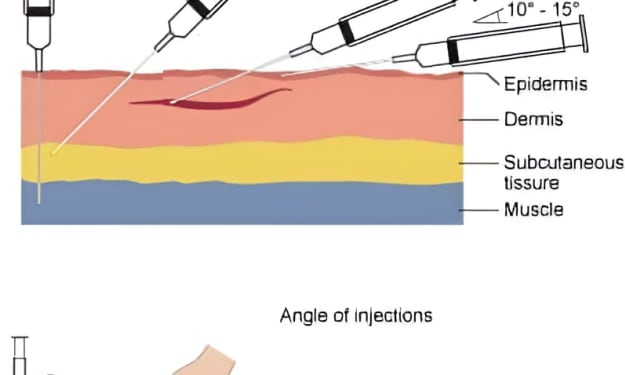
Proper Injection Techniques and Angles: A Pharmacist's Essential Guide
Pharmacists, especially those working in community pharmacies or clinics, often go beyond the traditional role of dispensing medications. Administering injections to patients is a critical part of their responsibilities. However, giving injections requires more than just skill—it demands precise knowledge of the proper techniques, angles, and procedures to ensure safety and effectiveness. Administering an injection at the wrong angle can lead to complications such as tissue damage, infections, and even improper absorption of the medication. Therefore, understanding the correct techniques is vital for both patient safety and the pharmacist's professional competence.
By William Henryabout a year ago in Psyche
Mastering Cardiology Billing in Connecticut: A Step-by-Step Guide
Cardiology billing can feel like a maze, especially when you're working within the specific guidelines of Connecticut. From dealing with complicated codes to ensuring accurate reimbursement, it's easy to feel overwhelmed. But with a little knowledge and organization, you can master the process and make it as smooth as possible. Let's walk through the key steps to mastering cardiology billing in Connecticut.
By Connecticut Medical Billing Services about a year ago in Psyche