humanity
Mental health is a fundamental right; the future of humanity depends on it.
If You’ve Outgrown Someone, You Don’t Need to Hate Them to Let Go
Letting go doesn’t always come with closure. Sometimes it doesn’t come with a fight, betrayal, or big breakdown either. Sometimes, it’s just a slow drifting. A quiet realization. A feeling that the connection no longer fits — not because they were bad, but because you changed.
By SHADOW-WRITES7 months ago in Psyche
The Hustle Culture Nearly Killed Me
I don’t remember the exact moment I stopped recognizing myself. Maybe it was the third night in a row I fell asleep in my car with my laptop still glowing on my thighs. Or maybe it was the morning I coughed up blood into a paper napkin, wiped it clean, and just… kept typing. Like a machine. Like a woman possessed.
By Ava Writes Truth7 months ago in Psyche
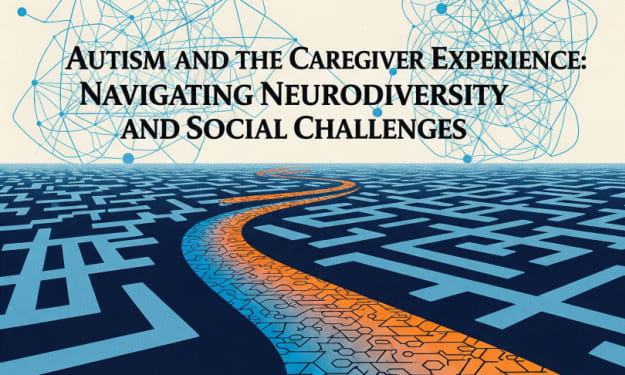
Autism and the Caregiver Experience: Navigating Neurodiversity and Social Challenges
Introduction Autism Spectrum Disorder (ASD) is a complex neurodevelopmental condition characterized by persistent challenges in social interaction, communication, and behavior. As the prevalence of ASD continues to rise globally, awareness of the condition has increased. However, less attention is given to the caregivers of individuals with autism—those who navigate daily responsibilities that often involve emotional, financial, and social strain. This article explores not only the neuropsychological aspects of ASD but also the social dynamics and mental health consequences experienced by caregivers. By understanding both perspectives, we aim to shed light on the full ecosystem surrounding autism.
By Siria De Simone7 months ago in Psyche
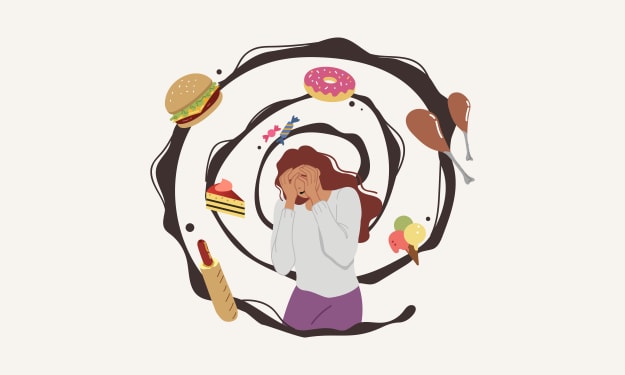
Eating to Fill the Void: When Mental Health Feeds the Mindless Hunger
Lately, I’ve been in a dip. The kind where brushing your teeth feels like too much. The kind where everything is overstimulating and silent at the same time. The kind where your body’s still moving, but your mind is somewhere under the blankets. Still. Fading. Cold.
By Briana Feliciano7 months ago in Psyche
Why Some People Feel Everything So Deeply (And It’s Not a Flaw)
Some people walk through life and feel... everything. They cry at movie trailers. They get anxious before sending a text. They can sense when someone else is hurting — even if that person is silent. And sometimes, they wonder: “What’s wrong with me? Why can’t I just let things go like everyone else?”
By SHADOW-WRITES7 months ago in Psyche
Sensory Toys and Spaces
As more awareness about neurodiversity becomes available, so too does understanding and acceptance of places and things to accommodate it. As an autistic person, I have watched places grow and develop new programs and services for the neurodivergent community as I have grown up. They were rare to unheard of when I was growing up in rural California. Particularly libraries were pioneers in creating these spaces or allowing check-outs of fidget and sensory toys. But as time progresses and I'm seeing more and more acceptance, I have started to see such spaces pop up in festivals and conventions as well. There will, in these cases, usually be a quiet room filled with sensory toys and/or weighted blankets.
By Minte Stara7 months ago in Psyche
ADHD Unmasked: What Science Tells Us About the Distracted Mind
Introduction In recent decades, Attention Deficit Hyperactivity Disorder (ADHD) has moved from the periphery of clinical discussions to the forefront of psychological research, media conversations, and social awareness. Once regarded as a childhood issue characterized mainly by hyperactivity, ADHD is now understood as a complex neurodevelopmental condition that affects individuals across the lifespan. Yet, despite its growing recognition, ADHD remains widely misunderstood. This article delves into the psychological and neuroscientific foundations of ADHD, explores how it manifests in everyday life, and addresses common myths and misconceptions.
By Siria De Simone7 months ago in Psyche
The Productivity Paradox: Working Less to Achieve More
Introduction In a society that often glorifies hustle culture and equates busyness with success, the notion of working less to achieve more seems counterintuitive. However, a growing body of psychological and neuroscientific research supports what some might call a radical idea: reducing work hours, implementing rest periods, and respecting personal boundaries can actually enhance productivity, creativity, and long-term well-being.
By Siria De Simone7 months ago in Psyche