how to
How to cope with your emotions, maintain mental health, deal with life's stressors and help others do the same.
Cracking the Narcissistic Code: The Journey to Empowerment and Clarity
Today, I'm here to reveal a truth that might seem a tad. Once the narcissist realizes that you've cracked their code, things might take an unexpected turn. So, let's dissect this revelation and lay out the implications for you.
By Judith Okech2 years ago in Psyche
4 Gaslighting Techniques That Erode Your Self-Worth
Gaslighting is a subtle yet severe form of psychological manipulation. It is used to dominate or control another person. Through gaslighting, an abuser can damage another’s self-worth. This is done by undermining their confidence, distorting their sense of reality, and making them doubt themselves. Gaslighting targets an individual's perception of themselves. This makes them question their thoughts, emotions, and memories.
By Trust Mental Health2 years ago in Psyche
Unveiling the Hidden Treasures: Exploring the Potential of Rainforests in Curing Diseases.
Rainforests, often referred to as the Earth's lungs, are some of the most diverse and complex ecosystems on the planet. These lush and vibrant habitats are not only home to a rich variety of flora and fauna but also hold the promise of untold wonders for humanity. Among the myriad of possibilities, one of the most captivating ideas is the existence of herbs within rainforests that have the potential to cure various diseases. While this notion has sparked excitement and curiosity, it also raises ethical and environmental concerns. This essay delves into the possibility of rainforests containing herbs that could cure diseases, exploring the scientific basis, cultural knowledge, conservation challenges, and the potential for new medical discoveries.
By Armando Rios2 years ago in Psyche
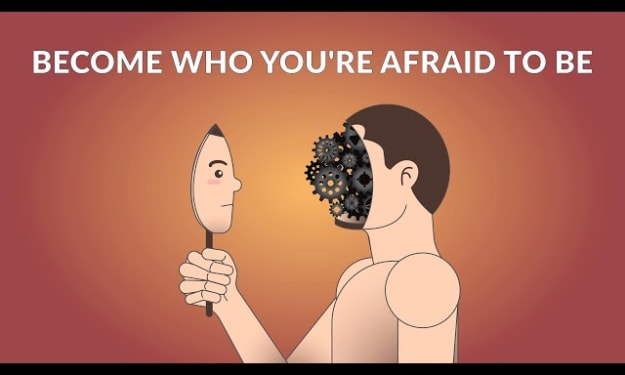
Become who you are Afraid to be.
Most people are afraid to fully be themselves. They’re afraid to embrace the parts of themselves that might be regarded as unacceptable, because embracing these unacceptable parts makes them feel uncomfortable. So to escape this uncomfortableness, they divide themselves into two halves: conscious and unconscious. In the conscious-half, they construct an ideal image of themselves: an image formed out of the bits and pieces of their past that they deem as good and acceptable. And as a result, in the unconscious-half, they repress the parts of themselves that they view as bad and unacceptable. In Jungian psychology, this repressed part of the personality is called /The Shadow/. And unless The Shadow is integrated into the personality, a person can never reach their fullest potential. Instead, one will always remain incomplete, fractured, and partial—living a life of regret rather than the full life that could have been. Imagine, for example, that I’ve solved a few equations and convinced myself that I’m a great mathematician. I might meet a few friends, and they tell me that they have a maths club. They gather every weekend and try to have a crack at maths most difficult problems. This scares me, because if I join, I’ll no longer get to be the ‘great mathematician’ that I’ve convinced myself I am. Instead, I’ll be a concrete person with actual strengths and weaknesses. And in this scenario, there are two possible actions I can take. The first action is to run from my shadow and let it grow. I refuse to join the maths club and realize my own weaknesses as a mathematician. I get to cling to the ideal image of myself as a great mathematician, but as a result, I lose the opportunity to actually become one. The second action is to come into contact with my shadow and integrate it. I join the maths club and realize that I’m not the great mathematician that I thought I was. In the short term, this hurts. I discover that I’m not very good at geometry, but also that I excel in differential equations. I become measured with my colleagues. I have an actual place and rank among other mathematicians. In reality, I realize I’m not the great mathematician I thought I was, but now I open up the possibility of actually becoming one. I can actually improve my skills and rank. In the long run, this ends up being the best decision I’ve ever made. See, in a way, we often prefer to be pure potential. We convince ourselves we /could be/ whatever we want to be, but don’t actively work to /actually/ be something. We just comfort ourselves with the idea that we could be something if we wanted to. This is because when we work towards something, we start feeling our weight in the world. We’re measured and ranked. We’re quantified and actual. And this actual reality is often less pleasurable to live in than our ideal fantasy. But it’s real, not a fantasy. And reality can be improved, but a life of imagination always ends in tragedy. The path to self-improvement starts with self-acceptance. Only by embracing and integrating our shadow, by accepting the ugly parts of ourselves, by becoming who we’re afraid to be, can we reach our fullest potential. But if we reject our shadow, if we pick and choose the parts of our past, personality, and behaviour that we like and repress the parts of ourselves we fear, we become incomplete and partial. And instead of living a full, whole life, we live one full of regrets. But it’s up to you to decide: in Jungian terms, will you embrace your shadow or reject it? Would you rather fail in actuality or succeed in mere hypotheticals?
By Ash Martin2 years ago in Psyche
Overcoming Anxiety: Personal Stories Of Triumph
Anxiety, often characterized by a relentless cycle of worry and fear, can be an overwhelming experience that significantly impacts one's quality of life. However, amidst the struggles, there are inspiring tales of individuals who have conquered anxiety and emerged stronger than ever before. These personal stories of triumph serve as beacons of hope for those who find themselves trapped in the grip of anxiety.
By Judith Akabs2 years ago in Psyche
Techniques For Inner Peace
In our fast-paced and increasingly chaotic world, the pursuit of inner peace has become more crucial than ever. Mindfulness, a practice rooted in ancient traditions, has gained significant popularity in recent years as a potent tool for achieving tranquility and balance amidst the demands of modern life. This exploration delves into the techniques of mindfulness, shedding light on how they can be harnessed to cultivate inner peace.
By Judith Akabs2 years ago in Psyche
5 Daily Habits For A Healthy Mind
Maintaining a healthy mind is just as essential as taking care of our physical well-being. In the hustle and bustle of modern life, it's easy to neglect our mental health. However, incorporating simple yet effective daily habits into our routine can significantly contribute to a healthier mind and overall well-being. In this article, we'll explore five daily habits that can help cultivate a resilient and balanced mental state.
By Judith Akabs2 years ago in Psyche
The Intriguing Connection: Exploring the Possibility of a Baby Absorbing Mother's Memory and Genetics
The bond between a mother and her child is one of the most profound and mysterious connections in the human experience. As a baby develops within the mother's womb, it is nurtured and shaped by her body, but does this intimate connection go beyond physical nourishment? This essay delves into the fascinating question of whether a baby absorbs its mother's memory and genetics during pregnancy, exploring the current scientific understanding and cultural beliefs surrounding this phenomenon.
By Armando Rios2 years ago in Psyche
9 Things Depression Makes You Want to Hide
Here are nine things depression often makes you want to hide! - Inner Turmoil and Negative Thoughts Depression is accompanied by a whirlwind of emotions, negative thoughts, and self-doubt; and you might feel like you need to hide these inner struggles from others. You're afraid that you are a burden to others, or fear their sharing of your thoughts will scare them away. Now, you have the choice of putting on a nice face and showing your other side to the world. Although it looks like a way to guard yourself, this may make the rest of us less able to understand just how much you're struggling and what kind of support you need. - Intense Feelings of Loneliness and Isolation Dealing with depression often leaves you feeling like you're trapped in a deep, dark hole; completely isolated and convinced that no one else could possibly understand what you're going through. But one of the major obstacles in how you open up about your emotions to others can be fear of being misunderstood. You think they’ll judge you or dismiss your symptoms as just being in your head. This can be super discouraging and make you want to just clam up and keep everything buried inside. - Perpetual Exhaustion and Fatigue Depression saps your energy and leaves you feeling depleted - like you have nothing left to give. Physically, depression manifests as a constant low-grade fatigue; while mentally, it’s like someone has turned down the brightness knob, leaving your mind in a heavy fog. The pressure to preserve a facade of normality is what makes it all so complicated. Many of us are told by society to be strong and cohesive; so you're getting used to masking your exhaustion through fake smiles and assurances that you "just do it right." You may feel overwhelmed and defeated when you constantly try to show a false front. You're operating at half capacity, unable to satisfy your own expectations or those imposed on you by others. - Loss of Interest and Enjoyment Depression has a way of taking the wind out of your sails. Everyday activities that used to bring joy feel like a chore - or just empty and joyless. Now it feels like a spark that had once ignited your passion is gone. It's also normal to hide that feeling of indifference and it just creates a barrier in your relationship with other people. Suddenly, social events that used to be fun and exciting are a burden. You're making excuses so you can avoid them. Or maybe you don’t want to disappoint loved ones by not appearing invested in the things that used to bring you happiness, so you pretend. However, it will often result in a sense of isolation and detachment. - Self-Care Struggles Living with depression can, at times, make even the most basic self-care tasks feel overwhelmingly challenging. It becomes an insurmountable obstacle to take a shower, eat nutritious food or get sufficient sleep. It's as if these simple acts require a great deal of effort and willpower, draining you both physically and emotionally. The fear of judgment and mistaken belief from others is always a major part of these struggles. You may feel like hiding the problems that you're dealing with, fearing it will be seen as laziness. And that fear of being judged or not understood can reinforce the isolation and loneliness that depression often brings. - Financial Struggles When you’re struggling with depression, staying on top of your work tasks and performing at your best can be tough, and this can lead to job instability. Similarly, depression makes it challenging to focus, stay motivated, and make sound financial decisions. Furthermore, the shame and fear of being seen as a failure can worsen the effects of depression on your job and financial situation. Fears of what other people will think, or the belief that asking for help is a sign of weakness, cause you to hide your financial difficulties. Unfortunately, keeping your financial struggles hidden can intensify the stress and anxiety you experience due to depression. It creates a cycle where you’re not addressing the challenges you face, which further impacts your mental and financial health. - Pile-Up of Uncompleted Tasks It can be incredibly challenging to navigate life when depression weighs you down. No matter how small or simple it may seem to others, all of this is going to become an uphill battle. Even the most basic tasks are made difficult by fatigue and lack of energy or willpower, as well as overwhelming sadness. Then feelings of shame and guilt are often exacerbated, when the remaining tasks begin to pile up. You begin to blame yourself and think that you are weak or incapable of handling your responsibilities. – Self Harm or Substance Abuse When dealing with depression and trying to cope, it’s not uncommon to resort to self destructive behaviors. These behaviors vary and can include substance abuse, alcoholism, self harm, overeating, or even engaging in risky intimate encounters. While these coping mechanisms may provide a temporary sense of relief and distraction from emotional pain, the consequences are often not very good. In addition, when you engage in such behavior, it usually leads to feelings of shame and guilt, which in turn leads to a vicious cycle, where you just want to hide your behavior so that you don't disappoint your loved ones. - Treatments or Medication Therapy and medication both work well for treating depression. Your overall well-being could benefit considerably from these therapy alternatives. However, discussing them can occasionally be awkward. Due to the anxiety of being viewed negatively or stigmatized, talking about medicine and therapy can be challenging. You fear that your difficulties will be downplayed, invalidated, or that you will be characterized as weak. Such concerns can restrict the opening up of dialogue, as well as impede your request for help. Depression is not something that you have to face alone. There's a lot of people out there who are prepared to help you, whether they're friends or trained professionals. But it may be difficult at first to open up about things like this, but we can make huge and brave steps forward in our recovery. Don't be scared of letting others in, accepting their support. On your journey to health, it can have a big impact.
By Nwanya Paschal2 years ago in Psyche
Unlocking the Potential: Strategies to Enhance Human Intelligence
Human intelligence is a remarkable attribute that defines our capacity to learn, reason, adapt, and solve problems. While genetics play a significant role in determining our cognitive abilities, it is possible to enhance and maximize our intelligence through various practices and lifestyle choices. This essay explores a comprehensive range of strategies to increase human intelligence, empowering individuals to unlock their full intellectual potential.
By Armando Rios2 years ago in Psyche
Unraveling Alzheimer's. Content Warning.
Alzheimer's disease is a progressive neurodegenerative disorder that primarily affects memory, cognitive function, and behavior. It is the most common cause of dementia, a term used to describe a group of symptoms affecting memory, thinking, and social abilities severely enough to interfere with daily functioning. In this comprehensive article, we will explore the symptoms, psychological and biological causes, consequences, medical treatments, psychological interventions, and precautions associated with Alzheimer's disease
By Shams Ul Qammar2 years ago in Psyche