disorder
The spectrum of Mental Health disorders is incredibly vast; we showcase the multitude of conditions that affect mood, thinking and behavior.
Maladaptive Daydreaming
I noticed a change in me, about eight years ago. At that time I was a sophomore in high-school and I found it extremely hard to concentrate in class. I was daydreaming or at the time I thought that’s what I was doing. At a moments of notice I would dream about another world and role play in my head of this world. It was an intense dream and I’ll always have vivid pictures in my head of what the people looked like and their names.
By Khadijah Jackson5 years ago in Psyche
Here's Why ADHD Patients Have Such Different Experiences
According to a 2016 CDC survey, around 6.1 million or 9.4% of children have been diagnosed with ADHD, which may not seem like much compared to the general population, but is definitely more than we might expect (CDC). Almost everyone knows at least one person with ADHD, and interestingly enough, each of these people has experiences and symptoms that are unique to them. For example, one person with ADHD may struggle with paying attention during class, another person may struggle more with tics and excessive talking, and yet another patient may have issues with all of the above. But why, you might wonder, do these differences occur? Studies have shown that there are many reasons why the ADHD experience may be different for each patient, including the different types of ADHD, a genetic predisposition for certain symptoms, comorbidities that may go along with ADHD, and traumatic events experienced during key times of brain development.
By Celia Pyburn5 years ago in Psyche
BASIC WAYS IN WHICH HUMAN MINDS CAN DYSFUNCTION
When a child is born, the mind is not fully developed. In the early years of growth, there is a lot of physical and mental development that happens. The brain of a human fully develops after a few years of birth and after that, there are only modifications that can happen.
By Rahul Shakya5 years ago in Psyche
Face Blindness a.k.a. Prosopagnosia
This series will look into different illnesses/diseases/disorders and understand what they are. No one is perfect, and everyone has some condition, whether you are aware of it, believe it, or recognize it or not. In the end, it is a matter of whether it affects your daily life and whether it causes you inconvenience in going on with your days. In high school, I self-diagnosed with OCD (Obsessive-Compulsive Disorder), fortunately, I learned to cope with it and tell myself to "let it go," so it doesn't affect my life as much as it used to.
By Storyteller5 years ago in Psyche
The reality of Trichotillomania
Trichotillomania, also known as hair pulling disorder, is a mental disorder that is part of the obsessive compulsive disorder classification. Trichotillomania involves the overwhelming compulsion to repeatedly pull out their own hair, which can be from the head, eyebrows, lashes, pubic hair, or any hair on the person's body.
By Diane Campbell5 years ago in Psyche
Dementia or ADHD
You can’t remember the word for, what is it? You bake with it, use it to scrape out the bowl. Damn, the mixing bowl is dirty, got to wash that. Do I have enough eggs? What was I looking for again? The thingie, the, oh hell who is texting now? 30 min later, the word ‘spatula’ pops in your head. You’ve noticed that regular words, everyday words, names you should know escape you. You are more forgetful about errands. You get sidetracked more easily than normal. You are also over the age of 50. Secretly you begin to worry if you are seeing early signs of dementia or Alzheimer’s. Or, are you one of many adults that are dealing with ADHD? What are your chances that you will be diagnosed with ADHD? Not very good and this is why.
By Greta Frusha5 years ago in Psyche
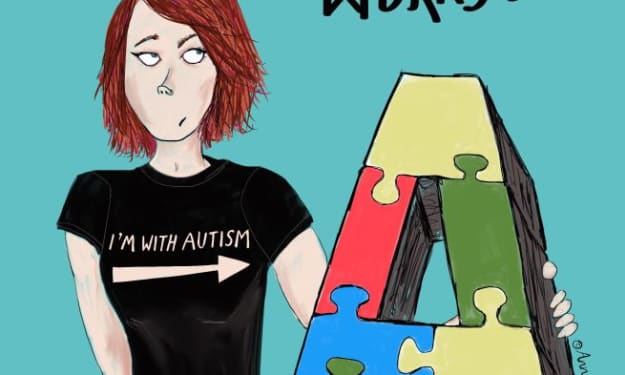
Supporting Adolescents with ASD Transition to Adulthood
Factors Supporting Adolescents with ASD Transition to Adulthood Autism or Autism Spectrum Disorder (ASD) is prevalent among the U.S. population. According to the Diagnostic and Statistical Manual of Mental Disorders 5th Edition (2013), about 1% of the U.S. children and adults experience ASD. Specifically, 1 in 68 adolescents has ASD (Anderson & Butt, 2017). Even though the Diagnostic and Statistical Manual of Mental Disorders 5th Edition (DSM-5) asserts that research has not found specific causes of mental illness, it has addressed some consequences including the dropout rate among adolescents (e.g., Anderson & Butt, 2017; Goldstein et al., 2018) thus resulting in low quality of life of adolescents with ASD compared to those without ASD (Goldstein et al., 2018). Moreover, even though transition services for adolescents with ASD are expanding, the outcomes remain bleak. Transition services focused on developing daily living skills related to executive functioning for goal attainment, follow-through, as well as managing self-care needs should be a priority (e.g. Alverson, Lindstrom, & Hirano, 2015). High school transition services designed to develop and support youth's internal motivation, disability awareness, family supports, and clear post-school goals are crucial for them to be college and career ready.
By Distinguished Honorary Alumni Dr. Matthew Primous5 years ago in Psyche
Person-First or Identity-First Language?
Throughout my undergraduate education, I was always taught to use person-first language when referring to people with disabilities of any kind. I became used to this way of speaking throughout my degree and as I completed my minor in learning and developmental disabilities. I personally don't have any experience with a learning disability myself, so I tried to imagine what I would prefer, person-first or identity-first language, if I did have a learning disability. Every time I thought about what I would prefer, I always arrived at person-first language. I thought to myself, “I would want other people to recognize me as a person first and not define who I am just by my disability.” Fast forward to my first semester in PDP, we were assigned the article Person-First and Identity-First Language Developing Psychologists’ Cultural Competence Using Disability Language by Dunn and Andrews. Upon reading this article the first time, I still did not fully understand or agree with using identity-first language, (saying a disabled person instead of a person with disabilities) but I enjoyed that my prior beliefs and teachings were being challenged.
By Nicole Chevrier5 years ago in Psyche