bipolar
Bipolar disorder; understanding the highs, the lows and the in between.
Mood disorders
It is often quite natural when a person has irritability, anger, happiness or sad, and etc. These moods change from time to time depending on the situation and fragility of it. "A mood disorder is a condition that severely impacts mood and its related functions" (DiMaria, 2022). This is where the mental health conditions heavily impact your mood and emotional state, which may later have an effect on the body and mind.
By Mahpara Mukhtar3 years ago in Psyche
Depression
Depression is something that is known throughout the world yet there is not much knowledge given to what it actually is. Grieving or feeling sad about trying circumstances in life, such losing your job or being divorced, is natural. Depression, on the other hand, differs in that it lasts for at least two weeks, nearly every day, and itself in more symptoms than just melancholy.
By Mahpara Mukhtar3 years ago in Psyche
Schizophrenia
Schizophrenia is a complicated mental health problem that is hard to make sense of put together; many people tend to confuse Schizophrenia with multiple personality disorders, but has no connection with it whatsoever. "Schizophrenia is a chronic, severe mental disorder that affects the way a person thinks, acts, expresses emotions, perceives reality, and relates to others" (Bhandari, 2022). It can also be defined as: "Schizophrenia refers to both a single condition and a spectrum of conditions that fall under the category of psychotic disorders" (Cleveland Clinic, 2018). Many behaviors or experiences may be a part of this disorder; or the behaviors could be due to schizophrenia. "When schizophrenia is active, symptoms can include delusions, hallucinations, disorganized speech, trouble with thinking and lack of motivation" (American Psychiatric Association, 2020).
By Mahpara Mukhtar3 years ago in Psyche
Anxiety: Overcoming, Evolving, Empowering. Content Warning.
As someone with anxiety, every day feels like a battle against my own mind. It's a constant struggle to break free from the grip of fear and worry that consumes me. But amidst the chaos, I strive to become a better person, to rise above the limitations my anxiety imposes on me. Acceptance is the first step. I acknowledge that anxiety is a part of me, but it doesn't define who I am. It's a condition that I must learn to manage, rather than allowing it to control me. I embrace the fact that I have unique strengths and qualities that go beyond my anxiety. Self-care becomes a crucial priority in my journey towards self-improvement. I understand that taking care of my physical and mental well-being is essential. I establish healthy habits such as regular exercise, a balanced diet, and sufficient sleep. Engaging in activities that bring me joy and relaxation, like practicing mindfulness or pursuing hobbies, becomes an integral part of my routine. Education is my armor against anxiety. I educate myself about anxiety disorders, their causes, and coping mechanisms. By understanding the intricacies of my condition, I gain the knowledge to identify triggers and implement effective strategies to manage them. Therapy and counseling provide me with valuable tools and techniques to navigate through anxious moments, helping me build resilience and emotional strength. Embracing vulnerability is another aspect of my growth. I learn to express my fears and concerns openly, seeking support from trusted friends and family. I discover the power of connection, understanding that I'm not alone in my struggles. Sharing my experiences not only helps me to release the burden but also creates a safe space for others to open up about their own challenges. Challenging my comfort zone is a daunting but necessary task. I realize that avoiding situations that trigger anxiety only reinforces its hold on me. Instead, I gradually expose myself to those situations, pushing my boundaries at a manageable pace. With each small victory, my confidence grows, and the grip of anxiety loosens. Practicing self-compassion becomes a mantra in my journey. I learn to treat myself with kindness and understanding, forgiving myself for setbacks and celebrating even the smallest achievements. Each step forward is a triumph, no matter how insignificant it may seem to others. Patience and perseverance are my guiding lights. I understand that progress is not linear, and setbacks are inevitable. But I keep moving forward, embracing the ups and downs as opportunities for growth. I remind myself that I am on a unique path, and my journey to becoming a better person is a personal one. Through it all, I am determined not to let anxiety define me. I am more than my fears and worries. With resilience, self-care, knowledge, vulnerability, and self-compassion, I am on a transformative path. I am becoming a stronger, wiser, and more compassionate person, not in spite of my anxiety, but alongside it. You are capable of overcoming your anxiety and becoming an even better version of yourself. Remember that you have the power to take control of your life, despite the challenges you face. Here are some encouraging words to inspire you on your journey I hope this words will help you too. 1. You are stronger than you realize: Anxiety may make you feel weak at times, but deep within you lies a strength and resilience that can conquer any obstacle. Trust in your inner strength and believe in your ability to overcome. 2. Progress is progress, no matter how small: Celebrate every step forward, no matter how small it may seem. Each victory, no matter how minor, is a testament to your growth and determination. Acknowledge and appreciate your progress along the way. 3. You are not alone: Remember that countless others have faced and conquered anxiety. Seek support from loved ones, friends, or even support groups who understand what you’re going through. Knowing you’re not alone can provide immense comfort and motivation. 4. Embrace your journey: Embrace the process of self-improvement and personal growth. Every experience, even the difficult ones, holds valuable lessons that shape you into a stronger person. Embrace the ups and downs, and trust that each step forward brings you closer to the person you aspire to be. 5. Believe in yourself: Have faith in your abilities and believe in your potential. Remind yourself of past achievements and the moments when you’ve overcome anxiety. Cultivate self-belief and know that you have the strength and resilience to face any challenge that comes your way. 6. Practice self-compassion: Be kind and gentle with yourself. Understand that setbacks are a natural part of the journey, and it’s okay to have moments of vulnerability. Treat yourself with the same compassion and understanding you would offer to a loved one. 7. Visualize your success: Picture yourself as the person you aspire to be, free from the constraints of anxiety. Visualize yourself confidently navigating through situations that once caused you distress. Use these visualizations as a source of motivation and a reminder of the person you are becoming. 8. Take it one step at a time: Overcoming anxiety is not an overnight process. Break it down into manageable steps and focus on one thing at a time. Each small step forward accumulates into significant progress over time. Celebrate every milestone along the way. 9. Never give up: The road to personal growth and self-improvement may have obstacles, but don’t let them deter you. Even during moments of doubt, remind yourself of your inner strength and resilience. Keep pushing forward, for every step brings you closer to a brighter, anxiety-free future. Remember, you are not defined by your anxiety. You have the power to shape your own narrative and create a life filled with joy, confidence, and personal growth. Have faith in yourself, be patient, and keep moving forward. You are capable of achieving amazing things!
By Missy Jane Barnal3 years ago in Psyche
A Journey to Inner Peace
Once upon a time, in a world filled with complexities and challenges, there lived an individual who found themselves caught in the clutches of anxiety. It was a tumultuous battle, as anxiety held sway over their thoughts, emotions, and daily life. Each day was filled with a sense of overwhelming unease, making it difficult for them to find joy or peace.
By Shams Ul Qammar3 years ago in Psyche
Surprising Science Behind Everyday Phenomena
Every day, we encounter countless phenomena and experiences that pique our curiosity. From the simple act of boiling water to the mesmerizing colors of a rainbow, there is often a fascinating scientific explanation behind these everyday occurrences. In this blog, we will uncover the surprising science behind common phenomena, shedding light on the hidden mechanisms and principles that shape our world.
By Zenia Samson3 years ago in Psyche
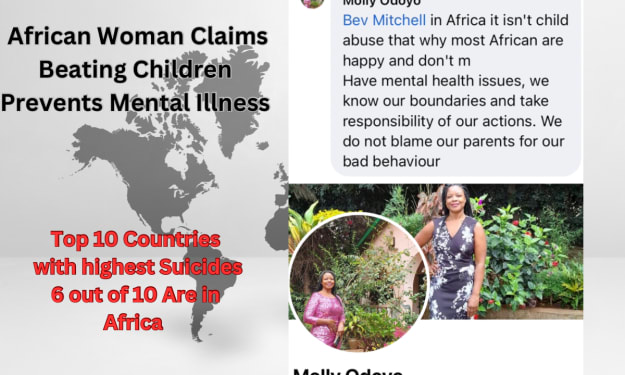
Africa Has Highest Rates of Suicides; Woman Claims Beating Children Cures Mental Health in Africa
Wednesday, 7 June 2023 By: TB Obwoge It was disheartening as an advocate for not only mental health & suicide prevention but a Black woman to read such comments about mental health and child beatings. Also having a nonprofit for gender equality and children's right.
By IwriteMywrongs3 years ago in Psyche
Embracing Resilience
Life presents us with a myriad of hardships and obstacles that can make us question our ability to persevere. It's a common sentiment that resonates with people from all walks of life, often keeping us awake at night as we grapple with the weight of our struggles. However, amidst the trials and tribulations, it's crucial to recognize the extraordinary capacity within us to grow and thrive, even in the face of adversity. Today we are going to delve into the intricacies of our innate strength, exploring the realms of logical reasoning, critical thinking, and the unveiling of our hidden potential. By harnessing these empowering tools, we can navigate life's challenges with resilience and purpose.
By Shams Ul Qammar3 years ago in Psyche
The Link between Bipolar Disorder and Creativity
Introduction Bipolar disorder is a complex mental health condition characterized by extreme mood swings, ranging from depressive lows to manic highs. While the disorder can present significant challenges for those affected, research has shown that there may be a connection between bipolar disorder and creativity. This intriguing link suggests that individuals with bipolar disorder may possess heightened creative abilities compared to the general population. However, it is essential to approach this connection with caution, as bipolar disorder is a serious condition that requires proper diagnosis and treatment. In this article, we will explore the relationship between bipolar disorder and creativity, highlighting the potential benefits and challenges it brings. Additionally, we will emphasize the importance of seeking treatment at the best treatment centers for bipolar disorder to ensure individuals receive the care and support they need to manage their condition effectively.
By sanidhya sawant3 years ago in Psyche
EDUCATION AND MENTAL HEALTH CARE.. Content Warning.
Mental health care disparities continue to persistently affect marginalized communities, presenting significant challenges that impede their access to high-quality services and undermine their overall well-being. These disparities arise from a complex interplay of multifaceted factors, including the unfortunate inaccessibility of mental health care services, deeply ingrained cultural stigmas surrounding mental well-being, widespread discrimination, and a troubling lack of awareness regarding mental health.
By Kelvin M-Gray3 years ago in Psyche
Conquering Social Anxiety
Social anxiety, also referred to as social phobia, is a psychological disorder characterized by an intense fear of social situations and an overwhelming self-consciousness when in social settings. People with social anxiety often experience significant distress and anxiety when confronted with everyday social interactions, such as meeting new individuals, public speaking, attending social gatherings, or even engaging in casual conversations. Managing social anxiety can be a difficult task, but there are numerous strategies that can assist individuals in coping with and reducing their symptoms. The following techniques can be helpful:
By Shams Ul Qammar3 years ago in Psyche