
Should I Lie Or Should I Offend People?
Lying is a tempting tool

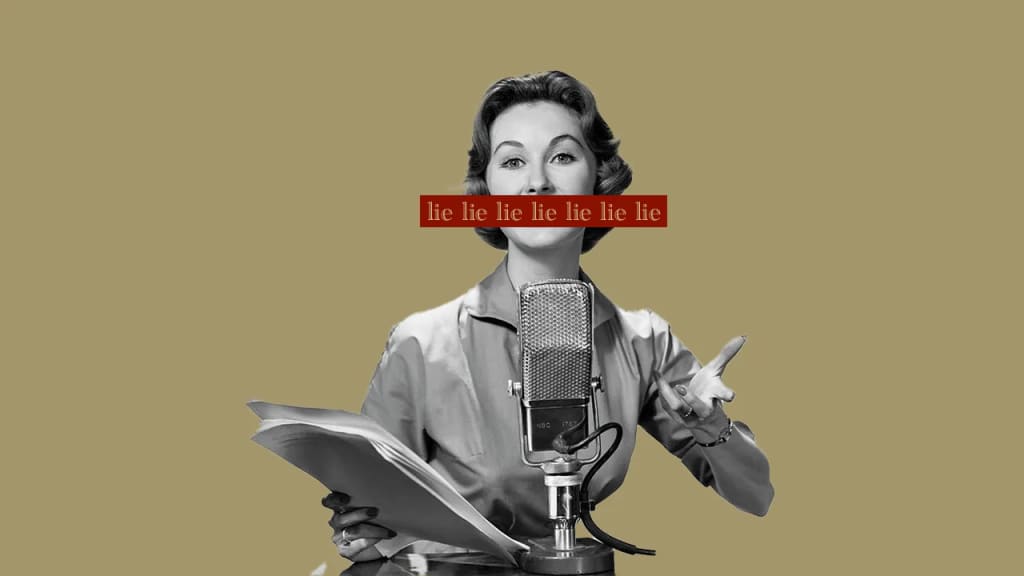
Imagine unwrapping a Christmas gift from your mother, and finding a knit cap that’s, well, let’s just say it’s not exactly your style.
What’s your reaction?
- “I would prefer to have my ears frozen than to wear that;”
- “It would look better on a peacock;”
- “How sweet! I can’t wait to wear this lovely cap.”
Let me guess: You picked the third option. At least, this is what most people do in that kind of situation. I mean, they lie.
In today’s world, these kinds of well-meaning fibs are all too common.
- “No, those jeans don’t make you look fat.”
- “I’m not angry that you were 40 minutes late.”
- “This hairstyle? Oh, it suits you perfectly.”
We’ve all been there, right? It looks like giving up our own morals for the sake of the common good is not so bad after all.
What are the pros of telling lies?
Sure, honesty is important, no one’s disputing that. But what about those moments when being honest feels like stepping on a landmine? When the truth could break up relationships, make us look bad, or kick us out of the “normal” group?
Lies often serve as lubricants, smoothing the rough edges of human relationships. Take the classic scenario of a partner, who always arrives late. Rather than sparking a showdown, it’s often easier to smooth things over with a little white lie — like pretending you just arrived yourself.
Dr. Pamela Meyer, renowned author of “Liespotting,” calls such tricks “social scripts.” We are all familiar with a set of unwritten rules dictating when and where it’s acceptable to bend the truth.
Sometimes lying seems to be the only option. Imagine a situation where a spouse discovers a message on a partner’s phone, hinting at infidelity. It’s much simpler to make up something, like saying that a coworker or friend sent the message, than to tell the truth and risk tearing the family apart. In this case, the lie becomes a shield against the devastating consequences of the truth head-on. Psychologist Dr. Marshall Rosenberg sheds light on this common phenomenon:
“We’re wired to dodge conflict, even if it means sacrificing honesty. Fear of confrontation often outweighs our commitment to truth.”
And then there’s the desire for acceptance, the need to belong. Is it really so terrible to fib about being an avid skier just to impress a potential friend or romantic interest?
Dr. Tasha Eurich, an organizational psychologist and author, explains that lying can be a defense mechanism to protect our sense of belonging and self-worth in front of people who are important to us.
What’s more, lies serve as a protective shield, safeguarding fragile egos from the piercing arrows of criticism and condemnation.
But perhaps the most insidious motivation behind our lies is the pursuit of self-preservation. Dr. Dan Ariely, behavioral economist and author, states:
“People are adept at crafting narratives that cast them in a favorable light, even if it means bending the truth. The desire to maintain a positive self-image trumps the commitment to honesty.”
This drive for self-preservation leads us to embellish our successes, downplay failures, and spin narratives that fit our desired persona. It’s a survival tactic in a world where perception is reality, where ‘faking it till you make it’ isn’t just a mantra, but a way of life.
Let’s not forget the everyday phenomenon of making excuses. From skipping the gym to procrastinating on deadlines, we’ve all been guilty of spinning tales to justify our actions. Or lack thereof. Sometimes, it’s easier to blame traffic or a sudden illness than to admit our own shortcomings and make a fool of ourselves.
You see, lies aren’t just black-and-white moral failings. They’re nuanced tools in our arsenal of communication and often even the generally accepted norm.
Imagine a world without lies
In the world where the truth rules, every interaction with other people would be very different from what we are used to.
Picture yourself striding into the office with a daring new haircut, only to be met with blunt remarks about its less-than-flattering effect.
What about the daunting task of telling your mother about all the cracks in your relationship. You’ll leave her without the illusion of tranquility she clings to.
And consider the awkward tension that hangs in the air after critiquing a friend’s cooking skills.
We are often just not prepared to handle the truth. As Dr. Brad Blanton, in this book of “Radical Honesty,” aptly notices:
“We don’t really want the truth. We want comfort.”
It can be too painful to face our flaws and the harsh realities of life. Dr. Pamela Meyer, author of “Liespotting,” recognizes that “radical honesty requires radical courage.” It means facing our anxieties and insecurities head-on, initiating difficult conversations with others, and occasionally forcing ourselves into conflicts.
It looks like too much work. So we often seek refuge in the safety of lies.
Is lying our only choice?
Sure, the idea of a society where everyone exchanges pleasantries and smiles may seem appealing. But beneath this veneer lies a troubling paradox:
The lies we tell to maintain connections often sow seeds of disconnection and distrust.
It starts with a small fib, a harmless white lie to spare someone’s feelings. But then it snowballs, growing bigger and more tangled with each falsehood. Before we know it, we’re trapped in a web of deceit, constantly monitoring our words and following scripts to keep our lies afloat.
Think about being stuck forever pretending to enjoy your friend’s terrible cooking simply because you once offered a polite compliment.
Prioritizing surface-level harmony over genuine communication slowly erodes the foundation of our relationships.
But when we shed our masks and confront uncomfortable truths, something remarkable happens. We create space for true intimacy to flourish. Instead of hiding behind a facade of perfection, we embrace our imperfections and those of others. It’s in this vulnerability that genuine connections are forged.
Dr. John Gottman, a renowned psychologist and relationship expert, stresses the importance of honesty in fostering intimacy and trust. He emphasizes that:
“Honesty forms the bedrock of genuine intimacy and trust in relationships. When we prioritize superficial harmony over authentic communication, we sacrifice the very essence of connection.”
Yes, honesty is a more challenging path.
It requires more thought, more time, and more effort. But the rewards are immeasurable. It grants us the clarity to see the real people around us and discover our true selves.
So the next time your mother presents you with a less-than-desirable gift, consider offering genuine feedback instead of feigned enthusiasm.
Who knows? Your honesty might spare you from future embarrassment and pave the way for receiving the gifts of your dreams.
About the Creator
Keep reading
More stories from Ivanna Kanafotska and writers in Psyche and other communities.
Wanna be more disciplined and procrastinate less? Just let it go!
Sitting at my desk, I open my laptop and attentively review the list of tasks I need to complete today. Got it, can start the job! I reach for my phone, open Instagram and start mindlessly scrolling through the feed.
By Ivanna Kanafotskaabout a year ago in Psyche



Comments (1)
So so amazing .i love your content and subscribed. Kindly reciprocate by subscribing to me also . thank you and keep it up