
Rediscovery: Step 1
Shedding off the bruised and battered cloak I thought was my protection
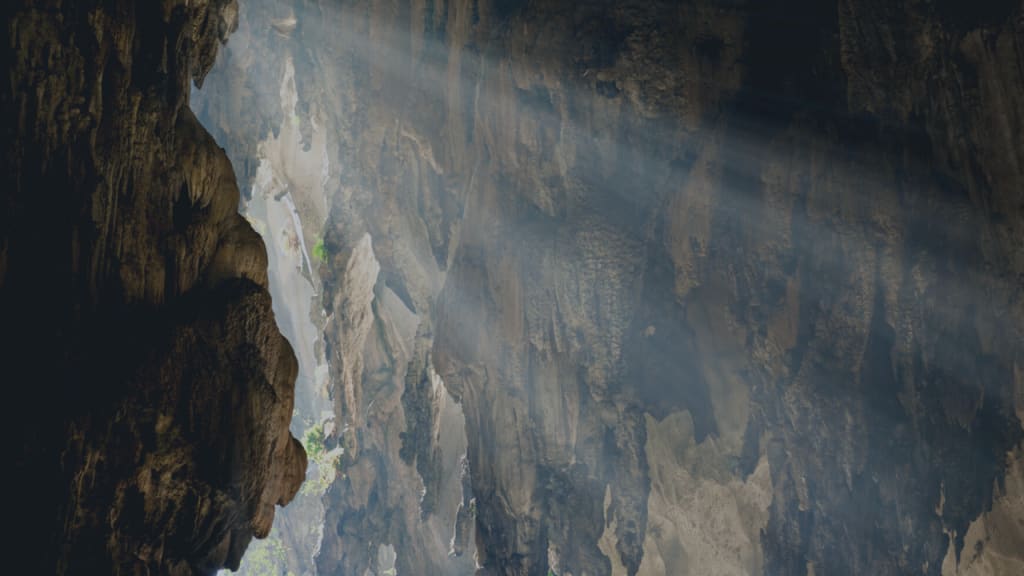
In ten steps, I vow to rediscover myself.
Do you know who your parents are? Who their parents are? How many generations back can you trace your family? Five? Six? More?
I've felt a deep sense of 'unbelonging' throughout most of my life. I never fit in - to anything. Cliques, crowds, fads. Friend groups, family groups, clubs. Nothing. I never fit in. To anything.
So I draped a cloak around my shoulders. A cloak of protection. A cloak of safety. I sewed to that cloak a hood and draped it over my head and most of my face. I never went anywhere without it. I'd fashioned it in many patterns. Sometimes it was made out of silence and solitude. Other times, it was fabricated from the mirrored intimidation I often felt from the outside world. And in times I felt my most vulnerable, it was dyed in apathy and anger. Those times seemed to make up the majority of my youthful years.
As a result, I started wearing my cloak everywhere, even the spaces I shouldn't have felt the need to. At family events. Hanging out with the small circle of friends I'd managed to acquire in high school. Eventually, even at home where I should've felt my absolute safest.
What happens when your cloak becomes your flesh? You lose your identity. You lose your light. I can't say how long it took for the shadows of my cloak to completely conceal my light, but I know it happened rapidly. Of course, I could rationally claim I had all the reason in the world to cocoon myself beneath the protective layers of defense mechanisms and very valid responses to early childhood trauma I'd undergone. But exactly what good would that do? Would it heal me? No. Instead, it would only serve to sate my need to feel justified and right with the choice I'd made to withdraw from the world. My cloak then morphed into something else. A web of shadows and each web was a valid and psychological-study approved reason behind the need for the cloak in the first place.
Knowledge is many things. Dangerous is one of them. Knowledge doesn't readily meet perspective and so all known things can be perceived in many ways - dangerous ways, depending on the circumstance. I was a knowledgable child. In fact, my intellect was the only thing my family agreed on in my regard. It was my only 'good' trait. It was also half the reason I stayed in my cocoon for so long, why my traumatizer hated me with such ferocity and why my peers never bothered understanding me on human level. I was a mind that acquired knowledge and nothing more. No feelings to hurt. No heart to spare. Just someone with answers sometimes.
And I knew this. I knew this and it hurt. I had this thing where I internalized pain and made it personal. It shouldn't be personal - these people hardly knew me - but I used it just the same and it fueled my creativity. I had a knack for words. I could spin a wondrous, suspenseful tale and draw one in with a voracious expectation of more, even when the tale had no identifiable plot or end - as it often didn't in my tween and teen years. And so my love of fiction writing and morbidity grew alongside one another in a beautifully twisted way. That's probably the single good thing to come of all this.
My pain, my hurt feelings, transformed into rage. This rage, too, was fuel for my writing - poetry. I never fancied myself a poet, but the rawness of the pain so obviously evident in my poetry seemed to reach a few people here and there.
There were other faces I painted on my pain. Self-loathing and self-hatred were a popular duo. For years, I went along this way and never imagined the residual effects of my trauma could actually be a form of mental illness. Of course, this was partnered with the larger scale hatred I faced in the outward world for being a double minority (black and a woman), and intelligent on top of all that. It really was a messy combination in the racially insensitive small town of Hickory, North Carolina in the 90s and early 200s. I can readily count at least six different teachers in the nine different schools I attended who made obvious their dislike of me while I can only count two who ever bothered to show concern on my behalf. I should mention one of those didn't actually teach any classes I was in. It didn't occur to me that the color of my skin could have been the motivation. I just always assumed I was a magnet for hatred and that I never deserved to be loved or even liked.
This wasn't an emotional assumption. In fact, emotions have always made me feel uncomfortable. Even now, at 31 years old with two daughters of my own. Emotions are to me what lack of control in the worst possible way are to other people. And this is after years of growth, introspection and therapy. Before I started self-work, emotions were a mystical element that everyone seemed to have and understand but me. My younger siblings and cousins would describe me a smart and mean. To my older family members, I was cold and hateful. My parents were the only ones interested in holding out hope for my eventual return from that shell I hid away in. I should note that my mother and stepfather are my parents and my childhood trauma didn't stem from either of them. In fact, if they hadn't unwittingly saved me from my situation that was hidden from the world, my story would be a much different one today.
It's still hard to reconcile today that there exist people who only need to see the level of melanin in my skin to know all they need about me. Sometimes, I have to remind myself that it isn't just a natural hatred the world has for me - that's just a myth I was told in my childhood.
There's a balancing act I do everyday with multiple facets of who my trauma molded me into. Have you ever suffered from such a negative self-image that you actually forget your own face? I have this monstrosity in my mind who flashes over the blank memory of my own reflection that shatters every time I look in the mirror. Every time, I'm shocked to see myself and not this hideous creature snarling back at me. Have you ever thought so lowly of yourself for so many years that when you come up from that hole, you spend your days reminding yourself 1. yes, someone can genuinely like your presence/your experiences/your voice/your face/your body and 2. no, no one paid said someone to pretend to like ____ (insert whatever they like about you here) for kicks/money/spite/____(insert whatever your paranoid mind thinks up here)? This is my life.
At the start of all this, I said I'd vow to rediscover myself in 10 steps. This is no sprint. I may not even reach the 10th step before my life here is over. But I can't die without some semblance of my real self exposed to someone on this planet. I don't know who I am. That image, that identity - it was taken from me over and over again. I couldn't tell you whether my ancestors in my very blended and murky heritage derived from the continent of Africa or of Asia. I can't tell you what indigenous North American tribe my maternal grandmother's parents were from. I can't even tell you my paternal great-grandfather's real ethnicity.
And if that were all I didn't know, maybe I wouldn't feel so lost. But I can't tell you what my life would look like if I never lived with my biological father. I can't tell you what my personality would be like if I were accepted rather than tolerated by my family without my instinctive nature to keep other's at an arms distance. I can't tell you how my teen years might have gone if I'd been adjusted enough to make authentic friendships. I can't tell you who I could have been. And if that were all I didn't know, then maybe I could feel more at home in my own body.
I'm not obsessing over who I could have been. In fact, I'm glad I'm not that person. That person wouldn't have created the most beautiful and important souls in my life - my daughters. That person wouldn't have faced off with and overcome hardships and struggles that I still can't believe I lived through. I'm fine with having never met that person. And I would be perfectly fine with being who I am, if I ever got the chance to know "this" me.
I have never known who I am. Me, the real me, has never been free to roam this world. The real me is just now snapping through those webs of shadows. The real me is just now cracking through that shell. And I'm ready to see who she really is.
Step 1: Bringing a torch to the shadows.
Here's an oath I'm making to me. From now on, I refuse to act under any filters (within reasonable safety and measured respect for the law) aligned with old ideologies I have of myself. When I fail to do this - as I'm sure I will because I'm an imperfect human being - I will respond to myself with a softness and fluid understanding that I can always learn and try again.
Next up: Step 2 - Acknowledging that it's okay to feel things.
About the Creator
Keep reading
More stories from writers in Psyche and other communities.
Do You have a Support Network?
Life is harder when you’re on your own. Human beings are social creatures, and we usually feel better when we have support from a strong social network around us. For most people, it’s our families that hold us together like glue.
By Elizabeth Woodsabout 8 hours ago in Psyche
Silver Screen Magic with Mae West
American actress and singer Mae West became a popular film actress during the Great Depression. She started entertaining in vaudeville, then performed on Broadway, and finally went to Hollywood. She signed up with Paramount Pictures and made her debut in the 1932 film “Night After Night.” She also starred in musicals, comedies, and crime dramas. The American Film Institute named her one of the best classic Hollywood actresses.
By Rasma Raisters3 days ago in Geeks


Comments
There are no comments for this story
Be the first to respond and start the conversation.