
Postpartum Depression and Anxiety: A Mother's Silent Cries
Suffering in silence

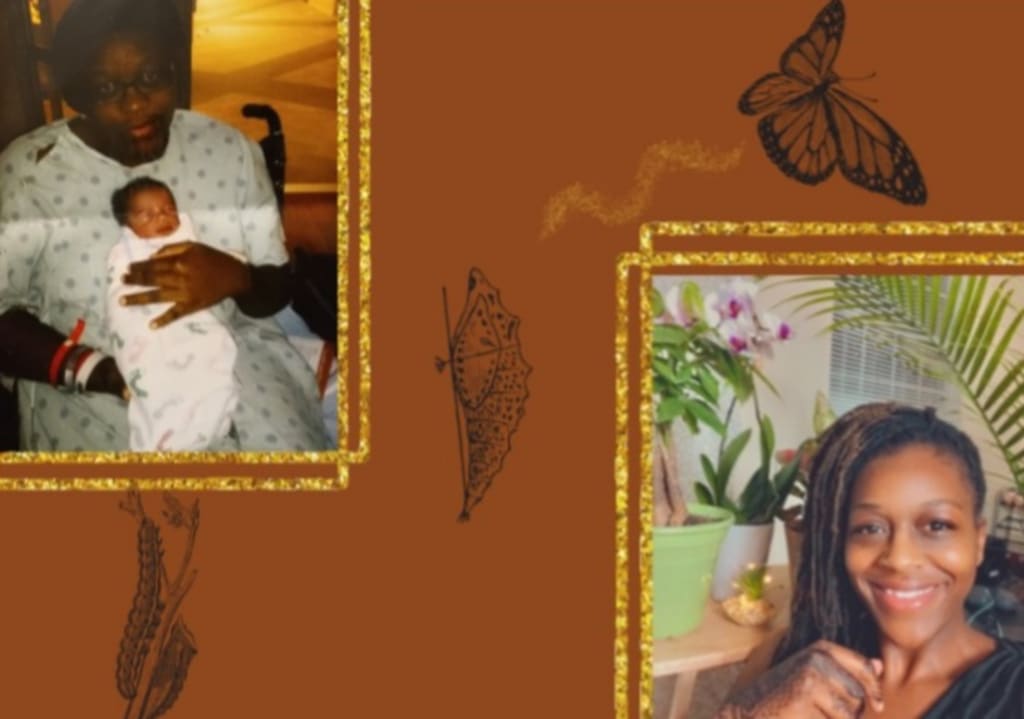
My childhood was less than perfect. As an adult, it still amazes me how resilient I was. I went in and out of foster care for seven years. My mother’s absence was due to her own personal battle with mental health, so I never faulted her for it. The instability fostered feelings of neglect, insecurity, and emptiness that lead to destructive behavior. As an adolescent, I fixated on the idea of motherhood. Not only would I be able to emancipate myself from foster care, but I would finally have someone to love me! My transgenerational trauma was only just beginning to show.
It wasn’t until my early 20’s that I made my dream a reality. I found out that I was pregnant at age twenty-two by my boyfriend I had known since I was a teenager. We were both young and foolish, but madly in love. The fact that we were not married put a strain on our relationship as I came from a Christian home. My boyfriend and I discussed getting married and prepared to tie the knot at the courthouse. We even went to an open house and found a suitable place to call home, then tragedy struck. I can vividly hear the words, “Twenty-four-year-old dead after a car accident”. Why me? At only two months pregnant I was now alone bringing a bastard into this world I thought.

I spent the remaining five months of pregnancy looking out the window, rocking back and forth while listening to "Missing You”, by Diana Ross. Winter turned into Spring, and Spring turned into Summer, but I had not realized the change. It seemed that the world was happening around me. I was in it, but not of it. On a warm August night, I awoke to sharp pains and blood rushing from my womb. After I made it to the hospital, I was whisked away into an operating room. The room began to fill up with doctors, nurses, and all sorts of specialists. I was so frozen with fear that an icy-hot feeling started going down my neck. I could hear the doctor murmur, “Hey Ms. Reece you had a placental abruption, and now we are about to perform an emergency c-section." Time had warped, and I felt like I was in the Matrix. I knew that I had had a baby, but I could not hear his sweet cry.
As I looked over in a drug-fueled spell, I could see a tiny, pale, lifeless body being rubbed profusely. Something was wrong. A nurse briefly brought him over to me, then they disappeared. The time was 4: 48 am, I was not taken into the NICU until 10:00 pm to see my sweet boy. I hesitated as I walked into the room, afraid of what I might see. I quickly glanced over to see him hooked up to a ventilator breathing shallow. My heart fell into my stomach. There was so much to process considering the death of his father and our traumatic ordeal. My motherly instincts kicked in, which caused me to be so protective. Even though the nurses were there to help him, I still felt offended with every prick and procedure. While in the hospital I couldn’t help but notice how detached I felt. It wasn’t that I did not love my baby, but I was numb. Part of me felt compelled to tell the nurses, “Hey can’t you see, I don’t feel like a mother!” Having Kangaroo time and breastfeeding my baby helped me to feel emotion.
After two weeks, I was able to bring my miracle baby home. The nighttime routine with a newborn took a while to adjust to, but I knew he depended on me. As time went on, small tasks became too difficult. Mustering up the strength to eat, brush my teeth, and comb my hair was near impossible. Then there was the internal dialogue. What is happening to me? I don’t feel normal. It isn’t supposed to be like this. In a desperate plea for help, I called my friend. I can’t begin to tell you the amount of courage that took, but the will to care for my baby outweighed my fear of judgment. My community rallied around me bringing items for the baby, homecooked meals,

and moral support. During my six-week checkup, I poured my heart out to my doctor explaining what I had been experiencing. Surprisingly, I was not judged, and CPS wasn’t going to be waiting outside the door to whisk my baby away. What I had been battling was Post-partum Depression (PPD) or “baby blues.” I was relieved to know that what I was experiencing was no fault of my own.
Becoming a mother is a transformative experience with much sacrifice. Not only does a women’s body change physically, but emotionally and behaviorally as well. Mothers benefit greatly from self-care: getting adequate sleep, getting a break, counseling, emotional and mental support. It truly takes a village to raise a child and mothers must be given support when they need it the most. Phone check-ins, offering a meal, and being attentive to their needs goes a long way. No mother should have to suffer in silence.
About the Creator
Anga Blue
Check out my insta: https://www.instagram.com/thevitaqueen/
Hi, my name is VQ and welcome to my universe.
I am a poet and non-fiction writer who dibbles in dabble in fantasy from time to time. Let this space be a familiar or enigmatic place.
Why Our Brains Remember Negative Experiences More Than Positive Ones
Have you ever noticed that a single criticism can overshadow a dozen compliments? Or that a stressful incident lingers in your memory far longer than a joyful moment? This phenomenon is known as negativity bias, a cognitive tendency where the brain prioritizes negative experiences over positive ones. It’s not a flaw — it’s an evolutionary adaptation that has helped humans survive for thousands of years.
By Games Mode On7 days ago in Psyche
Affection and Healing for Yourself
During the night of the last quarter moon, I gathered my ritual supplies. I carefully handled the chunk of black tourmaline that would protect me from your overall negative and narcissistic energy. I carefully walked the house with my stick of selenite in hand, asking the universe to cleanse our working space.
By Alisha Wilkins ✒️🦋🖋️6 days ago in Fiction


Comments
There are no comments for this story
Be the first to respond and start the conversation.