
On the Intellect of Visual People
Word-based intellects are not the only valid ones

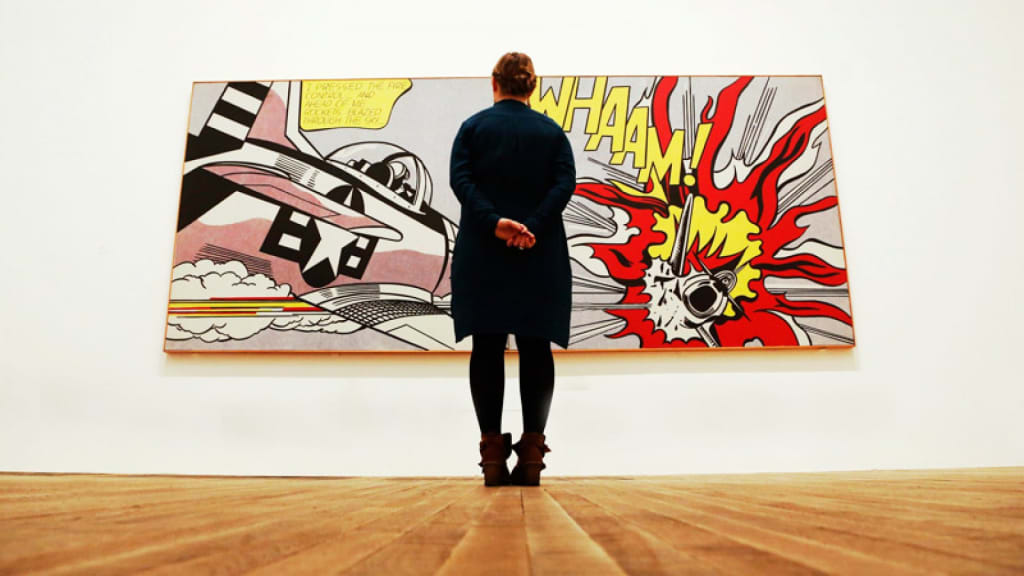
I think that there is a general assumption that visual artists are not that smart. Like perhaps they weren’t that good at things like reading, writing or math and that’s why they were left to mess around with their crayons instead of graduating past that like most people. In my career in design I’ve experienced some of the fallout from this mindset—being overly praised for writing a good email or the weird surprise from people if I have anything of value to say as if I only thought in color, shape and fonts. As a caveat to this, I will say that in my observations, there are differences in communication styles among “word people” and “visuals people” and that I’ve had to figure out how to bridge this divide so that I could survive and have any influence in a “word people” dominant environment and lucky for me I have been able to do it because I think I happen to exist in between these worlds.
Anytime there’s a difference among groups or individuals, there is an inclination to see that difference as an expression of inferiority. I believe this is just a baked in species-wide failing, though of course it has tragically been taken to horrifying extremes over our entire past and present too. Since most people are word-oriented, the people who are less so do experience a lack of understanding and judgement on top of that unfortunately.
Here’s my quite obvious point: the intellect of visual artists and other visually-oriented people is often not easily expressed by words, which is why of course they spend so much time expressing themselves in a different way! I feel really bummed out and uninspired oftentimes at art galleries or museums reading the little intro paragraph or the artist statement full of convoluted academic style language and references to other artists, etc, etc as if art needed to be justified in a hyper verbal, overly-intellectualized way in order to be respectable and valid to the word people. On the same note, I feel like MFA programs seem to aim to create visual artists who can easily pump out drivel such as “As momentary phenomena become clarified through diligent and academic practice, the viewer is left with a clue to the limits of our future.” (pulled from a satirical website called artybollocks.com).
And of course there is such a thing as visual language and it speaks for itself. One only needs to stop and appreciate it for what it is, which is an approach to life that gets a bit lost in the “word world” that seeks to define and direct and mediate everything into specifics, philosophies and too damn many words. Visual language is direct—what you see is what you get. It’s about emotional resonance, similar to music. It’s about appreciating the qualia of an image, the colors, textures, feelings, expressions, rhythms, references and maybe there is a “message” and maybe there isn’t, but that’s not necessarily the point like in “word world” and the messages can be more diffuse and just…different.
So yea, if you are more oriented towards visual matters, then your approach to words is likely to be different and the way you use words will be different too. It will probably be unconventional, which a lot of word people simply cannot deal with. Part of the bridging I’ve had to do with the word people was to make myself acquainted with their conventions and to participate in them, for example to say way more words than I find necessary because they find them necessary. It turns out that you need to pad out your points with a lot of words so that people understand that it’s a Big Point! You can’t just say a little meaningful statement and expect people to understand that it’s important apparently. There are all these little rules to verbal and written communication that I’ve had to figure out that the word people do not think twice about. But how many of these word people have ever had to figure out much about visual people culture?
There’s much talk about how visual the world is becoming through instagram, and other platforms, but what I’ve found is that a lot of people are far from embracing visual language. I think we as a society need to start educating everyone in schools about ways to communicate visually—through design and also fine art. This way visual expressions won’t need to be warped into strange academic confections in order to be taken seriously by “the word people” and we can all bridge the divides a lot more gracefully and we no longer need to disrespect one another’s intellect.
About the Creator
Nadya Goest
I think and write about art and creativity and psychological matters. I am also a visual artist and graphic designer. Life is so complicated, bizarre and amazing and I’m glad to be here to report on it.
Keep reading
More stories from Nadya Goest and writers in Psyche and other communities.
Why is Art Education So Boring?
I was talking to a musician friend the other day about our respective childhood art educations. It really struck me how the things we learned as young students have turned out to be pretty much at odds with the overall nature of art as we practice it now. As a kid, I remember spending a lot of time learning technical skills and principles like reading music, arpeggios, cross-hatching, color wheels; and then perfecting music pieces* and diligently completing art assignments. No class time or guidance was granted to the process of originating pieces that were personally meaningful to us and sprung from our own minds. That was a shadowy activity that wasn’t really acknowledged and sometimes even ridiculed by teachers.
By Nadya Goest4 years ago in Education
Thoughts on Vocal and the way the world is
"Death cannot stop true love, only delay it." – Wesley in The Princess Bride. I decided to come back to Vocal on a very cold and dark night at the end of December. I had been, and still am, convalescing from a horrible staph infection that had gone misdiagnosed for months. This, paired with the increasing challenges of being healthy, making the best choices for my co-parented child, being a wife, and being a director at a new job, was a lot to manage.
By Jazzy 3 days ago in Confessions




Comments
There are no comments for this story
Be the first to respond and start the conversation.