
Why is Art Education So Boring?
Making art and music as unfun as possible for the kids’ own good

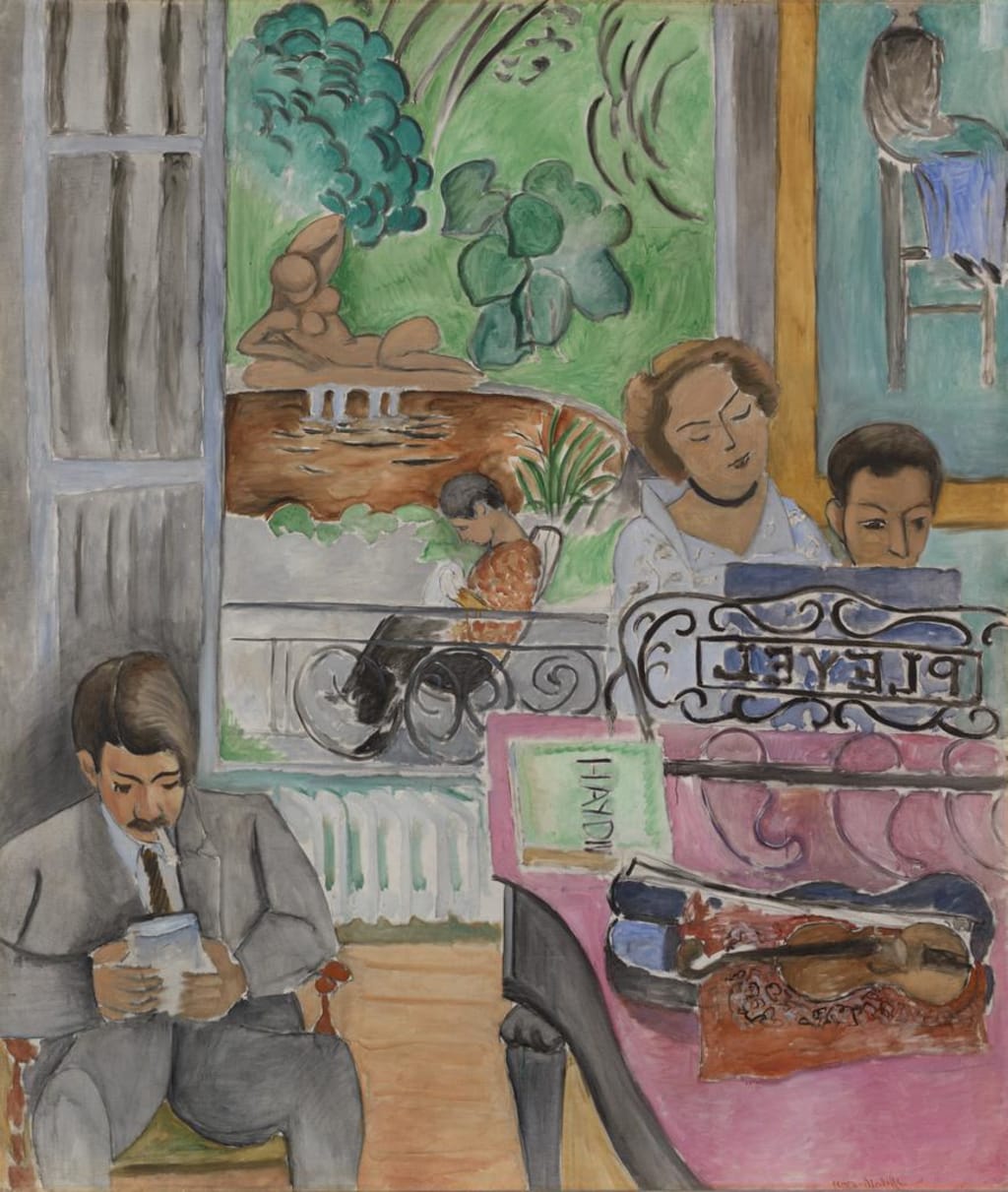
I was talking to a musician friend the other day about our respective childhood art educations. It really struck me how the things we learned as young students have turned out to be pretty much at odds with the overall nature of art as we practice it now. As a kid, I remember spending a lot of time learning technical skills and principles like reading music, arpeggios, cross-hatching, color wheels; and then perfecting music pieces* and diligently completing art assignments. No class time or guidance was granted to the process of originating pieces that were personally meaningful to us and sprung from our own minds. That was a shadowy activity that wasn’t really acknowledged and sometimes even ridiculed by teachers.
The notion that every kid comes fully equipped with the ability to originate and express artistic ideas and that the entire purpose of art is for individuals to do just that seems curiously MIA in these childhood learning environments. The education process seems to silently broadcast to kids by it’s very design that their individuality and creative power may as well not exist and what really matters is dutiful mastery of techniques, demonstrating these in fairly emotionally detached art pieces/performances, and a willingness to be guided by teachers. I don’t want to devalue the learning of artistic skills and techniques at all, however, I don’t think it’s quite as important as it’s made out to be. You can compose a simple song, for example, with only a few chords and it can be just as meaningful and evocative as a very technically complex song. The concept of creative autonomy does eventually surface in education, but years down the line and offered to the most advanced students. It’s as if you need to “pay your dues” to reach an élite status where you’re granted the exotic, perhaps even dangerous, power to apply your formidable skillset to your own thoughts and feelings—or what is left of them after years of neglect.
I also find the focus on how “good” one is at art in education to be really unfortunate. It leads to the widespread belief that engaging in artistic creation is basically pointless unless one has a fairly advanced skill level in a conventional sense. It prevents most adult people from even attempting artistic endeavors, claiming they don’t know how to draw, sing and so on. I believe the over-focus on skills generally puts impressing or delighting others with a finished product or performance ahead of the individual’s experience of authentic expression and the development of their own artistic process. It also prevents people from appreciating both their own art if it’s not conventionally “good” and art from people of “lower” skill levels. It encourages art students to become perfectionistic and tied to prevailing standards, which can make the creative process much more fraught and less exploratory than it could be. P.S. I want to clarify that authentic art and high skill levels can fully co-exist in case it sounds like I think they cannot! I just don’t think that high skill levels should be required for art to be considered “real”.
Now why the heck would art education be this way? Why separate kids from their natural creativity? Why kill the joy and fun in art by making the learning process so dry, exclusive and skills-obsessed? I came up with a few thoughts on this. School is designed with mainly the needs of teachers and other adults in mind. It gives teachers an important job—filling supposedly “empty vessel” kids with knowledge for success in life. Taking the creative autonomy of kids seriously threatens traditional hierarchical notions that schools are built on—if the vessel is already full, then what’s the teacher supposed to do? Also the notion that kids aren’t qualified to legitimately create their own art until they receive a lot of instruction enhances the value of the educational enterprise at the expense of kids’ creative confidence. Allowing kids to pursue their own individualized creative path also adds a lot more variables to the usual one-size-fits-all educational philosophy—something most schools are not willing or really capable of doing. Also authentic art often deals with emotions and deeper matters, which can be messy, strange and frightening to most in our emotion-phobic culture. Guiding students towards emotionally neutral art exercises keeps all parties safe from having to deal with anyone on a deeper level, which could perhaps lead to liability issues in schools.
Art education remains boring because kids are not encouraged to foster a connection to themselves and what they find interesting and relevant through the development of their own art practices. Of course, many kids excel in the present system, but it favors kids who come from stable, middle-class homes, have a natural proclivity towards diligent practice or who’s parents make them practice every day. This is why so many kids quit art lessons—they are not supported in practicing and/or they find the entire enterprise uninspiring and who could blame them! Let’s teach kids the basics of the art disciplines and encourage them to create expressive and original artwork as soon as possible. Let’s stop giving kids so many art assignments and pieces to practice and just give them the tools already. Teach techniques still of course, but let them come up with their own ideas for what skills would be interesting for them to pursue and to master or not! Art shouldn’t be treated like an activity to kill time or like any other subject in school. Let’s allow art to be what it actually is for students of all ages and stages: a joyful, connected, authentic expression of the individual. There should be space in classes for kids to share their work, to discuss it with their peers, and for kids to encourage and even challenge one another. Let’s empower kids to take their creativity seriously, to make it a lifelong pursuit, whatever their profession may end up being. Teachers will still have a big role to play, just more as a class facilitator and an important resource or mentor instead of someone who decides what the kids should be focused on each class. Art is the opposite of boring so let’s start teaching it in a way that inspires and empowers people from the start.
*I am defining an artist as someone who creates original works vs for example professional performers of composed music. I mean no disrespect to these highly trained and talented interpreters and performers but it is a different type of thing.
About the Creator
Nadya Goest
I think and write about art and creativity and psychological matters. I am also a visual artist and graphic designer. Life is so complicated, bizarre and amazing and I’m glad to be here to report on it.
Keep reading
More stories from Nadya Goest and writers in Education and other communities.
On the Intellect of Visual People
I think that there is a general assumption that visual artists are not that smart. Like perhaps they weren’t that good at things like reading, writing or math and that’s why they were left to mess around with their crayons instead of graduating past that like most people. In my career in design I’ve experienced some of the fallout from this mindset—being overly praised for writing a good email or the weird surprise from people if I have anything of value to say as if I only thought in color, shape and fonts. As a caveat to this, I will say that in my observations, there are differences in communication styles among “word people” and “visuals people” and that I’ve had to figure out how to bridge this divide so that I could survive and have any influence in a “word people” dominant environment and lucky for me I have been able to do it because I think I happen to exist in between these worlds.
By Nadya Goest4 years ago in Psyche
Best Laptop for Digital Art
In the vibrant world of digital art, the right laptop can be your greatest creative ally. Whether you're sketching breathtaking illustrations, designing compelling graphics, or animating entire worlds, you need more than just a machine you need a digital canvas that brings your ideas to life.
By Home Care Ranks2 days ago in Education
5 signs you're a good driver
As one of the agency’s best employees, you’ve been selected as a finalist to potentially take on a new top-secret mission. You've already shown your aptitude for surveillance and disguise, but the agency is looking to test one last critical skill: how well you can drive. To prove yourself, you’ll need to complete a series of complicated challenges behind the wheel. As the test begins, you notice that the distances between yourself and the cars around you are being meticulously monitored. One of the most widely recommended strategies when it comes to safe driving
By Munesh Yadava day ago in Education
Thoughts on Vocal and the way the world is
"Death cannot stop true love, only delay it." – Wesley in The Princess Bride. I decided to come back to Vocal on a very cold and dark night at the end of December. I had been, and still am, convalescing from a horrible staph infection that had gone misdiagnosed for months. This, paired with the increasing challenges of being healthy, making the best choices for my co-parented child, being a wife, and being a director at a new job, was a lot to manage.
By Jazzy 2 days ago in Confessions



Comments
There are no comments for this story
Be the first to respond and start the conversation.