
I'm begging you to deconstruct
Rebuild the way you think

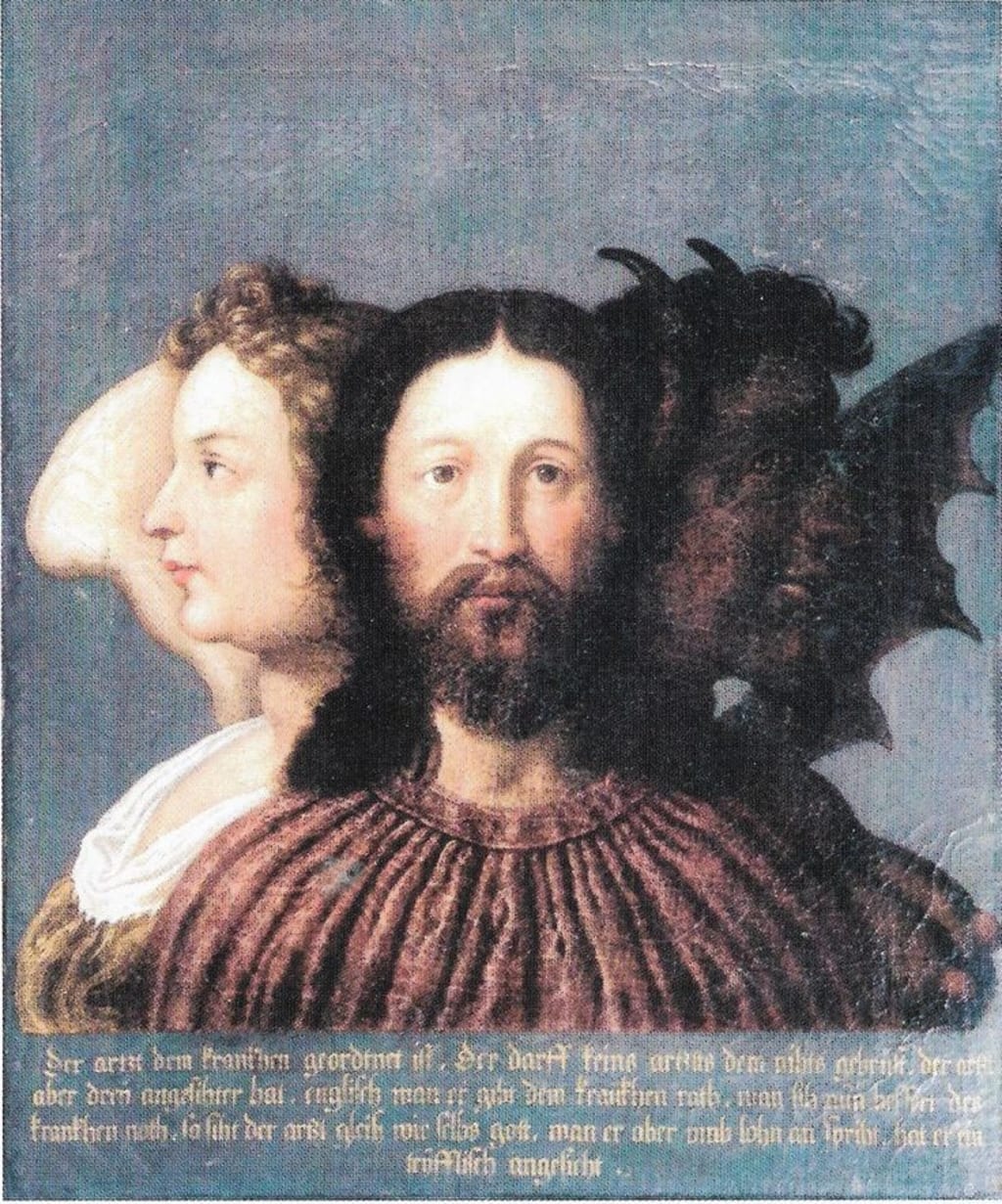
I'm 30, and traditionally at this age there is an expectation that you start settling into who you are as a person. Even in this ever aging society where the generations begin to linger on for good or ill, 30 is a big age. But it's also still quite young. Even if we have great hardships ahead, I can expect to make it at least another 30 years and probably more like 50 given family history of longevity and personal health. Even feeling older than I've ever felt, I still also feel young. And this is an example of how we need to reframe how we think about everything.
I guess I should be clearer about the different parts of who I am. I have a lot going on and I feel like I'm not alone in this, hence why I'm writing this now as a sort of confessional, or maybe better a public brainstorming session. Everybody creates multitudes within themselves. Thinking about at least the 8 billion humans to say nothing of the trillions of critters and plants sharing the world with us each having their own lives can be daunting, but thinking about those multitudes of the world is part of reshaping how we view our lives for the better. Let's start with one set of personal multitudes that most people can fathom.
I am a new dad, I have a wife who is the mother of my child, and we have four parents and four step parents (everybody remarried). That's nine separate people. And lets not forget not only the three surviving grandparents and all 18 siblings and step siblings who are not only new aunts and uncles, but some of whom have their own children (10 cousins so far). Without getting into the extended family tree of all our cousins and THEIR kids (who number in the dozens), that is 30 different people. 30 people with their own lives and desires, 30 people with different perspectives on the world, and 30 people who grew up together but still have unique takeaways and stories. 30 separate lives, but interconnected.
You need to hold those two realities in your head, that the stories are separate but intertwined. I am a 30 year old man with 29 other people in my close family, who if you were reading my story alone, you'd see them as side characters, but just the same I am a side character in their stories. And that's 30 different stories. And its hard to understand each one without the others in some way.
Now some will say "duh, we know this" but not everyone has taken the time to internalize it. The phrase "Walk a mile in his shoes" was drilled into my head as a child just to remind me to be respectful and consider different opinions; so excuse me if I internalize it deeply as an adult and make it encompass more. This is part of the process of deconstructing and reconstructing your ways of thinking. What does the idea that everyone has their own internal experience and their own life actually mean when we think about our place in society, and how we interact with others? We can't really step into other peoples skin and live their lives like a Freaky Friday situation, but we can think about their lived experiences and perspectives, and we can think about how we would react to what they were faced with. We can ask ourselves if we would act the same, and we can consider why they made their own choices and what drove them to do so. Were those choices made in isolation? Or were they measured against lived experience, the other people in their network, and the evidence for which choices were best?
I'm not just talking about choosing healthy versus junk food here.
I am an atheist spiritualist. You might be asking what the heck that means? To put it most simply: I don't believe in all powerful gods, but I do believe in spirits. I can't help being raised Christian, in both Catholic and Baptist contexts, and I can't help having early internet exposure in the age of Atheist debate culture on Youtube during the early 2010s. Early enough to get them fighting the religious right more than harping on feminists after which (even as a highschooler) I felt the movement had spoiled, and saw it for the rage-bait that it often was, unfortunately not without some misogyny that I have thankfully left behind with other old parts of myself. Only a few of those youtubers survived with their morality in tact in the age of the Donald's cult of personality leading the modern Know Nothings to political power.
But I also took away the idea of "rationality:" on the good side to trust science and the scientific method, on the ill-advised side to abandon all effects and mentalities of spirituality. Living in the pure atheist mentality I felt mentally fortified, but a little bit sad for the loss of tradition and "wonder." Of course, what do people classify as wonderous? And for a time I thought this sense of lack was a sense of nostalgia for my ignorance. How wrong I was.
I've always had spiritual encounters, even before I knew the depth of what they were, I take a lot of stock in the traditions of cultures that have both polytheistic and ancestral worship traditions. Chinese traditions, those of the Orishas and Eleguas, Hinduism, Shinto, the ancient Roman religion, Norse traditions, Egyptian traditions, and even those of ancient Canaan and the "Israelites", all have traditions that recognize many "deities" and many rites to honor the ancestors. Unlike some insular interpretations of the modern practitioners of Norse Paganism (I'm looking at you Asatru "brotherhood," not my friends), I don't think our reverence for the ancestors needs to be slavish nor do I think our dedications in life need to be endogamous. We can hold two truths at once: science is the best source of truth, but the world is full of spiritual mystery. We must do right by the spirits and our ancestors, but we must not let dedication to them make us bigoted or limited in our perspective.
In my contact with the non-ancestral spirits, those that I would describe alternatively as angels, demons, djinn, or in the words of Terence McKenna "Interdimensional Machine Elves," I find them to be curious and open to cooperation. They don't speak as we speak: they use images and pattern associations. They like to use trickery to distract people, and they respond to your mood. Approach with fear and they'll make you fear them, approach with hostility and they'll return it in kind, approach with love and they'll enhance your feelings to euphoria if you let them. Approach with curiosity, and they'll blow your mind. In one meeting with them they showed me a visual of the "Pattern of Mankind." The Pattern, a term I'm lifting from Octavia Butler's Patternist series, one of my favorites, represents the connected web of psychic humanity's mental energy. In the vision I was given of the real life pattern: all our emotion welled up as a single bubble encasing our species and this planet. And the spirits showed me the potential future, that our pattern would expand with us out into the Cosmos, bubbling up with us to engulf other worlds and stations we will inhabit. Other species we will encounter have their own Patterns, and as we meet and mingle with them our patterns could meld or they could fight.
Two truths at once: We are individuals, but our individual lives and choices are informed by and influence the pattern of mankind. Our species works as one, and has one pattern together on this Earth. New worlds and communities have their own patterns, but they can mingle and mesh, or they can fracture.
The ancestral spirits feed on our memory and on our devotion to them, by not being slavish we keep them dependent on our love without falling into bigotry informed by outdated views. The non-ancestral spirits depend on our emotions to feed, if we can control our emotions but also allow ourselves to feel responsibly, we can save ourselves mental anguish while also putting potentially angry spirits on a healthier diet of "soul-food."
We have a responsibility to ourselves and those we love. We must hold the truth of our own perspective and the truth that we share our lives with all of them together. The consequences of that include our recognition of the Pattern, and the Pattern takes many forms both in functionality and in allegory. Butler's own sci-fi allegories are very useful even if the basis of their inspiration are laid bare. In the Parable of the Sower and Parable of the Talents, the right wing of the United States is given a prophetic but obvious timeline of a swift and chaotic rise to power, and several years of small tyrants justifying their abuses through the same slogan the personality cult currently in power is using. "Make America Great Again", a phrase coined by Reagan even though many who never lived through his Presidency (myself included) are still affected by to this day. President Andrew Steele Jarret gives me JD Vance vibes more than a shew in for Trump, but this vision to me while both scary and hopeful (because Earthseed DOES succeed in the end) is almost too close to the truth of what's happening today. To look beyond our now however, I fear that we may be in for a few hundred years of stagnation and conflict, more like that of the psychic and feudal Patternists vs the beastly and anarchic Clayarks, with the mutes dealing with the threats from one or the other silently and without protest. I dont think we need to be resigned to such a fate, but I do think we ought to be wary of this possible future and think about how the Pattern influences us, and how what we do influences the Pattern of humanity.
A potent example is MAGA's obsession with their own White Guilt. Sure they'll claim liberals and commies are the ones obsessed with it, but who keeps insisting we honor Confederate generals when they rebelled against the country you're so "Patriotic" about? Let me, an ancestor honoring spiritualist, a historian, and a leftist, tell you about my own connection to the Confederates.
I have a few great-great-great Grandfathers that fought for the south in the Civil War. Right now we'll focus on William Thomas Shockley, my mom's mom's great grandpa. A Sergeant of the South Carolina Infantry under Colonel Hagood. Husband to two wives, father of 13 white children (and possibly a few mixed children that I have inferred from 23-and-me cousins.) Based on what I know from family stories and what records I could find, he was a landowning farmer and also held enslaved people. As one of my ancestors, I can't help but feel a bit of compassion and kinship for him, but being a slave-owner doesn't engender him or his opinions on things to me whatso-ever.
So if I were to summon his spirit for a seance, I might be tempted to ask him "Why did you fight for the confederacy?" He might feed me the lines that others of his time used to justify their cause: "we're fighting to preserve our way of life, to defend our states rights, to preserve our peculiar institution."
When pressed on this, he might either double down on his beliefs or question his assumptions. It's hard to say, I don't have any surviving letters from him in my possession to read and get a sense of his mentality. We all contain multitudes, and after a few generations, we tend to lose the multitudes our ancestors held. By remembering that they had them, we honor them even while disagreeing.
I might ask him how he feels about my marriage to my black wife, and having a half-black child who is my legal heir. He might balk, and I might then press him on his own black descendants and where they came from. He might ask me how I know about that if he hasn't been paying attention to the material realm. If a spirit isn't present in the world, I can't assume they know a lot about modern technology and knowledge. Maybe that would soften him up? Maybe it wouldn't and he'd say the two situations are different. People contain multitudes.
I don't have any plans to seance him any time soon, but he serves as a handy example when I talk about this. Maybe one day when I'm ready, I'll be prepared for his multitudes when I do call his spirit up from sleep because I've been talking about him and his life.
Ancestors sometimes speak clearly or in riddles, and even the clear messages can be interpreted in different ways. This message isn't just about talking to them though.
Just because people have things that affect their lives and decisions doesn't absolve them of accountability. Just because William T. Shockley is my great-great-great-grandpa doesn't mean I can't also call him out for serving in the Confederate army and trying to defend slavery. Just because he's my ancestor doesn't mean I'm beholden to his values just to honor his memory. Just because he was probably Episcopalian doesn't mean I also have to be. And just because someone says they're not trying to be racist they're just "trying to preserve our culture and heritage" doesn't mean you can't press them on what parts of their culture they're trying to preserve.
They usually haven't deconstructed that far.
About the Creator
Bryce Greene-Forgue
Teacher, Historian, Aspiring Sci Fi Author
Keep reading
More stories from Bryce Greene-Forgue and writers in Psyche and other communities.
Party Favors
Boaz VIII Alderon was a tall man even in his youth. He stood at six feet and eight inches when standing straight, which he always did. His father, his mother, and his aunt the Cardinal had all impressed on him and his brothers the need to seem strong willed and confident in every situation. It was easier for him to hold his posture straight on Luna than it was on Earth.
By Bryce Greene-Forgue2 years ago in Fiction
Do You have a Support Network?
Life is harder when you’re on your own. Human beings are social creatures, and we usually feel better when we have support from a strong social network around us. For most people, it’s our families that hold us together like glue.
By Elizabeth Woodsabout 6 hours ago in Psyche


Comments
There are no comments for this story
Be the first to respond and start the conversation.