
How Much Phone Time Is Too Much?
Eye strain, restless nights, and anxious minds—why it's time to rethink our screen habits

Introduction: The Invisible Habit We All Share
We touch our phones over 2,600 times a day, according to some estimates. From checking messages first thing in the morning to doomscrolling late at night, our daily routines are increasingly shaped by glowing screens. But how much screen time is too much? Is it possible that our eyes, brains, and sleep cycles are paying the price?
This article dives deep into how excessive phone usage impacts our eye health, mental well-being, and sleep quality. We’ll explore how much screen time is ideal, how it affects us when used before bed, and—most importantly—how we can regain control.
How Many Hours Should We Spend on Our Phones Daily?
There is no one-size-fits-all answer. However, experts agree that for non-work-related usage, 2 hours per day is a healthy upper limit. According to the American Academy of Pediatrics and the World Health Organization, screen time for adults (outside of work or study) should be kept to a moderate level.
In reality, most of us exceed 4–6 hours per day, especially with the rise of remote work, online socialization, and digital entertainment.
But why does this matter?
The Physical Effects: What Excessive Screen Time Does to Our Eyes
Digital Eye Strain (Computer Vision Syndrome):
Long hours of staring at screens without breaks can lead to a condition known as digital eye strain. Symptoms include:
Dry eyes
Blurred vision
Headaches
Neck and shoulder pain
Staring at screens reduces blinking rate by 60%, causing the tear film to evaporate quickly. This leads to dry, irritated eyes.
Blue Light Exposure:
The high-energy visible (HEV) blue light emitted by screens can penetrate deep into the eye and may contribute to retinal stress and macular degeneration over time. Blue light is especially problematic at night.
Poor Posture and Physical Fatigue:
The infamous “text neck” and forward head posture caused by prolonged phone use can result in chronic pain and even spinal issues over the years.
Pro tip: Use the 20-20-20 rule: Every 20 minutes, look at something 20 feet away for at least 20 seconds.
Mental Health Consequences of Phone Overuse
Excessive phone usage isn't just an eye problem—it’s also a mind problem.
Reduced Attention Span:
Constant notifications train the brain for dopamine-driven feedback loops, which make it harder to focus for long periods. Studies show a sharp decline in the ability to concentrate deeply after prolonged use of short-form content like social media.
Increased Anxiety and Depression:
Social comparison on platforms like Instagram or TikTok can lead to feelings of inadequacy, envy, or low self-worth.
Information overload can overwhelm the brain, leading to decision fatigue and chronic anxiety.
Phantom Vibration Syndrome:
Many people report “feeling” their phone vibrate even when it hasn’t. This phenomenon is linked to compulsive checking behavior and generalized anxiety.
Disconnection in Real Life:
Paradoxically, the more connected we are online, the more disconnected we feel in real life. This results in weakened personal relationships, a rise in loneliness, and reduced empathy.
What Happens When You Use Your Phone Before Bed
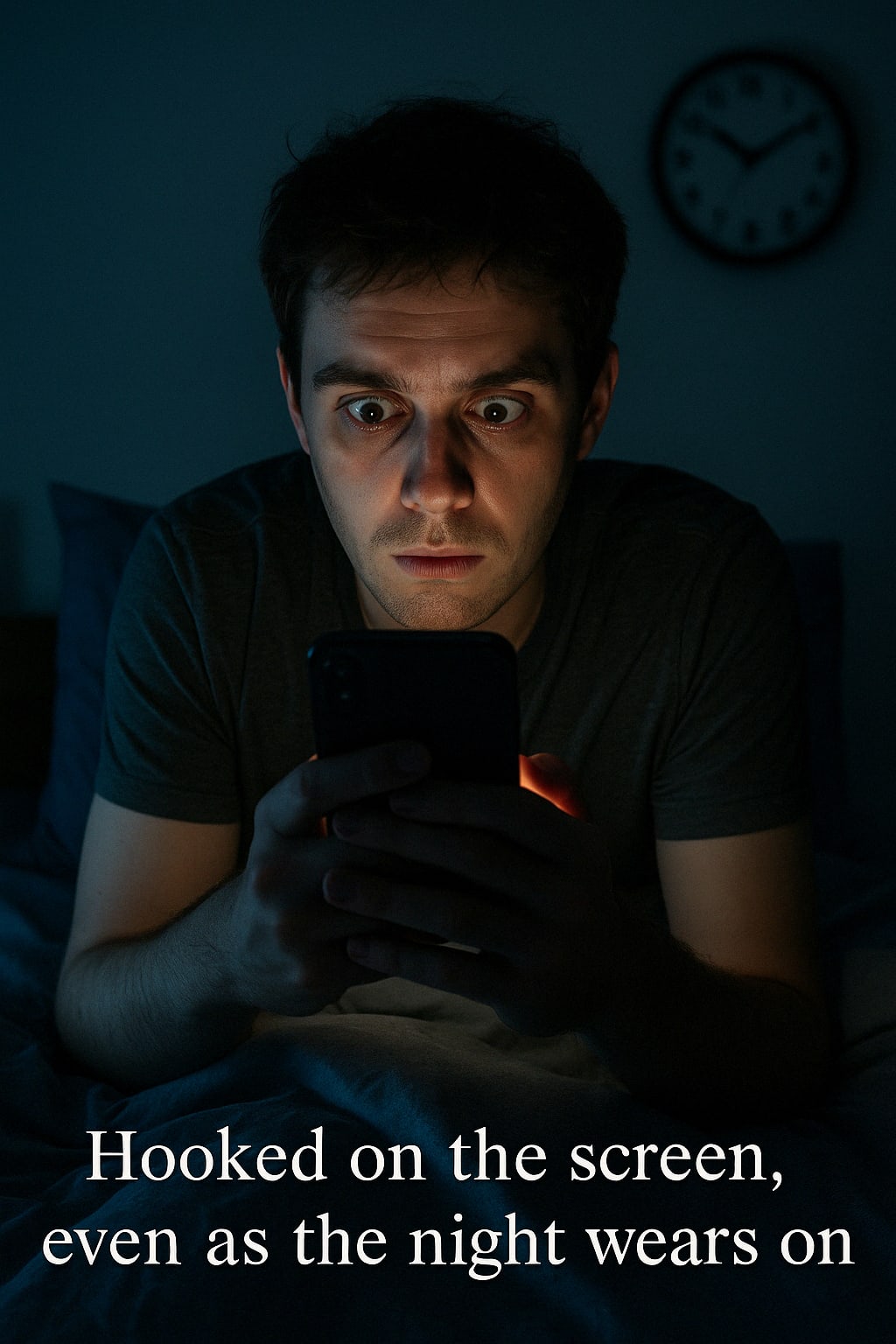
Here’s where things get particularly troubling. Using your phone within an hour of going to bed can disrupt your circadian rhythm, the body’s internal clock.
Melatonin Suppression:
Blue light inhibits melatonin production—the hormone that tells your body it’s time to sleep. Just 30 minutes of screen exposure at night can delay melatonin secretion by over an hour.
Lower Sleep Quality:
Even if you fall asleep after using your phone, your REM cycles may be disrupted. This leads to:
Fatigue in the morning
Poor memory retention
Mood disturbances
Increased Alertness at the Wrong Time:
Scrolling social media or reading stressful news stimulates the brain, making it harder to wind down. Instead of resting, your mind races.
Signs You Might Be Using Your Phone Too Much
You reach for your phone first thing in the morning and last thing before bed.
You feel anxious or restless when away from your device.
Your screen time report shocks you every Sunday.
You have trouble falling asleep or staying asleep.
You notice eye discomfort after browsing.
You struggle to focus without checking notifications.
If several of these apply to you, it might be time for a digital detox.
How to Take Back Control
It’s not about abandoning your phone altogether—it’s about building a healthier relationship with it.
Set App Limits:
Most smartphones now let you limit daily usage per app. Start with entertainment and social media.
Establish a No-Phone Zone Before Bed:
Keep devices out of the bedroom or stop usage at least 1 hour before sleeping. Instead, read a book or do light stretches.
Use Blue Light Filters or Glasses:
Enable night mode or use apps like f.lux that adjust screen warmth after sunset.
Take Regular Breaks:
Follow the Pomodoro Technique (25 minutes of focused work, 5 minutes break) to balance productivity and rest.
Turn Off Push Notifications:
Reduce the urgency of checking your phone every time a ping goes off.
Practice Mindfulness:
Apps like Headspace or Calm can be useful for digital wellness—ironically by using your phone more consciously.
Conclusion: Reclaiming Time, Sleep, and Sanity
In an age where everything is accessible at the tap of a screen, the real challenge is setting boundaries. Phones are incredible tools—but only when we use them, rather than letting them use us.
By understanding the impact on our eyes, our minds, and our sleep, we empower ourselves to make better choices. A few intentional changes can transform our relationship with technology—and ultimately with ourselves.
About the Creator
Ahmet Kıvanç Demirkıran
As a technology and innovation enthusiast, I aim to bring fresh perspectives to my readers, drawing from my experience.
Keep reading
More stories from Ahmet Kıvanç Demirkıran and writers in Psyche and other communities.
The Subscription to Selfhood: How We Became Monthly Members of Our Own Identities
You can imagine it like this: Every morning, before your coffee, before the mirror, before even remembering your own name, you scroll. A “mindfulness pack” tells you how to feel today. A “core identity” booster recommends what to believe. And an “aesthetic lifestyle box” arrives monthly, so you can photograph the life you're supposed to be living.
By Ahmet Kıvanç Demirkıran9 months ago in Psyche
Wild Card Weekend Recap: What Happens Now?
I think I figured out why I love Wild Card Weekend so much. It's because it's the first playoff anything of the calendar year. The NFL season starts in the fall, and once upon a time, the champion was crowned either on or slightly before New Year's. The evolution of the NFL schedule has resulted in the playoffs starting just into the New Year, and currently, the final week of the season falls on the first weekend of the New Year, with Wild Card Weekend coming a week after that. So yes, chronologically, the NFL's Wild Card Weekend serves as the first playoff anything of the calendar year.
By Clyde E. Dawkins5 days ago in Unbalanced



Comments (4)
Such an interesting story and well written.
Very useful information. We must protect our children
Sir it was very helpful
This is a great article about a topic we should all be more aware of and concerned with. I love that you didn't just diagnose the problem but you offered suggestions of how to take back control. Great piece filled with wisdom for the modern age.