
Group Therapy vs. Individual Therapy: Which Is Best for You?
Therapy can change your life, but choosing the right kind, group or individual, makes all the difference.

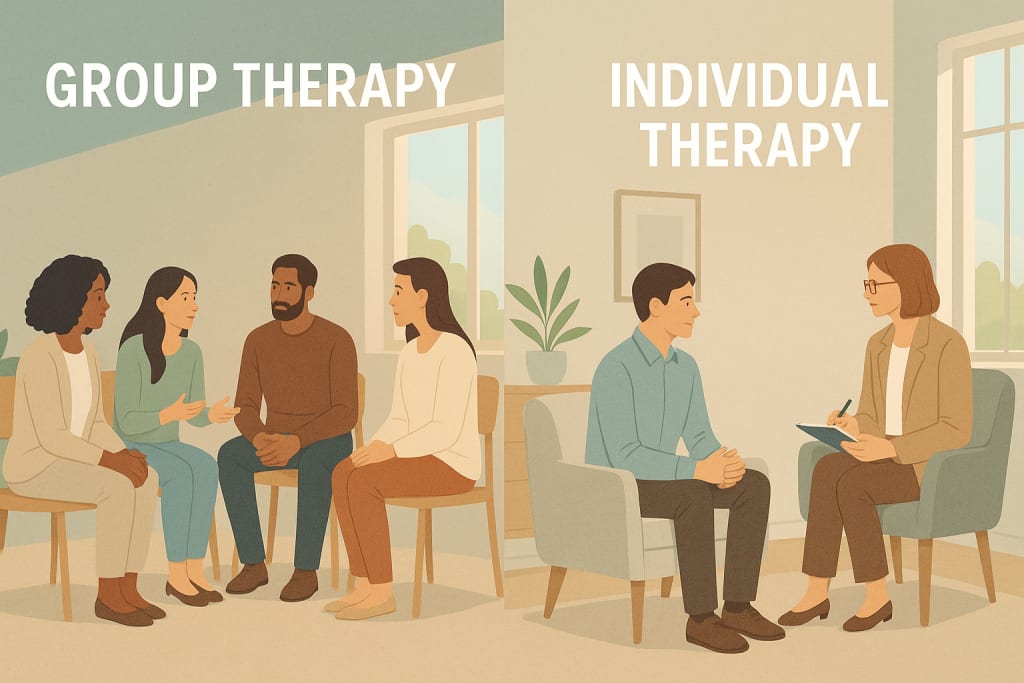
Many people think about therapy when life feels too heavy. But once they decide to reach out for help, another question appears. Should they choose group therapy or individual therapy?
Both are proven ways to heal, manage stress, and improve mental health. They simply work in different ways. Understanding what makes each one helpful can guide you toward the right choice for you.
What Is Individual Therapy
When you go to individual therapy, also known as "one-on-one therapy," you meet with a therapist alone. You and your doctor are in a safe place to talk.
Most sessions last between 45 and 60 minutes. What you say stays between you and your therapist. Many people feel safe enough to share their feelings and thoughts here that they might not do so anywhere else.
The therapist pays close attention, asks questions, and helps you figure out how and why you are feeling what you are feeling. You learn new ways to deal with problems and feel more in charge of your emotions.
Why People Choose Individual Therapy
- Personal attention: Every session is about you. The therapist focuses only on your goals, your progress, and your experiences.
- Safe and private: It is a space where you can talk freely about pain, fear, or confusion without worrying about judgment.
- Customized support: Your therapist adjusts every approach to fit your needs. If you struggle with anxiety, for example, they might teach specific relaxation or thought management techniques designed for you.
- Flexible pace: You choose how fast to go and how much to share. You might need time to think some days and talk about deeper things other days.
- Better self-understanding: When you receive full attention, you start to notice patterns in how you feel and act. Over time, you understand yourself more clearly.
When Individual Therapy Works Best
Individual therapy may be right for you if:
- You are dealing with grief, trauma, or major life changes
- You prefer private discussions over group settings
- You need focused help for anxiety, stress, or depression
- You want to understand deep personal or family issues
- You feel more comfortable speaking one on one
This kind of therapy allows space to explore personal thoughts and experiences without pressure. You can take your time and move at your own comfort level.
What Is Group Therapy
Group therapy is different. Instead of meeting alone with a therapist, you meet with a small group of people who face similar challenges.
A therapist leads the group, which usually includes six to ten members. Sessions happen weekly or every other week. The group shares experiences, listens, and supports one another in an open and respectful setting.
What Happens During Group Therapy
At the start of each session, the therapist may introduce a topic or ask how everyone is feeling. Members can talk about their week or any thoughts they wish to share.
You are not required to speak if you are not ready. Many people start by listening and slowly gain confidence to open up.
Everyone agrees to keep the conversation private. No one is judged or criticized. This creates a space where honesty and connection grow naturally.
Why People Choose Group Therapy
- Feeling understood: Listening to others with similar struggles helps you realize that you are not alone.
- Learning from others: Members share ideas, advice, and coping tools that have helped them.
- Building confidence: Speaking in a group strengthens communication skills and social comfort.
- Encouragement and support: The group becomes a community that celebrates progress and helps during tough moments.
- Self-reflection: Hearing others talk about their emotions often helps you understand your own in new ways.
When Group Therapy Works Best
Group therapy can be helpful if:
- You want to connect with others who understand your feelings
- You need practice expressing yourself in a safe environment
- You struggle with loneliness or social anxiety
- You enjoy learning from shared experiences
- You want encouragement from a supportive circle
Many people find that healing feels easier when they share it with others who care and understand.
Key Differences Between The Two
Both group therapy and individual therapy help you feel better, but they do it differently.
- Individual therapy gives privacy, personal focus, and deeper self-work.
- Group therapy offers connection, support, and shared learning.
- In individual therapy, you look inward and work one step at a time.
- In group therapy, you grow alongside others who are also healing.
Some people find comfort in private one-on-one time, while others find strength in shared voices. There is no wrong choice.
How To Decide What Fits You
If you feel unsure, that is normal. Here are some ways to find what works for you.
- Talk to a therapist: A mental health professional can help you understand which type of therapy matches your goals and comfort.
- Try one session: Attend a private session or a group meeting to see which feels right. Sometimes experiencing it is the best way to decide.
- Think about your comfort zone: If sharing feelings in a group feels too hard right now, start with individual therapy. You can always join a group later.
- Set clear goals: Ask yourself what you want from therapy. Do you want privacy or connection? This answer helps you choose.
- Be flexible: You can move from one type of therapy to the other anytime. Some people even combine both.
Combining Group and Individual Therapy
You can benefit from both at the same time. Many people start with private therapy to understand their emotions, then join a group to practice new skills in real situations.
For example, if you learn about setting boundaries in individual therapy, group sessions help you practice them with others.
- Individual therapy teaches you why you feel the way you do.
- Group therapy helps you test how you respond in real time.
Together, they create balance and lasting growth.
Myths About Group Therapy
There are many false beliefs about group therapy that stop people from trying it. Let’s clear them up.
- People will judge me: Members are usually kind, open, and nonjudgmental because they face similar struggles.
- I have to share everything: You control what you share. No one pushes you to talk before you are ready.
- It is not private: Everything discussed in group therapy stays confidential. Respect is a basic rule.
- It does not work as well: Research shows that group therapy is just as effective as individual therapy for many conditions, including anxiety and depression.
Once people experience it, they often discover how comforting and helpful it truly is.
How To Get The Most From Therapy
Whether you choose group or individual therapy, your effort matters most. Here are a few ways to make it more meaningful.
- Be honest: Say what you truly feel. Openness allows real progress.
- Attend regularly: Consistency builds momentum. Even if you feel tired or unsure, showing up helps.
- Be patient: Change takes time. Each session adds to your growth.
- Reflect afterward: Spend a few minutes thinking about what you learned or how you felt. This helps you see your improvement clearly.
- Apply lessons to daily life: Use what you learn outside therapy. It might mean speaking up, taking a break, or handling stress more calmly.
Therapy gives you tools, but practicing them makes the change real.
Final Thoughts
Choosing between group therapy and individual therapy depends on what you need most right now. If you want privacy, personal focus, and deep emotional work, individual therapy may be your best fit. If you want connection, shared understanding, and encouragement from others, group therapy can be very rewarding. You can also do both if that feels right for your journey. The most important thing is taking that first step toward getting help. Therapy, in any form, shows that you care about your well-being and want to build a better life. Both paths lead to the same goal, a healthier, calmer, and more confident you. Click here to learn more about therapy options and find what feels right for you.
About the Creator
Dr. Tennille Warren-Phillips
At Relate Psychological Services, we provide compassionate, evidence-based therapy tailored to individual needs. Led by Dr. Tennille Warren-Philips, we specialize in anxiety, depression, personality disorders, severe mental illness.
Keep reading
More stories from writers in Psyche and other communities.
When Saying “No” Feels Strange
He did not plan to smoke that day. He was standing outside his school gate, bag on his back, waiting for the van. A boy from his class took out a vape. Another smiled and asked him to try. He refused at first. Everyone laughed, not loudly, not cruelly just enough to make him feel small.
By Muhammad Ayaan about 7 hours ago in Psyche


Comments
There are no comments for this story
Be the first to respond and start the conversation.