
Don't be fearful in advance. Many difficult things will be resolved in strange ways, and there's only one thing you need to do.
From Fearful What - Ifs to Fearless Living: The Power of Now

Do you often feel anxious or even terrified about things that haven't happened yet?
You're afraid of suddenly losing your job, being unable to pay off your mortgage, and having your whole family end up homeless.
You're worried that your child might not get into their ideal university, and that their life will turn out gloomy as a result.
You're scared that your husband might cheat.
You're fearful that you won't have any security when you grow old and will spend the rest of your life in loneliness.
You're apprehensive about not being able to handle a certain job.
You're worried about being ostracized by others.
You're afraid of the breakdown of all kinds of relationships.
...
These fears are like an invisible net that tightly binds us and makes us lose our way in the darkness.
Where exactly do human fears come from?
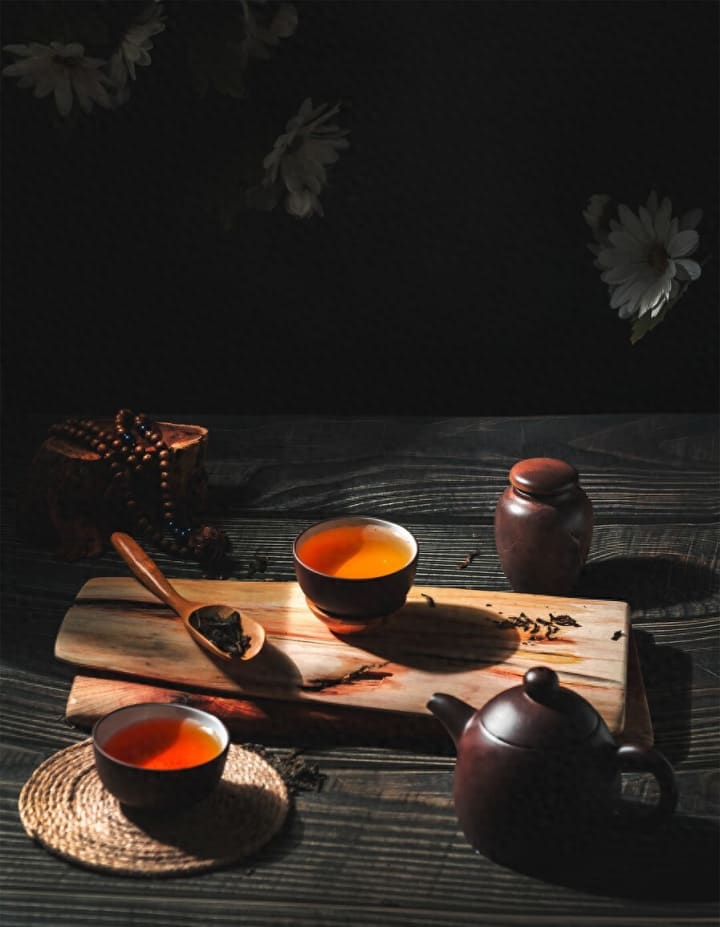
01 The Source of Fear: Uncertainty About the Unknown
Human fear mostly stems from ucertainty about the unknown. We dread when things slip out of our control, when we imagine being stuck in a quagmire with no escape.
So our brain takes over, letting "anticipatory fear" take the stage. Like a mischievous child, it replays endless scary scenarios in our minds, pulling us deeper into a spiral we can’t break free from.
I once had a friend who approached me anxiously for advice. Her first words were: "I suspect my husband is cheating."
I asked, "How do you know that?"
She replied, "He’s been working overtime every day, getting home at 9 PM, and doesn’t talk to me when he’s back." Then she vividly described details of his supposed affair—who the other person was, how it happened—as if it were already a fact.
Later, I learned the truth: her husband had taken on a huge project and was swamped with work. But her fear had peaked, like the sun obscured by dark clouds, losing its original light.
This reminds me of Master Shenxiu’s verse in Bodhi Gatha: The Mind is a Bodhi Tree: "Constantly wipe it clean, lest dust collect upon it." Our minds, like that bodhi tree, need regular "cleaning" to stay clear and alert, free from the confused of external chaos.
Psychological research reveals a "negativity bias" in the human brain—we’re hardwired to focus on and exaggerate potential threats. It’s like how bad news spreads faster than good: we instinctively fixate on worst-case scenarios, believing it prepares us for the worst. But in reality, this overactive imagination traps us in mental exhaustion, often blocking us from solving problems rationally.
02 Overimagination: Turning 1 into 100
Psychologically speaking, the root of human fear often lies in our overimagination of the unknown. Something that’s originally a 1 can become a 100 in our minds due to this tendency.
Take my friend as an example: She took her husband’s overtime work—a minor detail—and magnified it infinitely, conjuring up a cascade of terrifying "what-ifs." This reminds me of a classic story:
There was a farmer who owned a horse. One day, the horse ran away. Neighbors sympathized, calling it a misfortune. But the farmer said calmly: "Losing a horse—who knows if it might be a blessing?"
Sure enough, days later, the horse returned with a wild horse in tow. Neighbors congratulated him on his good luck, but he merely said: "Gaining a horse—who knows if it might bring trouble?"
Shortly after, his son broke his leg while taming the wild horse. When neighbors pitied him, he still said: "A broken leg—who knows if it might be a blessing?"
War broke out soon after, and all able-bodied young men in the village were conscripted. Most perished in battle, but the farmer’s son, spared due to his injury, survived. This is the essence of the old saying: **"When the old man on the frontier lost his horse, who could have known it was a blessing in disguise?" The "good" or "bad" of a situation often depends on our perspective.
We habitually fixate on the negatives, blind to the hidden opportunities. If my friend had viewed her husband’s overtime as a sign of career growth rather than a threat, her fear might have dissolved like mist in sunlight.
03 Solving Hard Problems: They Unfold in Unexpected Ways
All too often, we fret over things that haven’t even happened. But when they do arrive, we realize: many tough challenges resolve in the most unexpected ways.
It’s like a sudden storm that seems ready to destroy everything—yet after the tempest passes, a vibrant rainbow arcs across the sky.
I once knew an entrepreneur who faced mountainous hurdles at the start of his journey: funding shortages, fierce market competition, talent loss… Each problem felt like an insurmountable peak crushing his spirit. He obsessed day and night, terrified his dream would collapse.
However, just as he neared giving up, a chance encounter changed everything. He met an investor who resonated deeply with his vision and decided to back his project. With this support, his company stabilized, then developed a product that took the market by storm.
He later said, “I never imagined solutions could come this way. The problems that kept me awake at night just… melted away, almost by accident.”
This echoes the Tao Te Ching: “Misfortune is the shadow where blessing hides; blessing is the light where misfortune lurks.” Joy and sorrow, ease and hardship, are intertwined—constantly transforming into one another.
We can’t predict the future, but we can trust this: Every challenge is a chance to grow, and every setback is a stepping stone to a path we never saw coming.
04 The One Thing You Need to Do: Focus on the Present Moment
So, how do we face fear and the unknown? The answer is simple: focus on the present moment—the only thing within your control right now.
Focusing on the present means grounding your attention in what’s happening here and now, untethered from regrets about the past or anxieties about the future. As a Zen master once said:
“Eat when you eat. Sleep when you sleep.”
When you eat, savor the taste of your food fully. When you sleep, let go of all worries and rest deeply.
There was a writer who, like many, was consumed by endless anxieties: Would his work be popular? Would publishers reject his manuscripts? What would readers think? These fears paralyzed his writing, leaving him stuck in a creative rut.
Then, he took a friend’s advice and began practicing presence. Every time he wrote, he immersed himself completely—ignoring thoughts of publication or criticism. Gradually, his writing improved, and his work gained acclaim.
He later shared, “When I focused on the present, my mind grew calm and resilient. Fear no longer controlled me; I could finally use words to express my truest self.”
Focusing on the present unlocks your full potential, allowing you to pour your best into everything you do. As the Analects of Confucius states:
“Those who know it are not as good as those who love it; those who love it are not as good as those who delight in it.”
When you embrace the present and find joy in what you’re doing, work becomes more than a task—it becomes a source of fulfillment and strength.
About the Creator
Affection and Healing for Yourself
During the night of the last quarter moon, I gathered my ritual supplies. I carefully handled the chunk of black tourmaline that would protect me from your overall negative and narcissistic energy. I carefully walked the house with my stick of selenite in hand, asking the universe to cleanse our working space.
By Alisha Wilkins ✒️🦋🖋️2 days ago in Fiction




Comments
There are no comments for this story
Be the first to respond and start the conversation.