
Checking rechecking OCD
Checking rechecking OCD treatment
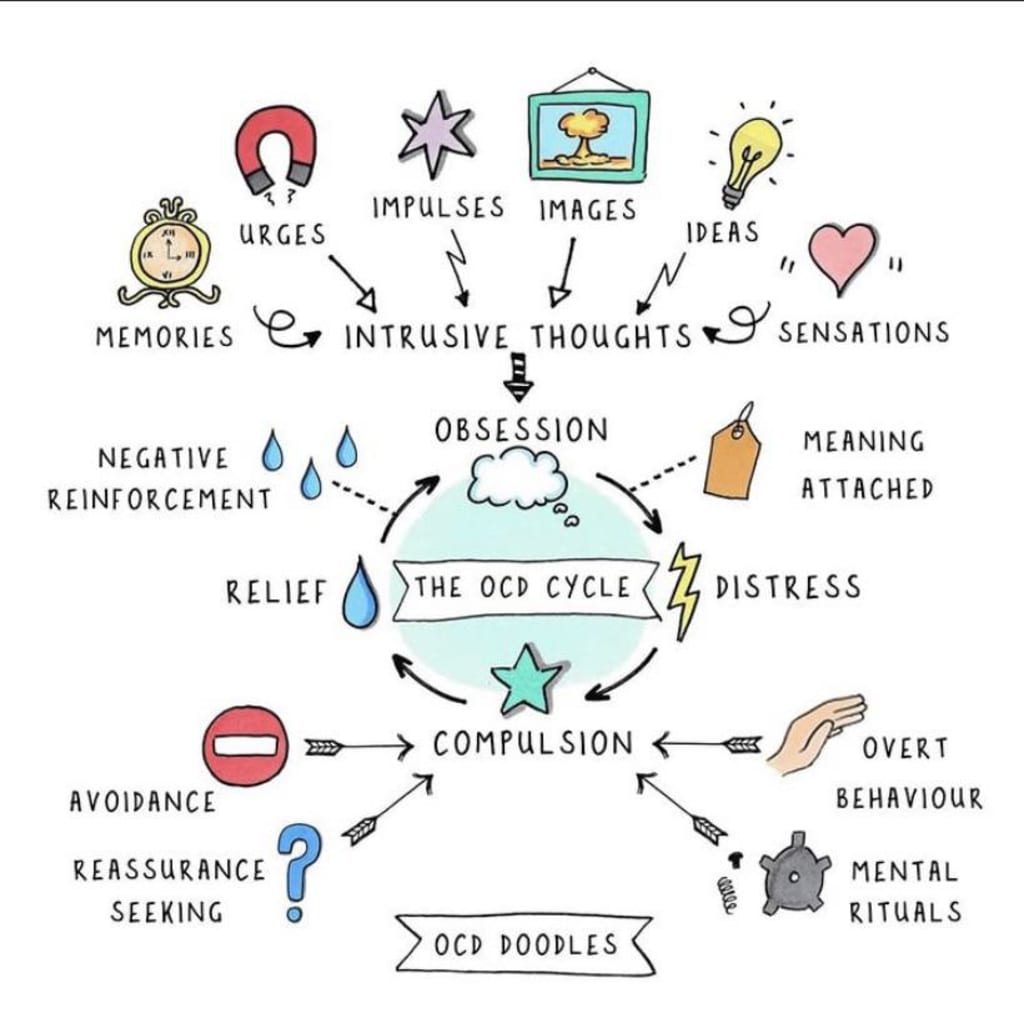
Checking and Rechecking OCD is a common form of OCD characterized by checking and Rechecking things multiple time compulsive behavior.People with Checking OCD fear that they will somehow cause something bad to happen to themselves or others, intentionally or not. This obsessive concern causes anxiety, which they respond to with checking rituals in an attempt to gain certainty that something terrible has not or will not happen.
Examples of Checking OCD
1. Riya gets stuck trying to leave the apartment, checking for safety hazards. Riya is at risk of being embarrassingly late to work. Even she got up early, got ready in time, and could have easily made it to the office but she was once again stuck in her flat and stuck with intrusive thoughts like:
: Did I remember to turn off the stove.
: Did I really lock the windows and unplug the toaster.
: What if a fire starts.
: What if someone gets hurt.
: Couldn’t live with myself if it was my fault.
2: Shyam turns his short commute into a long drive, checking for accidents. While driving to work, Shyam feels his anxiety rise to uncomfortable levels as the familiar unwanted thoughts start:
: Did I look both ways before I made that last turn.
: What was that bump I felt? Did I just hit someone.
: There were a lot of pedestrians in that crosswalk. Did I see them all.
: Did I break any traffic rule should I pay fine
3 : Rahul after end of the call or reading a social media post get obsessional thoughts like
: Did I say something bad to the caller
: Did I ask an inappropriate question
: Did I by mistake send adult content via a whatts up to other
: Did I post something vulgar on my social media comment
: Did I comment on social media post something vulgar
: Did I say something wrong to unknown
: Did I use abusing language to my friend
: Did I ask something sexually explicit to my friends
: Will my sexual fantasy my known will get to know, etc.
Shyam worries that his carelessness will result in tragedy for someone else, a thought that feels unbearable. He feels the need to be 100% certain that nothing bad happened, so he starts his checking rituals. He ends up driving in circles, trying to retrace his route (sometimes several times). He excessively checks his rearview mirror to survey the stretch of road that he just traveled. At times he stops his truck, gets out, and walks all the way around it, checking for signs of a recent accident. What should be a short commute can take hours.
As can be seen from these examples Shyam, Riya and Rahul both are struggling with something far beyond the “double-checking” that most people experience. Instead, they get stuck in a downward spiral of anxiety, doubt, and repetitive checking. The more they perform their compulsions, the more entrenched the cycle becomes.
Signs and Symptoms of Checking OCD
Obsessive thoughts in Checking OCD tend to center on the possibility of something bad happening to ourselves or others. When it comes to others getting hurt, the fear is that it would be our fault. Common obsessive concerns in Checking OCD include:
· Safety Concerns – fears about being responsible for a fire, flood, burglary, or any other threat to life or property.
· Health Concerns – fears of developing a serious illness.
· Mistake Concerns – fears of making errors of any sort.
· Inappropriate Behavior Concerns – fears of bad behavior (e.g., saying something hurtful in a conversation or accidentally writing racial slurs in a paper for school).
These obsessive concerns lead to distress usually in the form of anxiety and for this sub type of OCD checking is the compulsive behavior may be in range of 5 or 50 time utilized to reduce that anxiety. The purpose of the checking is to try to be certain that these feared outcomes have not, or will not happen. Common checking behaviors include:
· Physical Inspection: Looking closely at things (sometimes taking photos for more lasting “proof”), or physically examining them.
· Avoidance: Avoiding responsibility can mean escaping the anxiety around uncertainty. Getting someone else to be the last to leave the house or a room takes the responsibility for checking locks, stoves, faucets, etc. off of the person with OCD. If the concern is about making mistakes, then avoiding the opportunities to make mistakes, (e.g., not sending emails or having interactions with others), can reduce anxiety.
· Reassurance: People with Checking OCD often seek reassurance. This reassurance can be from within, reminding oneself that they have done things correctly. It is also common to seek reassurance from others with questions such as “You saw me lock the door, right?” or “Does this mole look normal to you?”
· Mental Rituals: A lot of checking goes on inside the head. This can take the form of replaying events in one’s mind. For example, a person with Checking OCD can spend hours in bed going over and over conversations they had that day in order to be certain that they did not do anything hurtful or inappropriate. Safety concerns can result in “replaying the video” (in one’s head) of all of your actions before you left the house, in order to be certain that everything was done correctly.
What Causes Checking OCD?
Most common cause of checking and rechecking ocd are cognitive maladaptive practice, behavioral learning, environmental factors, low stress tolerance, bad experiences, too much strict or too much over protected parenting. We can be more confident in identifying what maintains the OCD. So all these factor need to be analyse during planning phase of therapeutic intervention.
Compulsive behavior, like checking, is often temporarily effective because it reduces anxiety. Because of this, people with OCD are much more likely to do that checking behavior again the next time they find themselves feeling anxious about not being certain of something. That is how person becomes trapped with checking and rechecking OCD and then later never learn that there is another way out.
Checking OCD Treatment:
ERP again is best tool and approach in treatment for checking and rechecking OCD and is highly effective when done structurally. It encourages people to face their fears about possibly causing harm or destruction by purposefully triggering these thoughts and then learning that they do not have to give in to their urges in order for everything to be okay. Let’s look at an example of how this might work:
Example of ERP Therapy:
Riya the woman from the first example, who was always late for work because she was repetitively checking her apartment for safety hazards. An ERP assignment might have Riya leave her apartment without doing the checking routine that she normally does. By avoiding her checking routine,Riya would learn that her compulsions are not necessary and that her anxiety will subside on its own. ERP would also teach Riya that she can handle uncertainty.
People struggling with Checking OCD. first step is finding the right professional who have successfully work on the subject on this type of OCD as trained ERP provider. Exposure and Response Prevention therapy is most effective when the therapist conducting the treatment has experience with OCD and training in ERP. At Emotion of life all the therapists specialize in OCD and receive ERP specific training.
About the Creator
Shyam Gupta, Emotion of Life, OCD Recovery and Cure Program, Online & Onsite in Agra
Specialized treatment provider for severe & Chronic OCD without medicine "OCD Recovery & Cure Program" Program is available online as 4 months program & in onsite mode as 4 weeks in Agra
Call: 9368503416
www.emotionoflife.in/review
Keep reading
More stories from Shyam Gupta, Emotion of Life, OCD Recovery and Cure Program, Online & Onsite in Agra and writers in Psyche and other communities.
Contamination OCD
Contamination fears associated with OCD usually does not look like to be a very complicated subject. But when you take a close view, contamination is quite a bit more complicated than what we all perceive compare to what a person with this issue feel and face. When we say contamination OCD there are two things first is obsessions and second is compulsions. For contamination OCD sufferer it is not that simply limited to dirt, germs, and viruses. It may include like:
By Shyam Gupta, Emotion of Life, OCD Recovery and Cure Program, Online & Onsite in Agra about a year ago in Psyche
Smart phones, Humans and Aliens.
WARNING. I will be tapping into one of your favorite creative tensions: The absurdity of humans worshipping their glowing rectangles as if they were tiny oracles. There’s something deliciously poetic about that contradiction, and it lends itself beautifully to an instructive proviso.
By Novel Allen5 days ago in Poets



Comments
There are no comments for this story
Be the first to respond and start the conversation.