
Contamination OCD
management of contamination OCD
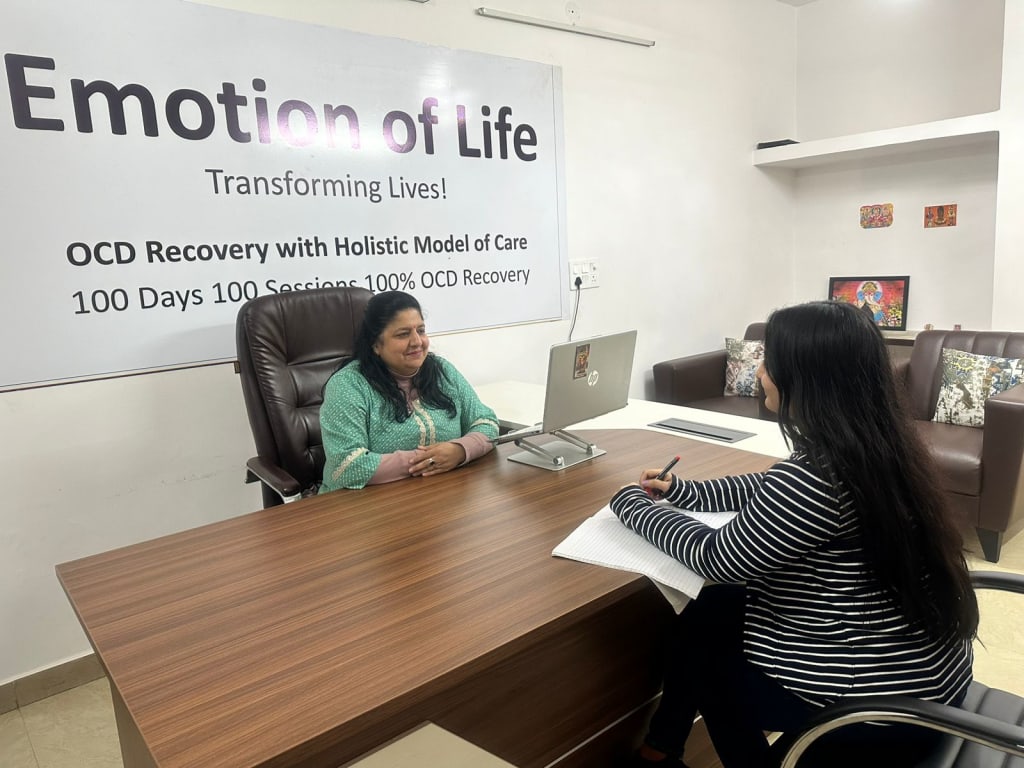
Contamination fears associated with OCD usually does not look like to be a very complicated subject. But when you take a close view, contamination is quite a bit more complicated than what we all perceive compare to what a person with this issue feel and face. When we say contamination OCD there are two things first is obsessions and second is compulsions. For contamination OCD sufferer it is not that simply limited to dirt, germs, and viruses. It may include like:
1. Bodily excretions (urine, feces)
2.Bodily fluids: sweat, saliva, mucus, tears
3. Blood and Blood Product
4. Semen
5. Garbage/ Dustbin
6. Used utensil
7. Household chemicals
8. Radioactivity
9 Broken glass and Articles
10. Sticky substances
11. People who look like unwell, unclean, not maintain
12. Spoiled food/ waste food
13. Liquid gel or soap
14. Pets animals
15. Birds
16. Dead animals
17. Public utility places
18. Specific fragrance
19. High sensitivity with body odour of specific body part like palm, feets, under arms
Contamination OCD sufferer’s unusual belief remains like very small amounts of contaminants can cover very large areas. For example, they may believe that a drop of blood or urine can somehow be spread to whole body, wear dress, entire rooms, thing they own and carrying..
This may include:
1. Certain Thoughts and Believe
2. Particular words
3. Specific illnesses, disabilities, people who are ill, disabled, or who have died)
4.Places where bad things have happened
5. Mental images
6. Overweight
7.Unattractive people
8. Colors
9. Bad luck
Logic has little to do with these fears. The belief here is that these names, images, concepts, or the characteristics of certain people can be magically transferred, simply by thinking about them or by coming into casual contact with them. They can be every bit as disabling as the items on the previous list. There is a further category that includes things that are more vague. For instance, there are some sufferers who fear to touch the floor, the ground, outdoors, or any public objects. When questioned about what it is they fear, they can only reply “I don’t really know, it just feels dirty to me.” There are also cases where a sufferer will get the idea that another person is contaminated in some way, although they cannot exactly say why. It may be a total stranger or a member of their immediate family. Compulsions are the usual responses of sufferers to these fears. They may involve any protective act that an individual carries out to avoid becoming contaminated or to remove contamination that has somehow already occurred. Compulsions of this type may include:
1. Excessive and sometimes ritualized hand washing
2. Disinfecting or sterilizing things
3. Throwing things away
4. Frequent clothes changes
5. Creating clean areas off-limits to others
6. Avoiding certain places or touching things
Another form of compulsion can include double-checking by a sufferer to make sure that they have not become contaminated, or asking others for reassurance that this has not happened. Sufferers will sometimes repeatedly ask others to check parts of themselves they cannot reach or see, or things they cannot go near. Some will go as far as to make lists of things they believe may have happened in the past, so as not forget this vital information. In an attempt to keep clean and minimize compulsions, some sufferers will create two different worlds for themselves; one clean and one dirty. When contaminated they can move freely about their dirty world and touch and do anything, since everything in it is already contaminated. Nothing in it has to be cleaned or avoided. Clothes that are considered contaminated must be worn when living in this zone. This dirty world usually takes in most of the outside world, and can also include parts of their home or work areas. It may even extend to having a dirty car to be driven only when contaminated. They may also be able to live freely in their clean world as long as they themselves are clean when they enter it and also stay that way. The clean world is usually a much more restricted area than the dirty one, and is often limited to special places at home or at work. There may also be a clean car which can only be driven when clean. The two worlds may exist side-by-side like parallel universes that are never allowed to meet. For magical types of contamination the solution is often a magical decontamination ritual designed to remove or cancel out the problem, thought, name, image, or concept. Saying special words or prayers, thinking opposing or good thoughts to cancel out bad thoughts, and doing actions in reverse, are just some of the compulsions that can be seen. Sometimes the usual washing or showering may even be part of the magical ritual. “Washers” as they are referred to are probably the most visible among those with contamination obsessions. It is not unusual for them to wash their hands fifty or more times per day. In more extreme cases, hands may be washed up to 200 times per day. Showers can take an hour or longer, and in severe situations can last as long as eight hours. Obviously, washers go through large amounts of soap and paper towels (used in preference to cloth towels which can only be used once and create laundry). Alcohol preps and disinfectant hand wipes are also popular. Their hands often become bright red and chapped with cracked and bleeding skin. Antibacterial soaps, peroxide, and disinfectants, such as Lysol, can be used to excess by some, causing further skin damage. I have even worked with several people who poured straight bleach on their hands and bodies, resulting in chemical burns.
Compulsive showering and washing are really quite futile, as the relief from anxiety only lasts until the washer contacts something else that is seen as contaminated. Washing may in some cases be strongly ritualized. It may have to be done according to exact rules, which if not followed force the sufferer to start all over again. Counting may also be part of a washing ritual to ensure that it has been done long enough period, or a certain number of times. In order to cut down on washing, sufferers sometimes resort to using paper towels, plastic bags, or disposable gloves to touch things.
In some cases, family members have been drawn into the sufferer’s web of compulsions. They are made to reassure to clean things that cannot be approached, to check the sufferer or the environment for cleanliness, or to touch or use things that are thought to be contaminated. This type of help, of course, doesn’t really help, as it only locks the sufferer into the illness and increases helplessness. It also leads to resentment and fighting, as family members feel increasingly imposed upon and their lives become limited. This is especially true when a family member is seen as the source of contamination.
To further complicate our contamination picture, there is a variant that veers off into what is known as “hyper-responsibility.” This is where instead of being fearful of becoming contaminated, sufferers fear spreading contamination to others. The types of contamination that can be spread to others are about the same as those that trouble other sufferers. Generally speaking, so are the types of avoidance and decontamination compulsions. There is not only a fear of possibly harming others, but also a fear of having to live with the resulting guilt. There are also some that suffer from both types of fears at the same time.
Having briefly covered this very complex topic, the next question would be what can be done about these problems? To those of you familiar with OCD, the answer should be obvious — behavioral therapy and possibly medicine. Behavioral therapy would be in the form of Exposure and Response Prevention (ERP). This remains the most widely used and accepted form of behavioral treatment for OCD. This type of therapy encourages patients to gradually encounter increasing doses of that which is contaminated, while resisting washing, checking, avoiding, or conducting magical rituals.
Therapeutic encounters are like small experiments to test patients’ theories about the dangers of their particular type of contamination. Treatment is tailored to each particular person’s symptoms and is done at their own pace. If a feared substance or situation is too difficult to confront in one whole step, it is approached more gradually. Some patients can only touch something that has touched a feared substance or object, and only later do they go on to touch directly what is feared. Family and friends are taught to not participate in rituals and to not give reassurance or answers to the same questions.
No one is ever forced to do anything, nor is anything sprung on them by surprise. It takes persistence and hard work, but through steady week-by-week work, the disorder is chipped away until recovery is eventually reached
About the Creator
Shyam Gupta, Emotion of Life, OCD Recovery and Cure Program, Online & Onsite in Agra
Specialized treatment provider for severe & Chronic OCD without medicine "OCD Recovery & Cure Program" Program is available online as 4 months program & in onsite mode as 4 weeks in Agra
Call: 9368503416
www.emotionoflife.in/review
Keep reading
More stories from Shyam Gupta, Emotion of Life, OCD Recovery and Cure Program, Online & Onsite in Agra and writers in Psyche and other communities.
Reassurance seeking behaviour management in OCD
Reassurance Seeking Behavior Management in OCD In today’s world, you might often hear people saying that they have OCD, referring to the mere need of keeping things organized. However, it is much deeper than that. Obsessive- Compulsive Disorder is a mental health condition in which one experiences continuous intrusive thoughts, known as obsession. As a result of these obsessions, an individual performs compensatory repetitive behaviors referred to as compulsions. Seeking reassurance is a common pattern seen in OCD as it momentarily helps in controlling distress.
By Shyam Gupta, Emotion of Life, OCD Recovery and Cure Program, Online & Onsite in Agra about a year ago in Psyche
The BAFTA Awards
By now, in a stunning departure from recent years, most of the world is aware of what happened at the BAFTA film awards. Social Media Headlines will tell you the bare bones: that John Davidson, a Tourette's Syndrome advocate, shouted a racial slur at two Actors of Colour, Michael B Jordan and Delroy Lindo.
By Natasja Rose7 days ago in Psyche



Comments
There are no comments for this story
Be the first to respond and start the conversation.